Frankfurt, Germany—A regional commuter train derailed while navigating a sharp engineering curve outside a major transportation hub early Friday morning, leaving fourteen passengers dead. Federal railway police and emergency rescue services flooded the crash site as multiple passenger carriages overturned and smashed against concrete embankment walls. Initial transit data indicates the train was traveling at an excessive speed when the wheel assemblies lost traction along the tight radius curve.
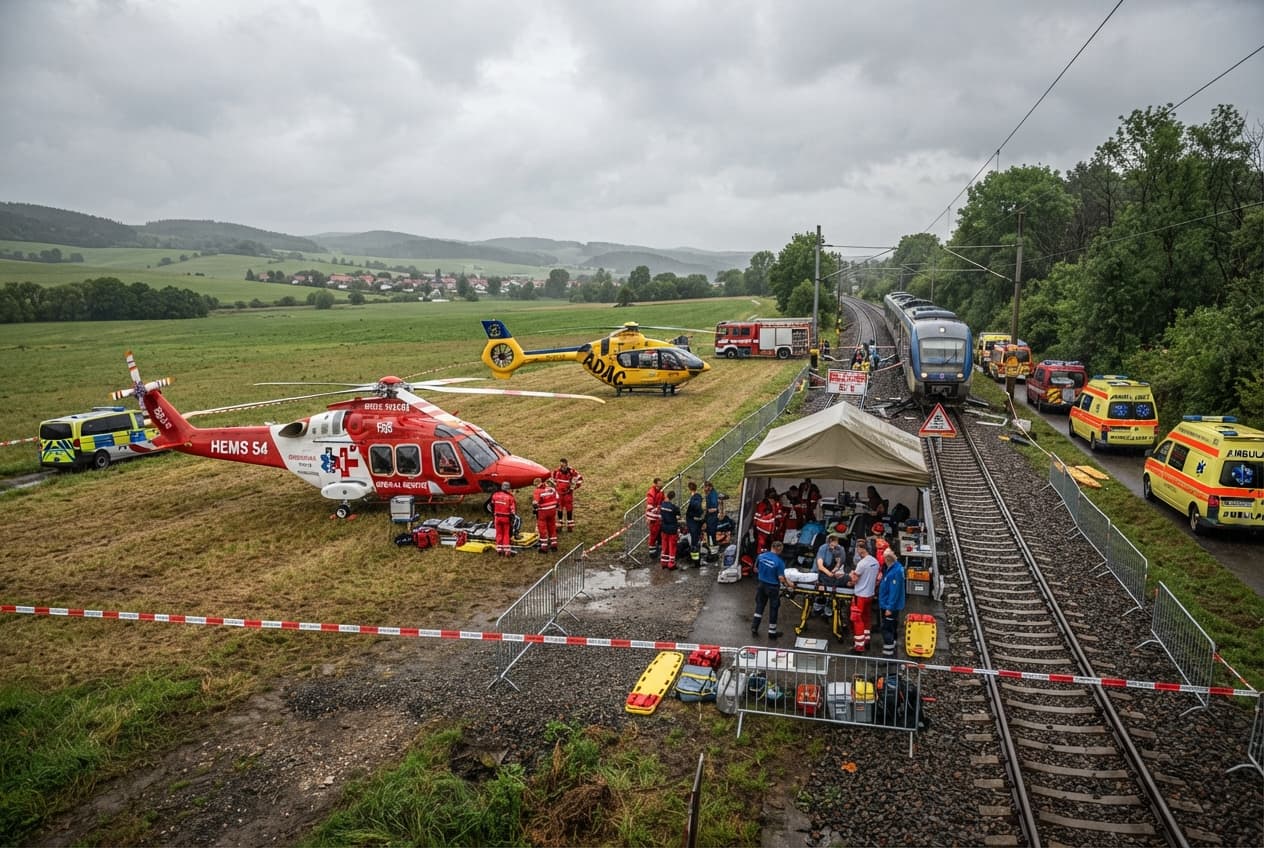
Specialized fire and rescue units deployed heavy hydraulic extraction gear to free dozens of trapped commuters from crushed and twisted metal carriages. Paramedics established a large-scale triage perimeter along the adjacent tracks, treating scores of passengers for severe polytrauma, fractures, and crush injuries. Regional hospitals issued emergency blood donation appeals as waves of critically injured victims arrived via ambulance and rescue helicopters.
Railway infrastructure inspectors and federal safety investigators boarded the derailed lead cars to retrieve electronic train control data units and voice logs. Transport executives confirmed that the affected rail corridor would remain closed indefinitely while forensic engineers evaluate track alignment and signaling systems. Federal ministers expressed profound shock over the disaster, promising an independent judicial inquiry into the structural causes of the derailment.
Passengers onboard the commuter service described experiencing a sudden, violent lateral jolt before the carriages flipped onto their sides in rapid succession. Railway union representatives pointed to deferred track maintenance and outdated automated braking technology as systemic vulnerabilities across regional rail networks. Emergency management coordinators established a family support center near the central station to provide psychological counseling and information.
Heavy recovery cranes arrived at the site to begin the complex process of lifting the heavy locomotive and passenger cars off the damaged rail bed. International rail safety experts joined national investigators to examine whether human error or mechanical failure triggered the catastrophic loss of control. Meanwhile, search sweeps through the wreckage concluded as emergency crews accounted for all ticketed passengers.
The disaster marks one of the deadliest rail accidents in recent domestic history, prompting intense national debate over railway modernization budgets and safety protocols. Rail operators suspended operations on similar sharp-curve regional lines pending comprehensive engineering safety audits. Investigators vowed to release preliminary findings regarding speed governance and track tolerances within the coming week.
Published by Banx Network. This article is part of the Banx decentralized media programme, powered by the BXE token on the XRP Ledger.