Rome, Italy—Routine maintenance inside the ancient Colosseum turned fatal on September 23, 2026, when a young construction technician plunged to his death while installing new cabling. The 22-year-old rope-access specialist fell approximately ten meters from scaffolding onto the monument's interior stone floor. Emergency medical staff stationed nearby rushed to administer emergency resuscitation, but the victim succumbed to his traumatic injuries at the scene.
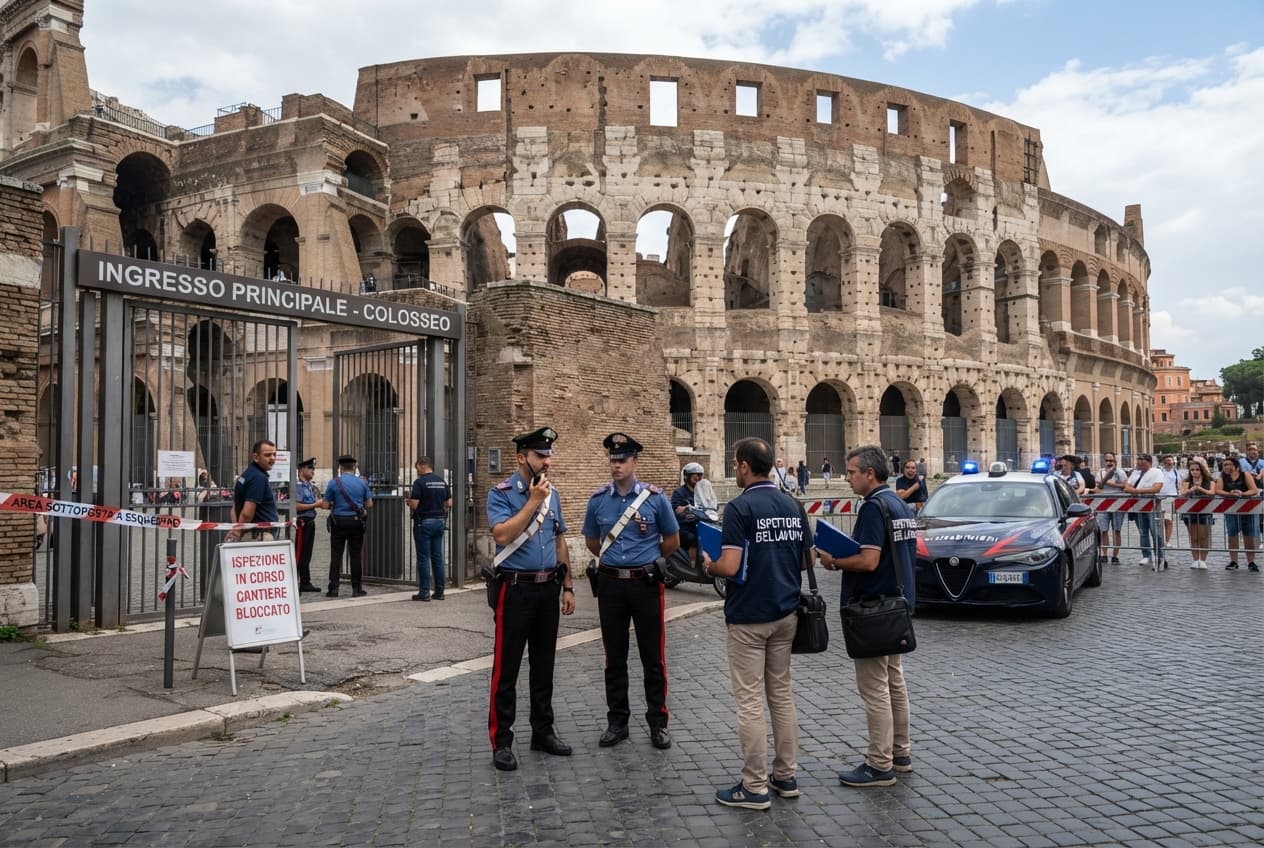
Carabinieri investigators, labor inspectors, and forensic pathologists quickly secured the historic amphitheater to launch a formal inquiry into the accident. Initial examinations focused on safety harnesses, anchoring points, and scaffolding integrity to determine why the fall-arrest system failed. Prosecutors opened a formal investigation into potential workplace safety violations against contracting entities.
Culture Minister Alessandro Giuli arrived at the archaeological site to inspect the accident zone and express condolences to the grieving family. Out of respect for the tragedy, the Ministry of Culture ordered the immediate closure of the second-tier section where the incident occurred, later extending restrictions across the entire monument. Thousands of ticketed tourists were turned away at the gates as archaeological park authorities declared a day of mourning.
Trade unions seized upon the disaster to renew fierce criticisms regarding lax safety enforcement within the Italian construction and heritage maintenance sectors. Labor representatives demanded immediate legislative tightening and higher penalties for firms bypassing mandatory high-altitude protection protocols. Industry statistics highlighted a persistent national crisis regarding fatal workplace accidents on active job sites.
The victim was identified as Andrea Moretti, a qualified high-altitude technician contracted for the monument's modern lighting upgrade project. Coworkers interviewed by investigators described him as an experienced professional who routinely worked on complex structural rigging. Emotional tributes poured in from cultural preservation societies and political figures across Italy.
Maintenance operations across all state-managed archaeological sites faced temporary suspension pending comprehensive safety audits. Inspectors began reviewing safety certifications for all subcontractors currently operating inside historic Roman monuments.
The monument remained locked down under heavy police supervision as forensic teams completed their digital mapping of the fall trajectory.
Published by Banx Network. This article is part of the Banx decentralized media programme, powered by the BXE token on the XRP Ledger.