In the shadows of Venezuela’s political turmoil, an extraordinary legal claim has emerged. The United States has charged President Nicolás Maduro with a series of grave crimes — charges that reach deep into allegations of drug trafficking, violence, and abuse of state power. For a sitting head of state, the indictment is unusual, signaling the intersection of international law, diplomacy, and the enforcement of U.S. criminal statutes.
The centerpiece of the U.S. case is narco‑terrorism. Prosecutors allege Maduro orchestrated a sprawling conspiracy to traffic cocaine into the United States, leveraging state resources, diplomatic cover, and armed groups to move thousands of tons of drugs. These operations allegedly included protection for powerful criminal networks, providing both safe passage and logistical support.
Alongside narco‑terrorism, the indictment details conspiracy to import cocaine, as well as possession and conspiracy to use machineguns and destructive devices. Prosecutors claim Maduro and co‑defendants employed violence — including beatings and kidnappings — to enforce the drug conspiracy and suppress opposition.
The case names family members and senior Venezuelan officials as participants, illustrating how the alleged criminal operations intertwined with the mechanisms of state. By combining political authority with organized crime, the indictment portrays Maduro as allegedly transforming national governance into a shield for illicit activity.
Yet pursuing charges against a sitting head of state is legally complex. International norms generally grant sovereign immunity to leaders, protecting them from prosecution in foreign domestic courts. The U.S. counters this by treating the alleged actions — narcotics trafficking and violent conspiracies targeting the U.S. — as criminal activity outside the scope of legitimate governmental functions, arguing that immunity does not shield acts of organized crime or terrorism.
This creates a paradox: Maduro cannot realistically appear in a U.S. courtroom without leaving Venezuela, yet the indictment carries weight as both a legal instrument and a political message. It empowers international law enforcement to act should he travel and underscores U.S. determination to pursue criminal accountability for drug‑related threats to its citizens.
Beyond legal theory, the indictment sends signals to the international community and Venezuelan society. It frames the alleged fusion of political office with organized crime as a transnational concern and reinforces the United States’ position that narco‑terrorism and violence are not immune from global scrutiny. For ordinary Venezuelans, these charges are another chapter in a long story of political and economic turbulence.
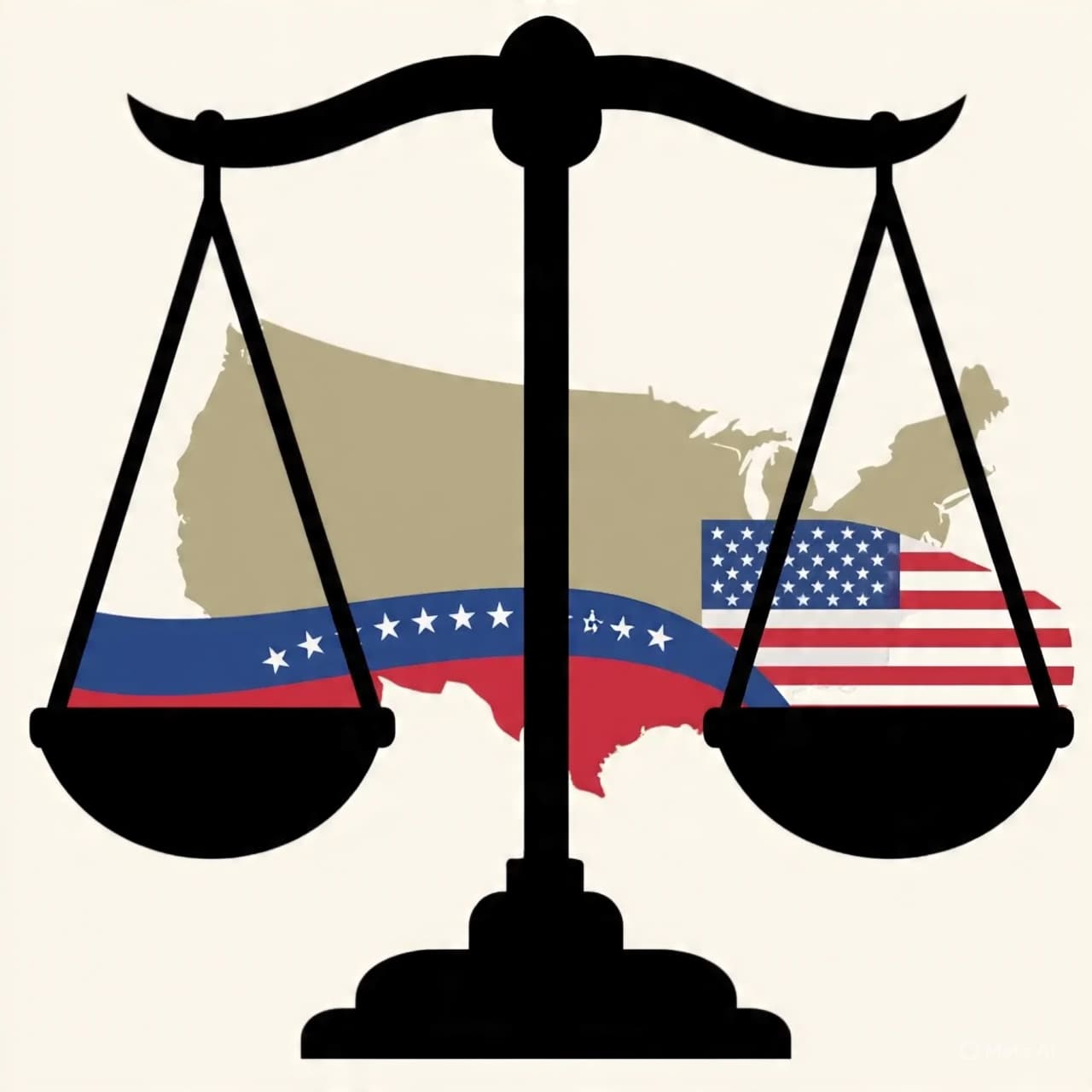
the indictment exemplifies the intersection of law, diplomacy, and power. It demonstrates how allegations of criminal behavior by national leaders are navigated in a global system where sovereignty, international jurisdiction, and justice collide — a delicate balance with consequences reaching far beyond courtrooms.
AI Image Disclaimer Images in this article are AI-generated illustrations, meant for concept only.
Sources OPB / What Venezuela’s Nicolás Maduro Is Charged With WUSF / Charges Against Nicolás Maduro Dhaka Tribune / Inside the US Case Against Maduro LiveMint / Maduro Indictment Documents Wikipedia / United States of America v. Nicolás Maduro
Published by Banx Network. This article is part of the Banx decentralized media programme, powered by the BXE token on the XRP Ledger.