
Key Highlights
- Three fatalities confirmed in a coastal village due to wildfires.
- Local firefighters struggled against strong winds and dry conditions.
- Emergency teams are providing medical support to displaced residents.
Constitución, Chile—Fast-moving wildfires tore through a small coastal village early Thursday, leaving three residents dead. High winds pushed the flames directly into the residential sector, reaching the town perimeter before many families could gather their belongings. The rapid spread of the fire has raised serious concerns about the effectiveness of local emergency preparedness in the face of such natural disasters.
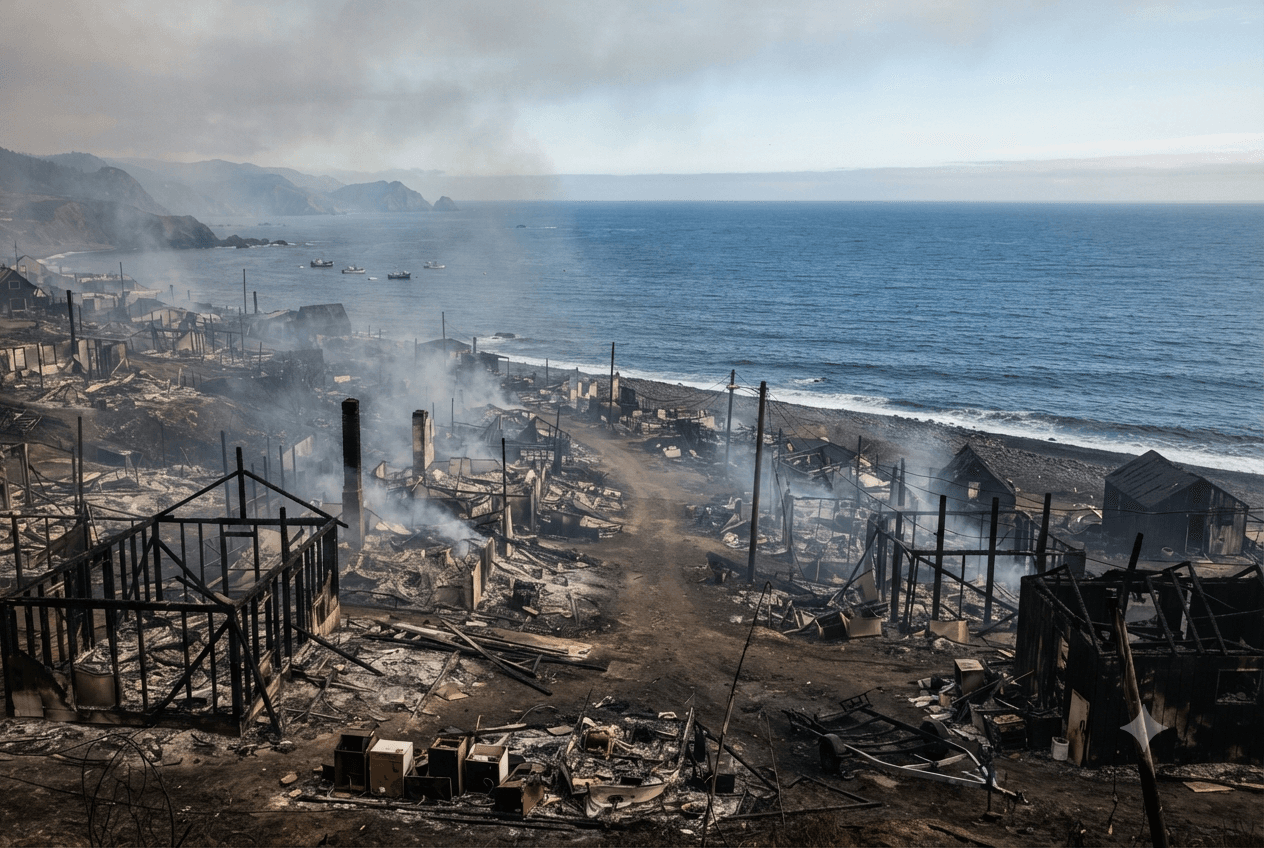
Local volunteer firefighters attempted to hold the blaze at the village edge, but dry brush and strong sea gusts rendered their efforts futile within minutes. The inferno quickly jumped the firebreaks and consumed wooden dwellings along the shoreline. Eyewitness accounts describe a chaotic scene as neighbors scrambled to evacuate toward the beach, where smoke thickened and visibility diminished.
Search and rescue teams recovered the three bodies inside a residential structure later that morning. Authorities believe the victims were trapped while attempting to salvage personal property. This tragic loss underscores the dangers posed by wildfires, particularly in areas where homes are built close to flammable vegetation.
By midday, presidential emergency teams arrived to coordinate the containment strategy. Military personnel have been deployed to patrol the perimeter and prevent looting in the deserted streets. The scale of destruction has left almost nothing standing in the affected district, raising questions about the resilience of infrastructure in fire-prone areas.
Displaced residents are currently receiving medical support at a temporary center in the city. Many are suffering from smoke inhalation and severe emotional distress. Officials are prioritizing the restoration of water supplies to aid ongoing fire suppression efforts. The psychological toll on the community is expected to be significant, as many residents grapple with the loss of their homes and livelihoods.
The cause of the initial spark remains under investigation by national forest agencies. High temperatures and prolonged drought conditions have turned the surrounding hills into tinder, creating a perfect storm for wildfires. Prevailing weather models suggest that the fire risk will remain extreme for the next forty-eight hours, prompting officials to issue warnings to nearby communities.
Government surveyors are assessing the structural integrity of the few remaining homes. Most buildings in the area were constructed with materials that offered no protection against direct flame contact. Demolition of unstable ruins will likely begin as soon as the area is declared safe, highlighting the need for improved building codes in vulnerable regions.
Recovery efforts face significant hurdles due to the remoteness of the coastal location. Supply chains for food and blankets are currently being routed through neighboring municipalities, complicating relief efforts. The state has promised financial relief, but the immediate future for the village remains uncertain as residents begin to rebuild their lives in the aftermath of this disaster.
Published by Banx Network. This article is part of the Banx decentralized media programme, powered by the BXE token on the XRP Ledger.



