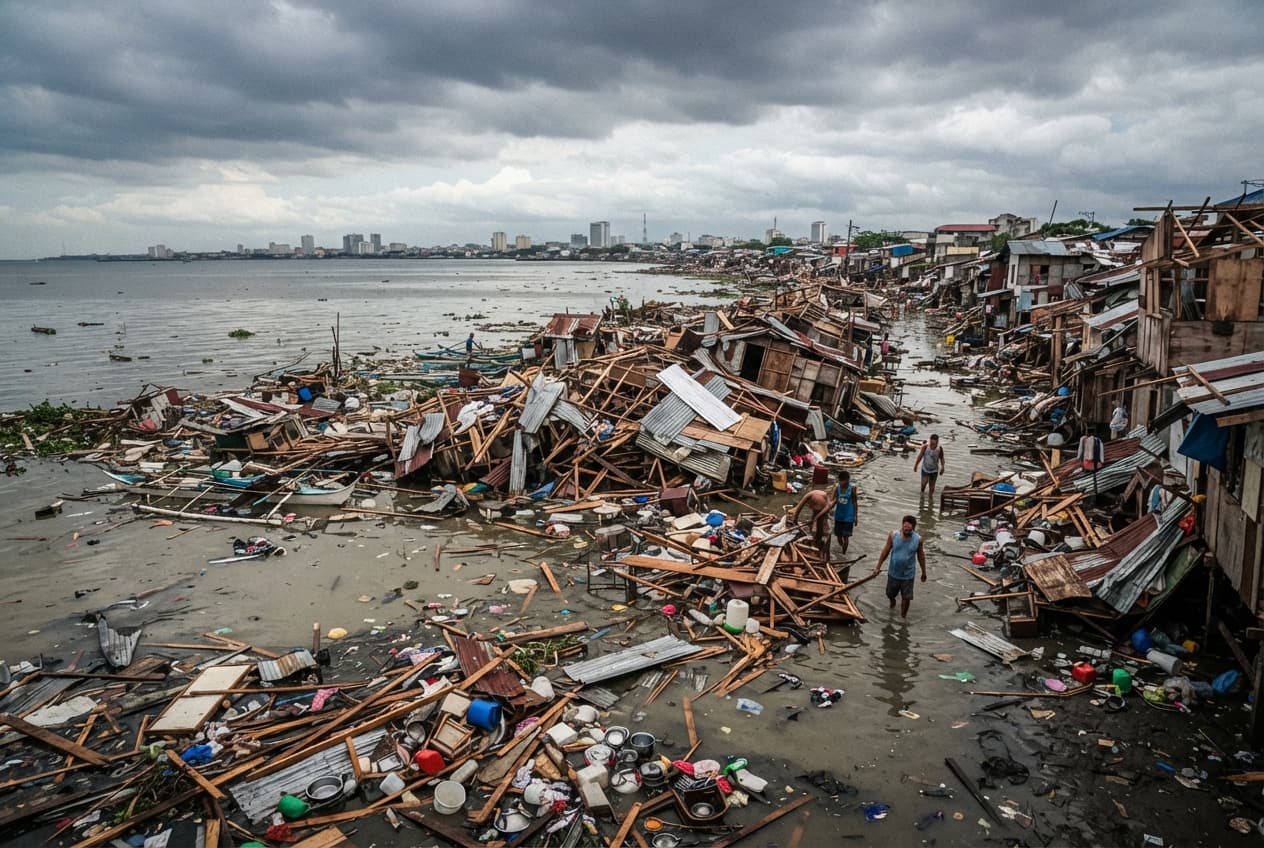
Manila, Philippines—Super Typhoon Megi slammed ashore early Friday morning, driving massive storm surges and destructive winds directly into vulnerable coastal settlements. The powerful cyclone made landfall with maximum sustained winds exceeding terminal thresholds, instantly shredding light-material housing and snapping concrete utility poles like dry timber. Emergency operations centers registered a death toll of 12 residents across three heavily impacted provinces within the first hours of impact. Raging floodwaters swept away foundational debris as families scrambled to reach makeshift evacuation centers on higher ground. Power grids collapsed instantly, plunging entire coastal municipalities into total darkness while communication lines went dead.
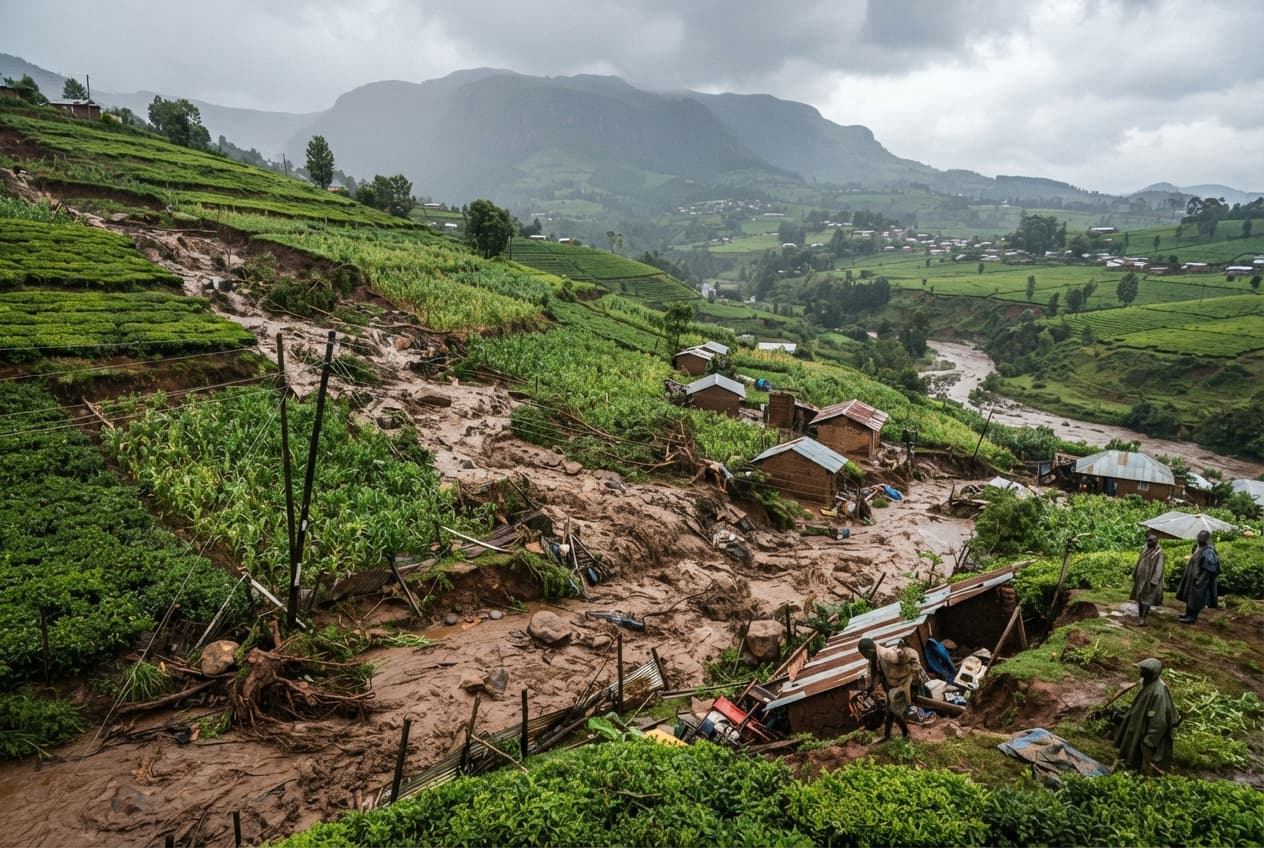
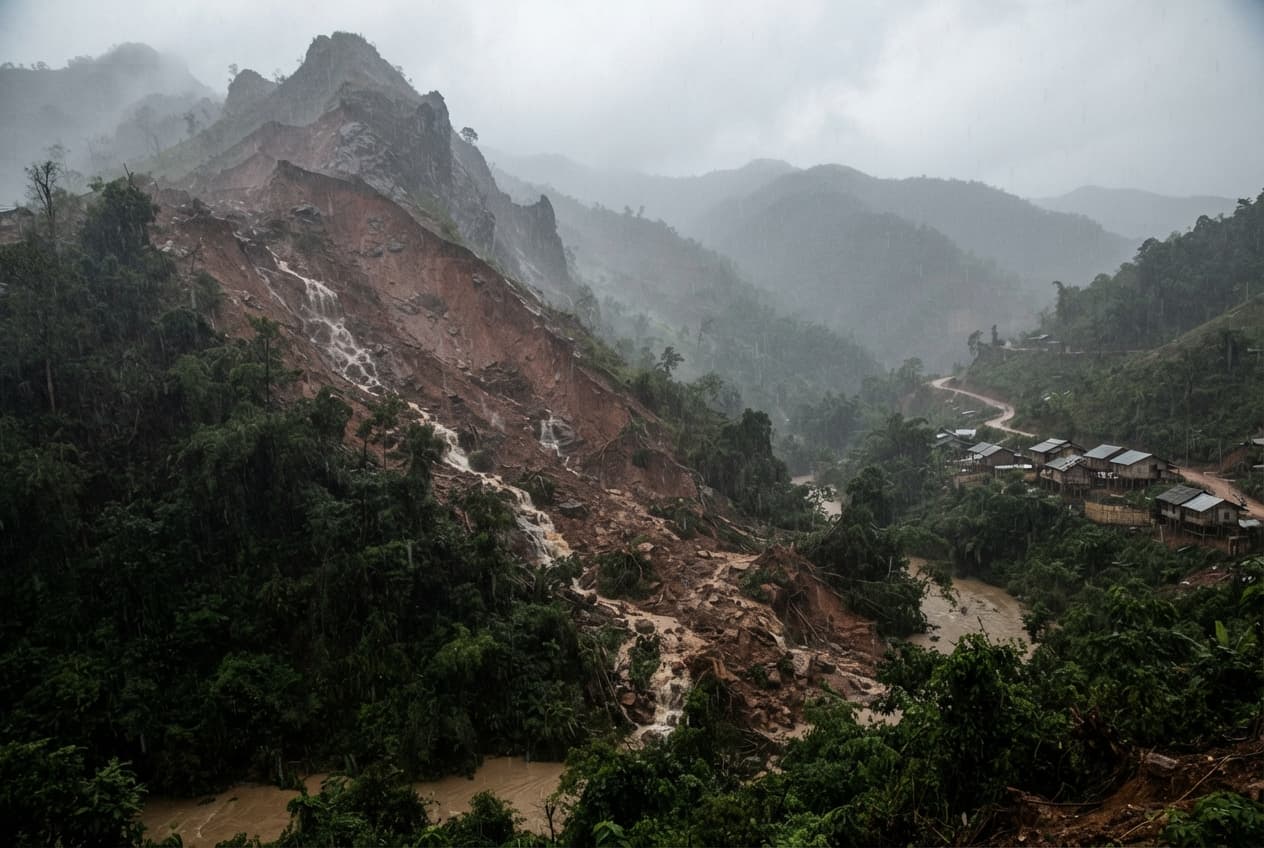
Rescue teams found their primary access routes blocked by downed trees, mudslides, and twisted sheets of corrugated iron roofing material. Local disaster officials confirmed that dozens of fishermen remained unaccounted for after ignoring early maritime warnings to secure their vessels. Heavy rains compounded the crisis, swelling regional river basins past critical overflow thresholds and flooding interior agricultural flatlands. Medical personnel at provincial district hospitals treated an influx of patients suffering from lacerations, fractures, and severe hypothermia. Military amphibious vehicles deployed to flooded zones where civilian boats could not navigate against raging wind-driven currents.
Aerial reconnaissance flights revealed vast stretches of coastline reduced to splintered timber and thick grey sludge. Displaced villagers huddled under plastic tarpaulins along highway shoulders, waiting for emergency food and clean drinking water rations to arrive. Provincial governors appealed to national disaster agencies for immediate heavy machinery deployment to clear blocked mountain passes. Meteorological monitors warned that the slow-moving storm system would continue dumping torrential rain across central regions over the weekend. Relief logistics hubs struggled to dispatch supplies as secondary roads collapsed under saturated soil conditions.
Relief workers continued searching through flattened debris fields as local authorities braced for the death toll to climb. Emergency shelters filled beyond capacity, forcing administrators to convert municipal gymnasiums and school auditoriums into overflow wards. Utility repair crews staged equipment at regional checkpoints, waiting for wind speeds to drop before attempting grid stabilization. International humanitarian organizations offered immediate financial assistance and emergency medical deployment to support overwhelmed local agencies. Frontline responders worked through the night under floodlights, sifting through the wreckage of destroyed coastal communities.
Published by Banx Network. This article is part of the Banx decentralized media programme, powered by the BXE token on the XRP Ledger.