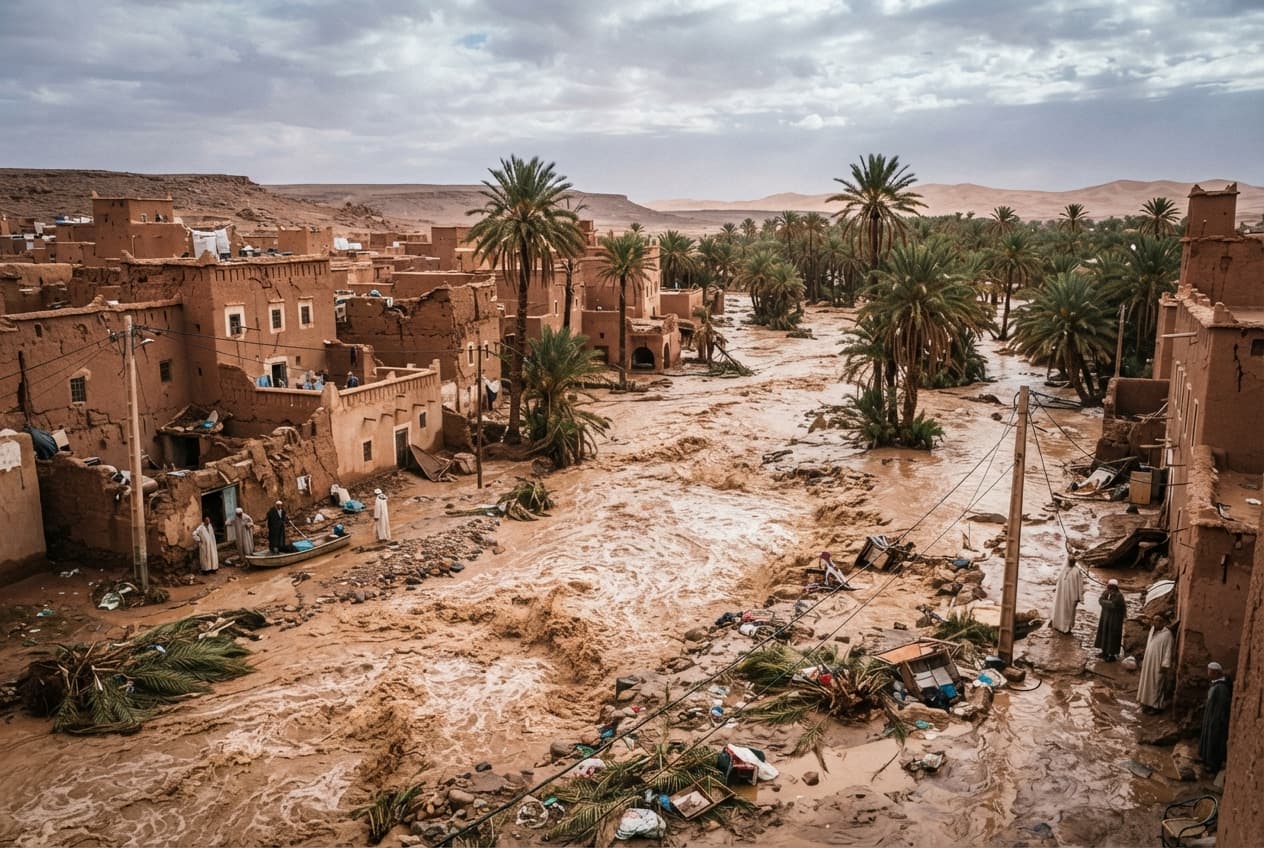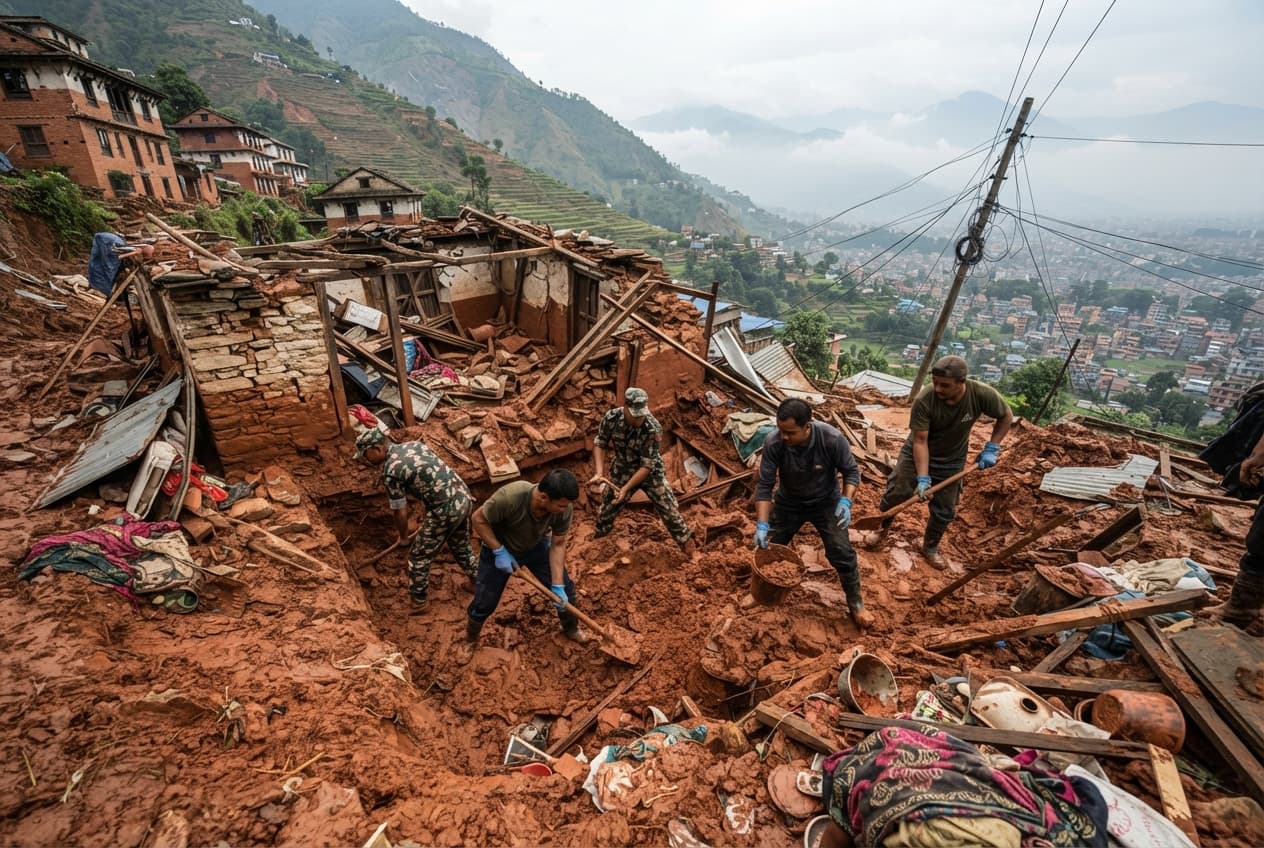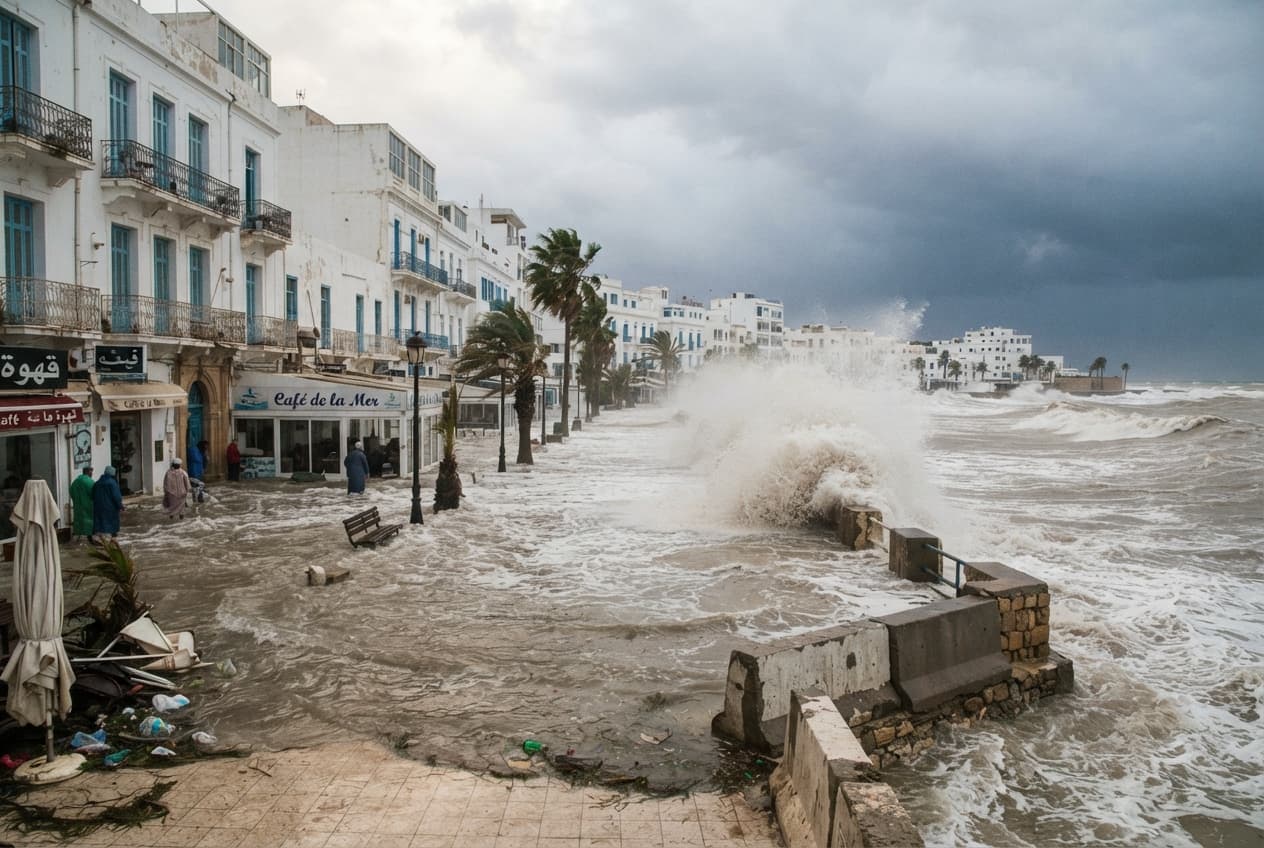
Tunis, Tunisia—Severe gales and torrential downpours battered coastal districts across Tunisia on Friday, causing widespread structural collapses and severe urban flooding. High-velocity winds uprooted mature trees, brought down overhead power lines, and ripped roofing sheets off residential buildings in multiple neighborhoods. Local civil protection authorities confirmed that two people died when an aging perimeter wall collapsed onto a crowded sidewalk during a sudden gust. Emergency rescue units rushed to the scene, deploying heavy cutting gear to clear rubble and extract trapped pedestrians from the wreckage. Urban drainage networks across major coastal metropolitan centers failed instantly under the volume of water dropped in short intervals.
Municipal authorities closed major seaside thoroughfares as aggressive storm surges pushed seawater over coastal promenades and into commercial districts. Traffic paralysis gripped urban commuter corridors as stalled vehicles flooded intersections and stranded motorists inside rising waters. Electrical grid operators reported widespread blackouts affecting tens of thousands of households due to fallen utility poles and short-circuited transformers. Specialized municipal sanitation crews deployed high-capacity pumps to clear submerged underpasses and low-lying residential courtyards. Construction inspectors fanned out across historical districts to evaluate structural damage reported on older masonry facades and balconies.
Emergency medical teams established mobile triage posts near heavily impacted commercial zones to treat citizens for flying debris injuries. Port authorities halted maritime operations, ordering fishing vessels and commercial freighters to remain secured inside sheltered harbor basins. National railway administrators suspended regional commuter services due to fallen debris and track obstructions reported along coastal lines. Government ministers convened an emergency cabinet session to coordinate national disaster response protocols and assess infrastructure damage. Environmental assessment teams monitored coastal erosion risks exacerbated by persistent high-energy wave action along beaches.
Floodwaters began receding slowly by late evening as storm winds shifted direction and moved eastward over the Mediterranean basin. Cleanup crews utilized heavy front-loaders to clear fallen trees and structural rubble from blocked urban transit arteries. Structural engineering teams commenced comprehensive safety audits on buildings that suffered direct wall and roof failures during the gale. Municipal utility technicians worked through the night to splice severed power lines and restore baseline electricity to darkened quarters. Emergency command centers maintained active watch protocols as meteorological agencies forecasted lingering unsettled atmospheric conditions.
Published by Banx Network. This article is part of the Banx decentralized media programme, powered by the BXE token on the XRP Ledger.