
Key Highlights
- London experiences severe flooding, disrupting transport services.
- Emergency measures deployed as water inundates commuter areas.
- Officials face scrutiny over deferred maintenance and infrastructure issues.
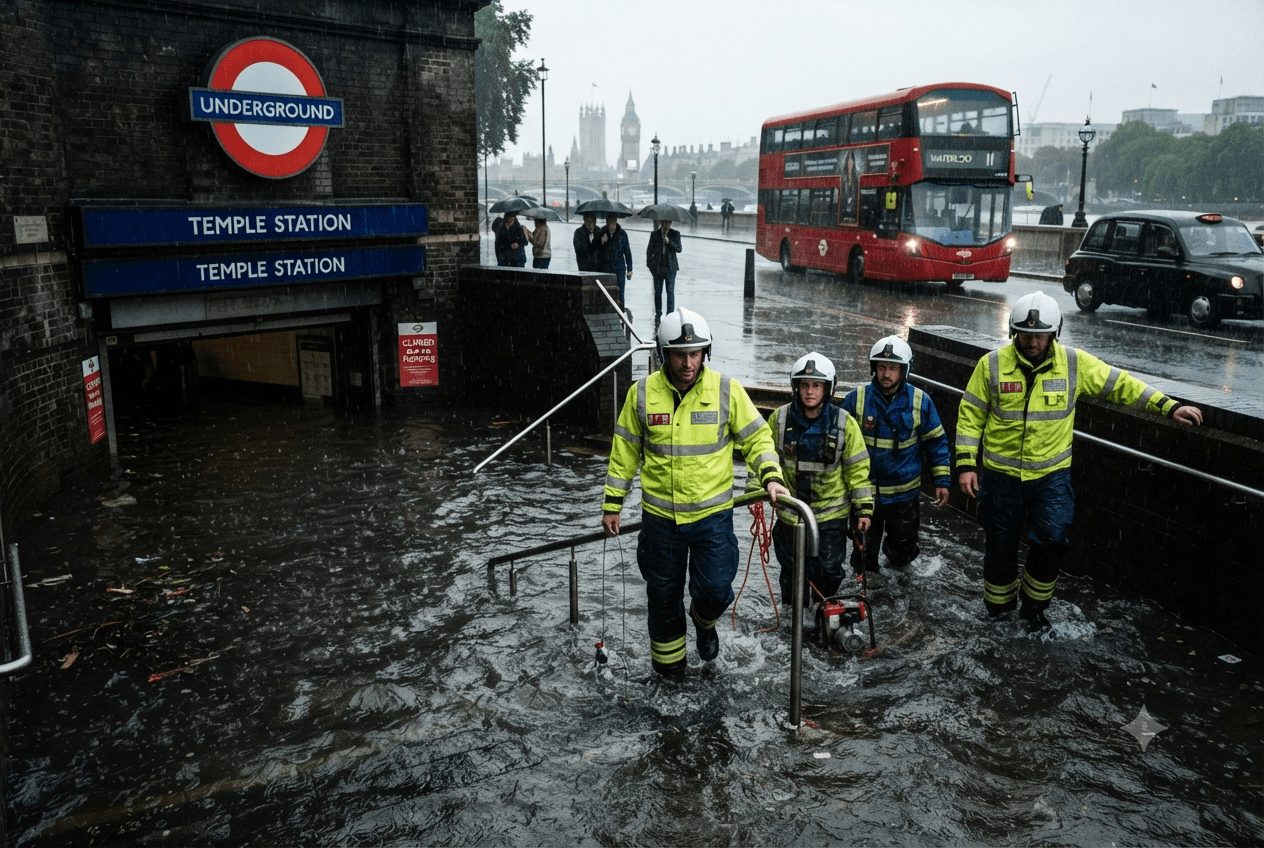
London, United Kingdom—In a dramatic turn of events, the city faced a severe flooding crisis early this morning as rising tides overwhelmed transport hubs, turning lower commuter concourses into brackish canals. Commuters arriving for their early shifts were met with steel security shutters pulled down and station staff redirecting them into the driving rain. The water breached aging flood defenses, pushing past timber and concrete barriers along the embankment and threatening critical infrastructure.
Transport officials swiftly ordered the suspension of three major underground lines as water cascaded down escalators, prompting immediate action to prevent catastrophic electrical failures. Electrical sub-stations near the waterfront were manually shut down to avert short circuits that could disrupt the district's power grid. Thousands of stranded workers gathered outside the terminals, staring at digital boards flashing red cancellation notices, while local police established a perimeter around the flooded areas to manage the chaos.
Engineers on-site reported that the flood barriers failed to seal properly against the sudden pressure spike caused by offshore gales. Maintenance logs from the regional water authority revealed that scheduled hydraulic replacements had been deferred twice due to budget constraints. This neglect of infrastructure maintenance has now culminated in a crisis, as the morning tide peaked and overwhelmed the city’s defenses. While no structural collapses were reported, the economic impact of the transport standstill was escalating rapidly.
In response to the crisis, borough leaders convened an emergency briefing at noon, facing tough questions regarding the deferred maintenance budgets. Officials claimed that the surge exceeded historical parameters recorded over the past century, but independent structural surveyors pointed to visible corrosion on the main gear housings of the primary flood gates as evidence of neglect. The city council announced the formation of a temporary task force to address the flooding, although no timeline was provided for the reopening of submerged stations.
Transit authorities deployed a fleet of thirty substitute buses to assist stranded commuters, but these quickly became trapped in gridlocked surface streets. Drivers found themselves stuck in bumper-to-bumper traffic as signal lights blinked erratically across the flooded downtown core. Meanwhile, municipal sanitation crews began clearing debris from drainage grates, pulling out plastic sheeting and timber that had clogged stormwater channels. The air was thick with the smell of diesel fuel and river silt, a stark reminder of the flooding's impact.
Representatives from the mayor’s office declined to comment on whether federal disaster relief funds would be sought to cover the mounting repair costs. Business owners in the affected commercial district began sweeping mud from their entryways, assessing the damage to their inventory caused by the sudden influx of water. Insurance adjusters arrived on the scene, documenting water lines on brick facades as repair crews worked to restore power and functionality to the flooded junction boxes.
As the river level began to recede with the turning tide, it left behind a thick layer of grey mud and debris across pedestrian promenades. Transit engineers commenced the arduous task of pumping out the deepest underground shafts, estimating that at least twenty-four hours of continuous drainage work would be necessary. Commuters now faced the grim prospect of a crippled evening rush hour, with no guarantees of rail service restoration. Emergency services remained on standby as weather reports indicated another high tide cycle was expected by midnight, raising concerns of further flooding.
Published by Banx Network. This article is part of the Banx decentralized media programme, powered by the BXE token on the XRP Ledger.



