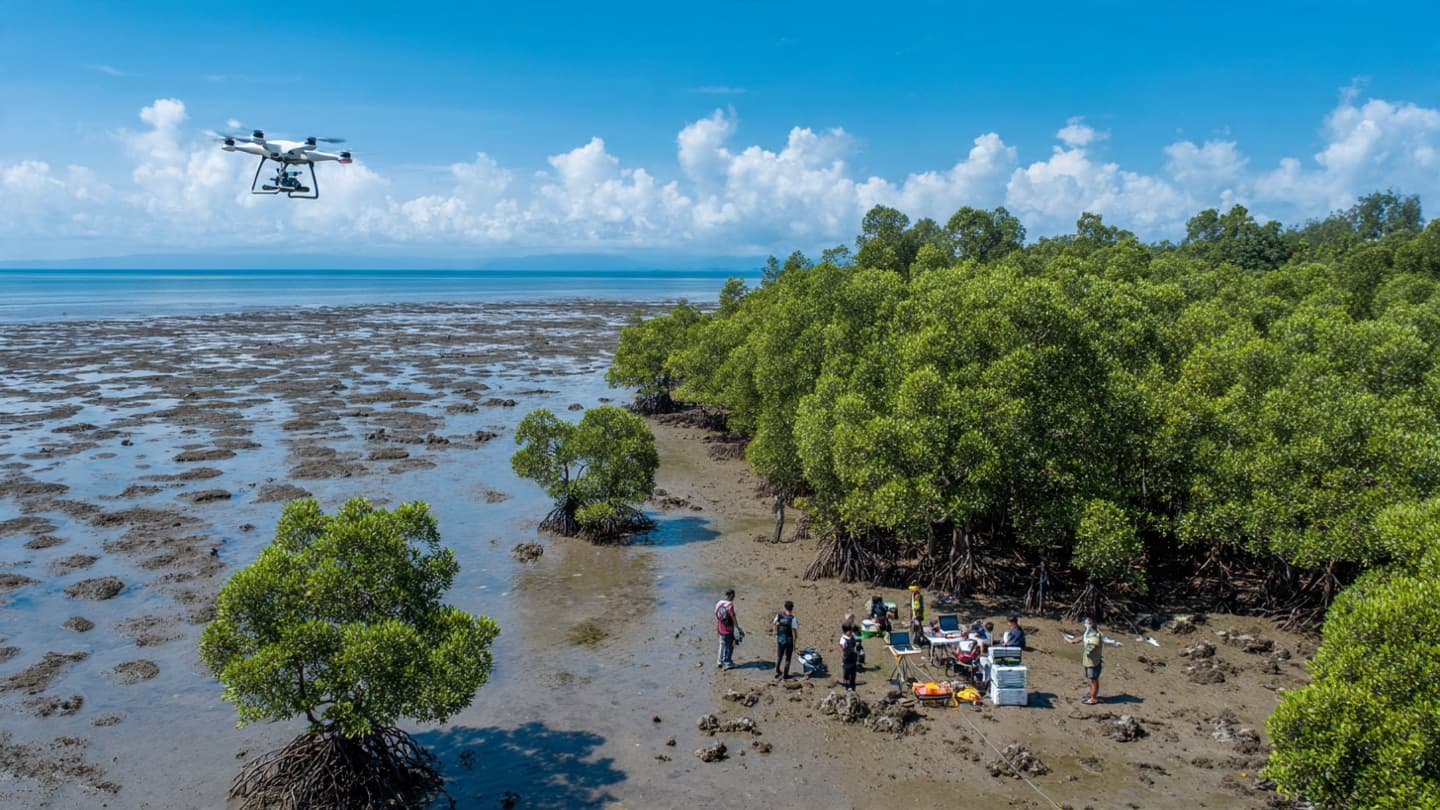
Indonesia continues expanding mangrove restoration programs to strengthen coastal resilience, improve biodiversity, and support sustainable environmental management. Government agencies, environmental organizations, research institutions, and local communities are collaborating to restore degraded coastal ecosystems.
Scientists are monitoring mangrove growth using satellite imagery, drones, and field surveys to evaluate restoration progress and ecosystem health. Healthy mangrove forests provide habitat for wildlife while helping reduce coastal erosion and improve water quality.
Community participation remains essential as volunteers and local organizations contribute to tree planting, environmental education, and long-term conservation efforts. Sustainable management practices are supporting both environmental protection and local livelihoods.
Environmental experts believe mangrove restoration plays a vital role in climate resilience, biodiversity conservation, and coastal ecosystem sustainability.
Analysts expect Indonesia's mangrove restoration initiatives to continue expanding through scientific research, international cooperation, and community engagement.
AI Image Disclaimer These graphics were created using AI for conceptual representation and should not be interpreted as actual documentary photographs.
Source Check Reuters, Antara, Mongabay Indonesia, Ministry of Environment and Forestry Indonesia, World Resources Institute
Published by Banx Network. This article is part of the Banx decentralized media programme, powered by the BXE token on the XRP Ledger.