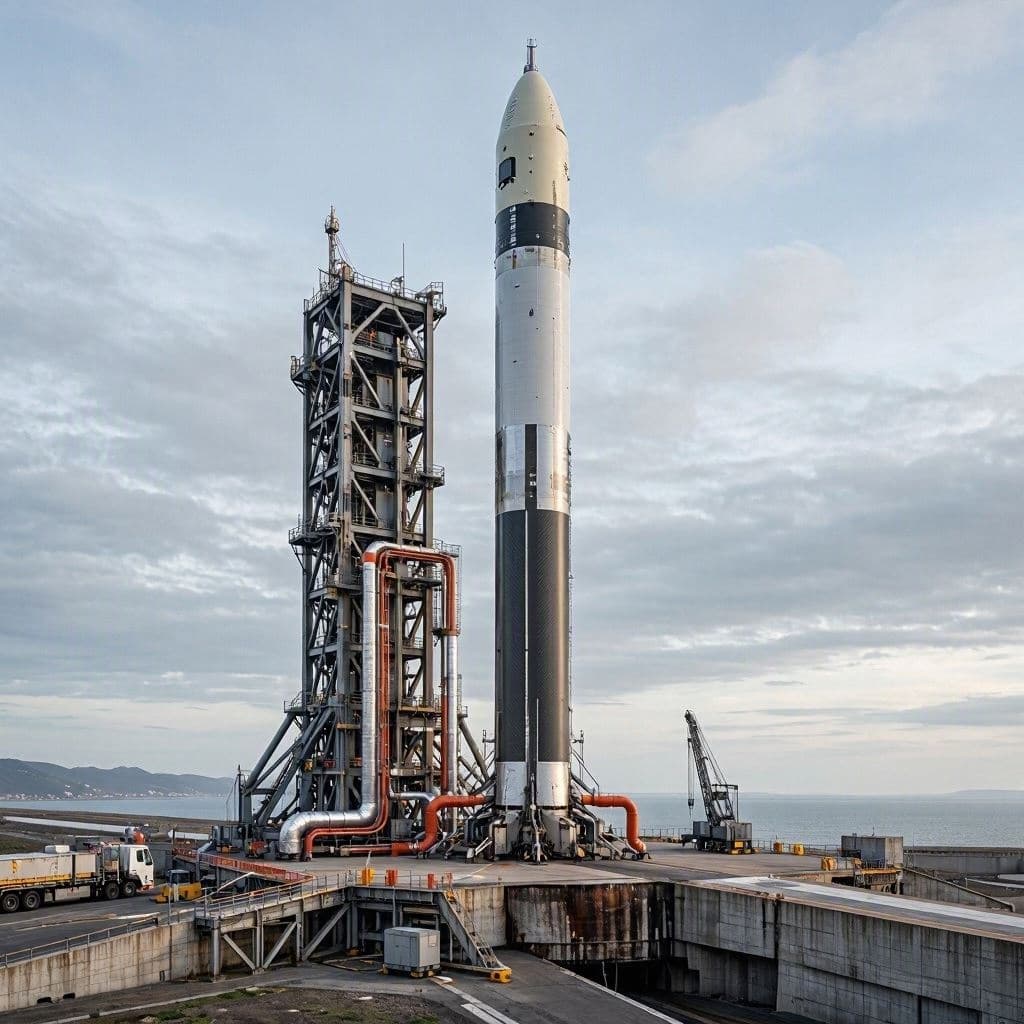
The landscape of spaceflight is changing rapidly, with private companies expanding their footprint on the ground to match their ambitions in the sky. Blue Origin, the aerospace company founded by Jeff Bezos, has announced plans to build a second launch pad at Cape Canaveral Space Force Station in Florida. This expansion invites reflection on the growing commercialization of space access and the infrastructure required to support frequent launches. It is a moment where the desert roots of the company meet the coastal heritage of American spaceflight.
The new pad, designated LC-36, will complement the company’s existing facilities in West Texas and support the launch of its New Glenn heavy-lift rocket. Expansion enables frequency. Infrastructure supports growth.
Cape Canaveral has a storied history as a hub for government and commercial launches, and Blue Origin’s addition joins other major players like SpaceX and United Launch Alliance. Competition drives innovation. History welcomes new chapters.
The New Glenn rocket is designed to carry significant payloads to orbit, including satellites and potentially crewed missions in the future. Its development marks a significant step for Blue Origin as it competes in the heavy-lift market. Power lifts weight. Market demands capacity.
Local communities and environmental groups are monitoring the project closely, ensuring that expansion proceeds with regard for ecological and safety standards. Balance protects progress. Regulation ensures safety.
For the broader industry, this move signals confidence in the demand for launch services and the viability of reusable rocket technology. As launch rates increase, the need for multiple pads becomes essential to maintain turnaround times. Demand drives supply. Reusability cuts cost.
As construction plans move forward, the focus remains on executing the vision with precision and care. The hope is that this new infrastructure will contribute to a more robust and accessible space economy. Vision builds reality. Access opens doors.
Blue Origin has outlined plans to build a second launch pad at Cape Canaveral Space Force Station to support its New Glenn rocket. The expansion reflects the growing demand for commercial launch services. The hope is for successful construction and increased launch capacity.
AI Image Disclaimer: The images provided are AI-generated to visually represent the aerospace and industrial aspects of the story.
Sources: SpaceNews Florida Today CNBC Blue Origin
Published by Banx Network. This article is part of the Banx decentralized media programme, powered by the BXE token on the XRP Ledger.