A sky once shared by travelers and migrating birds now carries the weight of a challenge — a declaration that reached across continents to claim dominion over air itself. Venezuela, its skies wide and sovereign, has answered that call with a sharp rebuke — calling Donald J. Trump’s demand to “close” Venezuelan airspace a “colonialist threat.” What began as a statement intended perhaps to deter traffickers has stirred deeper questions: who owns the air, and on whose terms?
On Saturday, Trump posted a notice — addressed to “all Airlines, Pilots, Drug Dealers, and Human Traffickers” — insisting that the airspace above and around Venezuela be considered “closed in its entirety.” The reaction from Caracas was swift and fierce. The Venezuelan government condemned the statement, calling it an “extravagant, illegal and unjustified aggression” and labeling it a “colonialist threat” against the nation’s sovereignty.
For Venezuelan officials, the matter is not just political posturing — it’s about principle. In their view, no external actor has the right to unilaterally claim control over international airspace where Venezuela holds sovereignty. Denouncing the statement as a violation of international law, Caracas said the move undermines the legal structure that governs nations’ territorial and aeronautical rights.
The fallout is immediate: previously planned migrant repatriation flights have been suspended unilaterally, and some international airlines’ operating rights into Venezuela have reportedly been revoked. Meanwhile, independent air-traffic data suggests that flights are continuing in Venezuelan airspace — a sign that, despite the rhetoric, enforcement remains uncertain.
This confrontation touches on more than geopolitics — it strikes at the idea of sovereignty itself. When a powerful nation claims the right to declare another’s skies off-limits, the entire architecture of international law and national dignity is tested. For Venezuela, the message is clear: sovereignty over airspace isn’t a bargaining chip, and foreign threats — however cloaked in the language of anti-trafficking — will be met with defiance.
As tensions escalate, the world watches. Whether this dispute remains a war of words or grows into a harder standoff will depend less on declarations, and more on what the skies and international law decide.
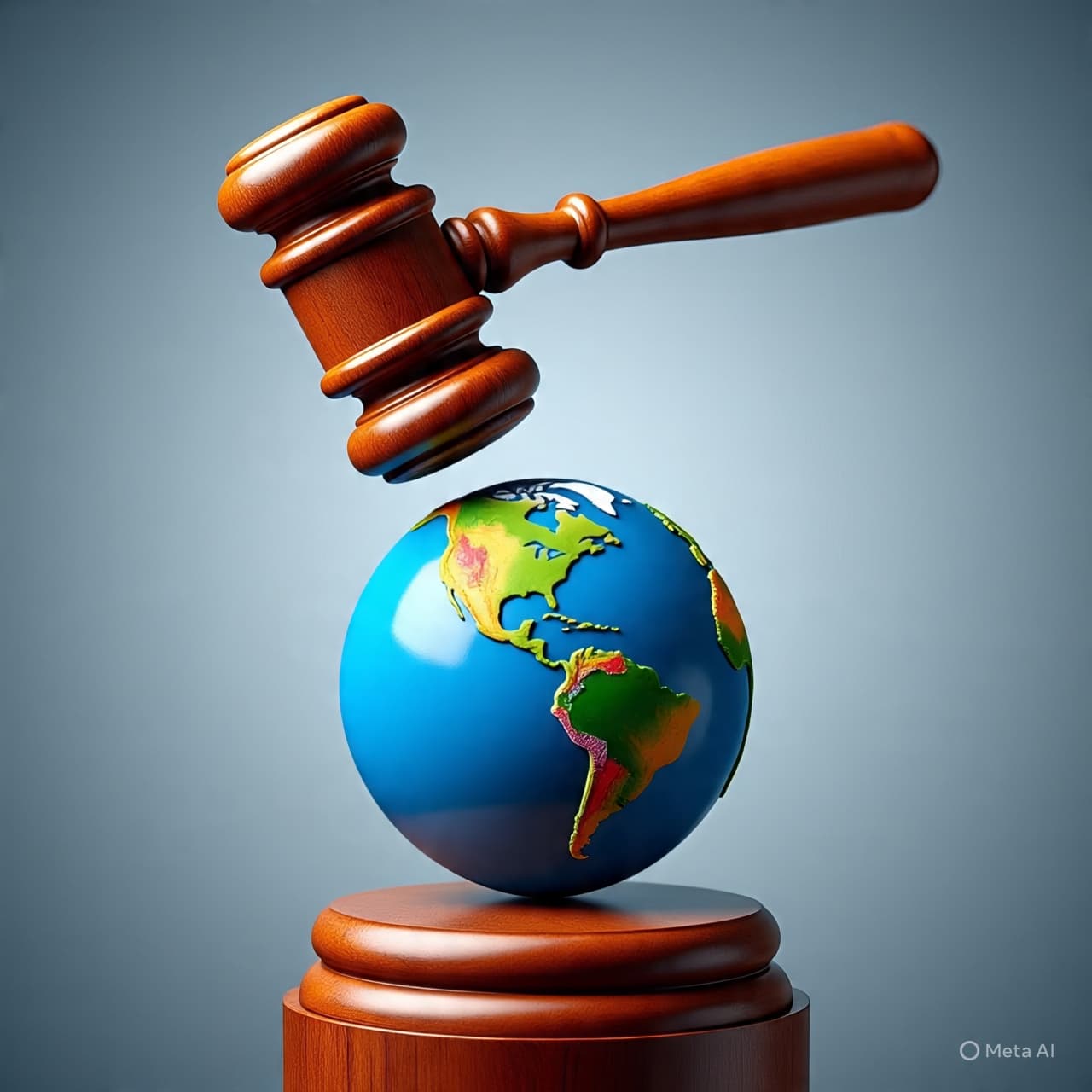
AI Image Disclaimer: Visuals are created with AI tools and intended for conceptual representation — not real photographs.
Sources: NPR, Reuters, The Guardian, KPBS/Public Media, France24
Published by Banx Network. This article is part of the Banx decentralized media programme, powered by the BXE token on the XRP Ledger.