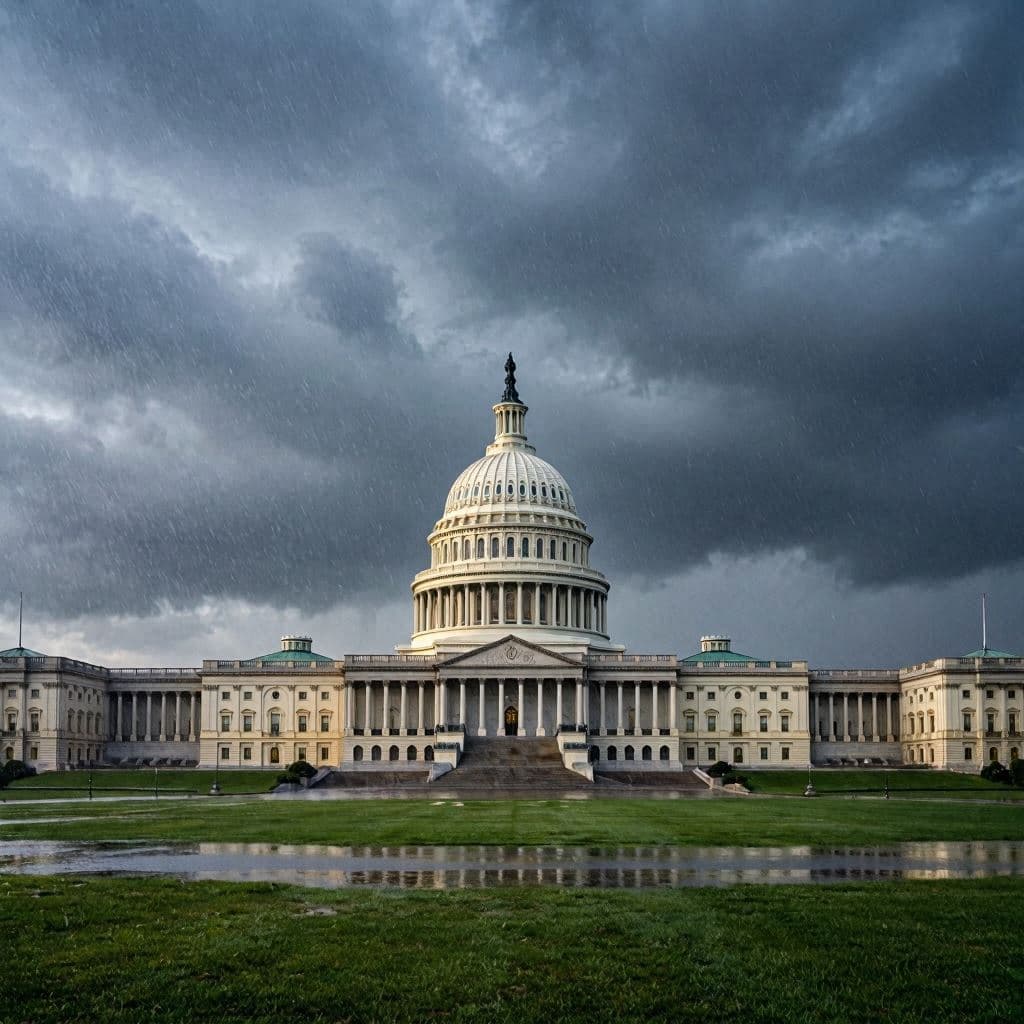
The sky over the nation’s capital often serves as a canvas for political drama, but on this coming Monday, it may paint a different kind of turbulence. Meteorologists are warning that heavy storms could sweep through the Washington D.C. area, bringing with them the threat of flash flooding. As clouds gather and pressure drops, residents are reminded of the raw power of nature, which pays no heed to jurisdictional boundaries or urban planning. It is a moment that calls for preparation and caution, as the rhythm of daily life may be interrupted by the sudden surge of water.
The National Weather Service has issued alerts indicating that intense rainfall could overwhelm drainage systems in low-lying areas. Flash flooding occurs when rain falls faster than the ground can absorb it or rivers can carry it away, creating dangerous conditions in a matter of minutes. For commuters and pedestrians alike, this means that familiar streets could quickly become impassable rivers, requiring vigilance and adaptability.
Historical data suggests that the D.C. region is particularly susceptible to such events due to its mix of impervious surfaces and older infrastructure. When storm drains clog with debris or reach capacity, water has nowhere to go but up. This vulnerability highlights the ongoing challenge of managing urban growth in an era of increasingly unpredictable weather patterns. The city’s resilience is tested not just by the volume of rain, but by the speed at which it arrives.
Local authorities are urging residents to stay informed and avoid driving through flooded roads. The phrase "turn around, don’t drown" is more than a slogan; it is a critical safety guideline. Vehicles can be swept away by surprisingly shallow currents, putting lives at risk. Emergency services are on standby, ready to respond to calls for assistance, but prevention remains the most effective tool against disaster.
For those who work in the federal district, the potential for disruption looms large. Government operations, tourism, and local businesses all depend on smooth transit and accessibility. A significant flood could ripple through the economy, causing delays and cancellations that affect thousands. Yet, there is also a sense of communal readiness, as neighbors check on one another and share updates on social media.
The psychological impact of severe weather should not be underestimated. The anxiety of watching the rain fall, wondering if it will stop or intensify, is a shared experience that binds the community. In these moments, the usual divisions of politics and policy fade, replaced by a common concern for safety and well-being. It is a reminder of our shared vulnerability in the face of natural forces.
As the storm approaches, the city holds its breath. Trees sway in the rising wind, and the air grows thick with moisture. It is a scene of dramatic beauty and潜在 danger, demanding respect and attention. The coming hours will reveal the true intensity of the system, testing the preparedness of both individuals and institutions.
Monday’s forecast serves as a gentle but firm reminder to prioritize safety amidst the chaos of storms. As the DC area braces for potential flash flooding, the collective hope is for minimal damage and a swift return to calm. Nature’s whims are unpredictable, but human preparedness can mitigate their impact.
AI Image Disclaimer: The visuals accompanying this article are AI-generated illustrations designed to represent the themes of urban weather challenges and storm preparedness.
Sources: National Weather Service, Washington Post, NBC Washington, AccuWeather
Published by Banx Network. This article is part of the Banx decentralized media programme, powered by the BXE token on the XRP Ledger.