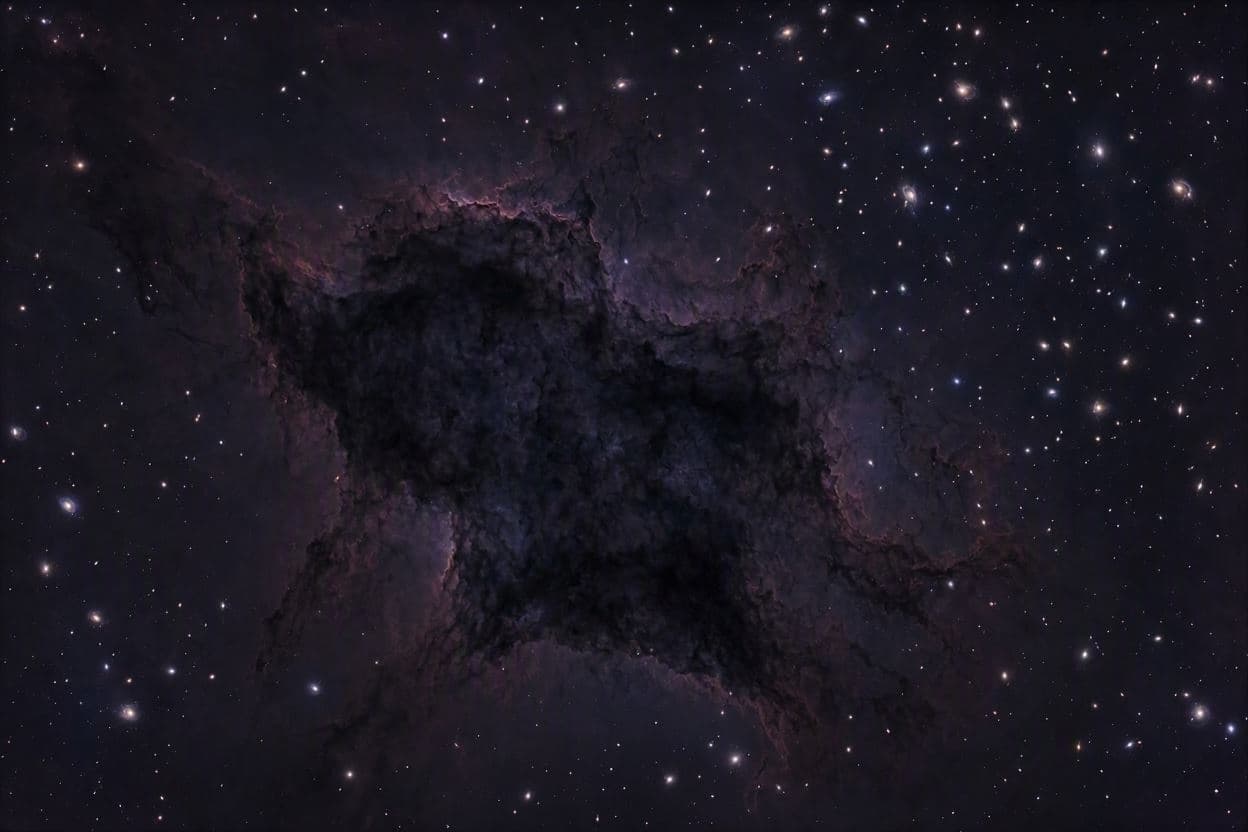
Galaxies are typically defined by their brilliance, vast collections of stars that shine like islands in the dark sea of space. But what if a galaxy existed without its lights? Recent observations of an object nicknamed "Cloud-9" suggest that such entities may indeed roam the universe, challenging our traditional definitions of galactic structure. This starless, gas-rich cloud offers a rare glimpse into the early stages of galaxy formation, or perhaps a relic of a process that never quite ignited.
Discovered initially through radio telescopes detecting hydrogen gas, Cloud-9 has now been studied using the Hubble Space Telescope to search for any faint stellar counterpart. The results were striking: no stars were found. This absence reinforces the idea that Cloud-9 is a "dark galaxy," a halo of dark matter and gas that has failed to form stars due to unknown environmental or internal factors. It stands as a silent witness to the conditions necessary for stellar birth.
The significance of Cloud-9 lies in its potential to explain the missing satellite problem, a discrepancy between the number of dwarf galaxies predicted by cosmological models and those actually observed. If many small halos remain dark and starless, they would be invisible to optical telescopes, detectable only through their gravitational influence or gas emissions. Cloud-9 provides concrete evidence that such objects exist, bridging the gap between theory and observation.
Scientists describe Cloud-9 as a possible RELHIC (Rare, Extremely Low-mass, Hydrogen-rich, Isolated Cloud). Its isolation from larger galaxies means it has not been stripped of its gas or triggered into star formation by tidal interactions. This pristine state allows researchers to study the properties of dark matter halos in their purest form, free from the complexities introduced by stellar feedback and supernova explosions.
The findings also raise questions about the efficiency of star formation in the early universe. Why did some clouds collapse into stars while others, like Cloud-9, remained dormant? Factors such as temperature, density, and the presence of heavy elements may play crucial roles. By analyzing Cloud-9, astronomers hope to uncover the thresholds that determine whether a cloud becomes a shining galaxy or remains a dark shadow.
For the broader scientific community, this discovery validates the importance of multi-wavelength astronomy. Relying solely on visible light would have missed Cloud-9 entirely, highlighting the need for diverse observational tools. Radio, infrared, and optical data together paint a more complete picture of the cosmos, revealing objects that would otherwise remain hidden.
As surveys become more sensitive, more candidates like Cloud-9 may be discovered. Each new find adds to our understanding of the universe’s diversity and the complex processes that shape it. The story of Cloud-9 is just beginning, promising further insights into the nature of dark matter and galaxy evolution.
In the quiet darkness of space, Cloud-9 reminds us that not all structures are meant to shine. Some exist to hold the secrets of formation, waiting patiently for us to listen to their silent story. It is a testament to the unseen forces that govern the cosmos.
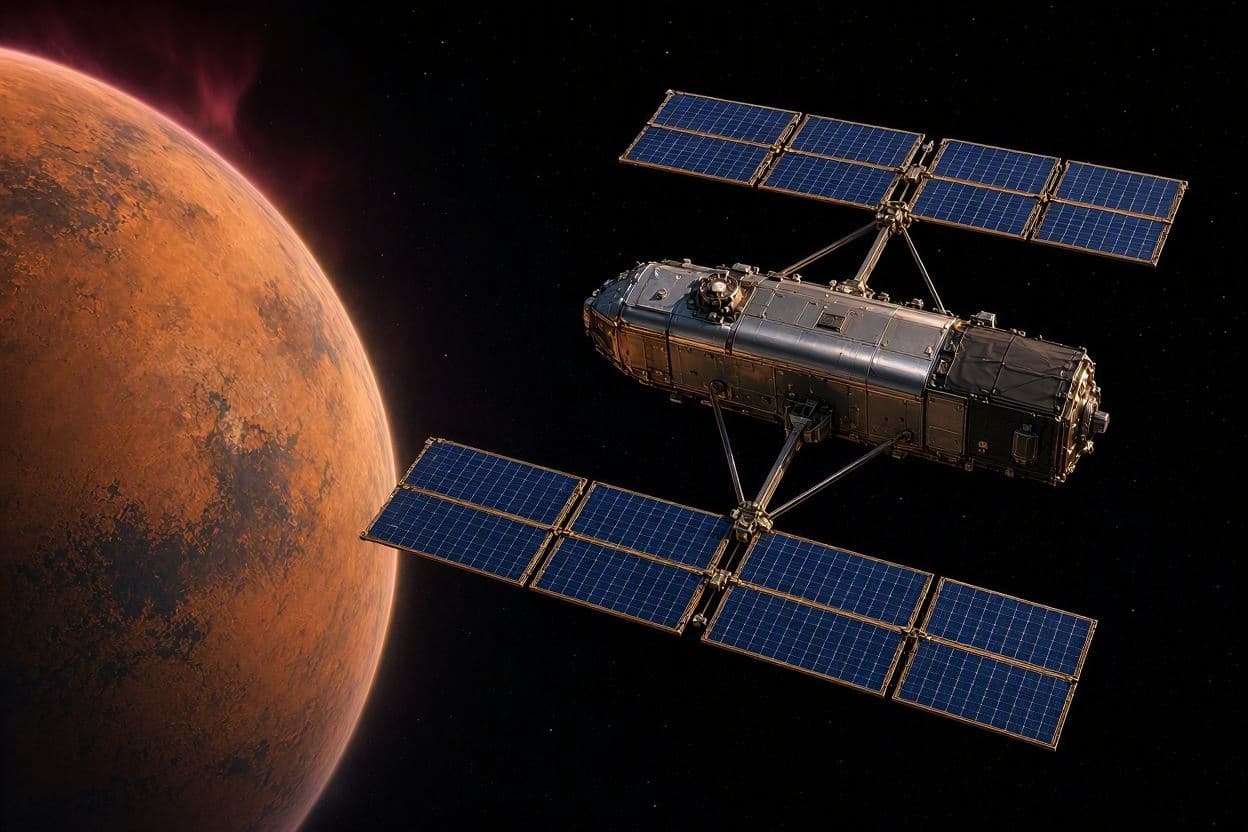
AI Image Disclaimer: Images used in this article are AI-generated to represent the concept of a dark, gas-rich cloud in space, avoiding any depiction of actual telescope images or specific data plots.
Sources: Phys.org, ESA, The Astrophysical Journal, Centauri Dreams
Published by Banx Network. This article is part of the Banx decentralized media programme, powered by the BXE token on the XRP Ledger.