Climate gatherings are often described as meeting points between science, policy, and shared responsibility. Like a wide ocean connecting distant shores, climate challenges bring nations together despite differences in size, resources, and political priorities. As preparations continue for a United Nations climate event in the Pacific, discussions over participation have become part of the broader conversation about cooperation.
Australia may be required to reconsider attendance requirements for a UN climate-related event in the Pacific, according to foreign officials familiar with discussions surrounding the gathering. The issue involves questions about who should be able to participate and how regional voices can be represented in important climate conversations.
Pacific nations have long emphasized that climate change is not only an environmental issue but also a matter closely linked to communities, economies, and national security. Many island countries face challenges from rising sea levels, coastal impacts, and changing weather patterns.
International climate meetings typically involve complex arrangements regarding attendance, representation, and decision-making processes. Organizers must balance practical considerations with the goal of ensuring that countries affected by climate change have opportunities to contribute to discussions.
Australia has played a significant role in regional climate diplomacy due to its geographic position and economic influence in the Pacific. Its relationships with Pacific island nations have included cooperation on climate adaptation, development programs, and regional security.
The Pacific region has increasingly called for greater attention to the experiences of smaller island nations. For many of these countries, climate discussions are closely connected to questions about protecting communities, preserving cultural heritage, and planning for future generations.
Diplomatic discussions about participation requirements are not unusual for major international events. Countries often negotiate ways to create forums that allow meaningful dialogue while managing logistical and organizational challenges.
The upcoming climate gathering represents another opportunity for nations to discuss shared approaches to environmental challenges. The process of organizing the event itself reflects the wider effort required to bring different perspectives together.
As discussions continue, attention remains focused on finding a balance between effective organization and inclusive participation. Climate cooperation depends not only on agreements made at formal meetings but also on ensuring that those most affected have a meaningful place in the conversation.
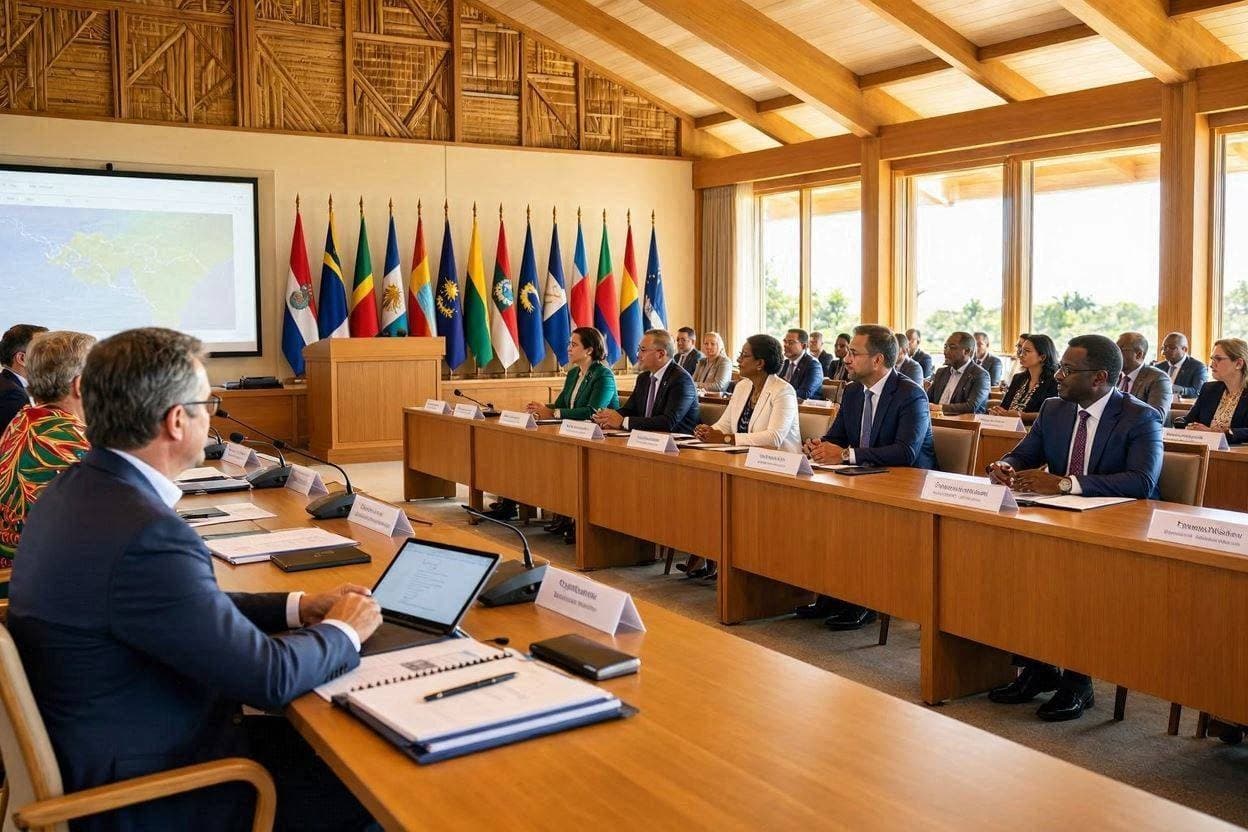
AI Image Disclaimer: The images accompanying this article are AI-generated illustrations showing Pacific climate meetings, diplomatic discussions, and regional environmental landscapes. They are conceptual visuals and are not actual photographs of the event.
Sources:
Reuters United Nations Framework Convention on Climate Change (UNFCCC) ABC News Australia The Guardian Australia Pacific Islands Forum
Published by Banx Network. This article is part of the Banx decentralized media programme, powered by the BXE token on the XRP Ledger.