The moon has long been a symbol of purity and silence, a celestial neighbor untouched by the chaos of Earth. Yet, as humanity’s reach extends into space, even this quiet sanctuary is becoming a repository for our technological debris. Recently, a rocket stage crashed into the lunar surface, an event that offers valuable scientific data but also raises concerns about space pollution. This duality invites reflection on the consequences of exploration and the need for responsible stewardship. It is a moment to balance the thrill of discovery with the duty to protect our cosmic environment.
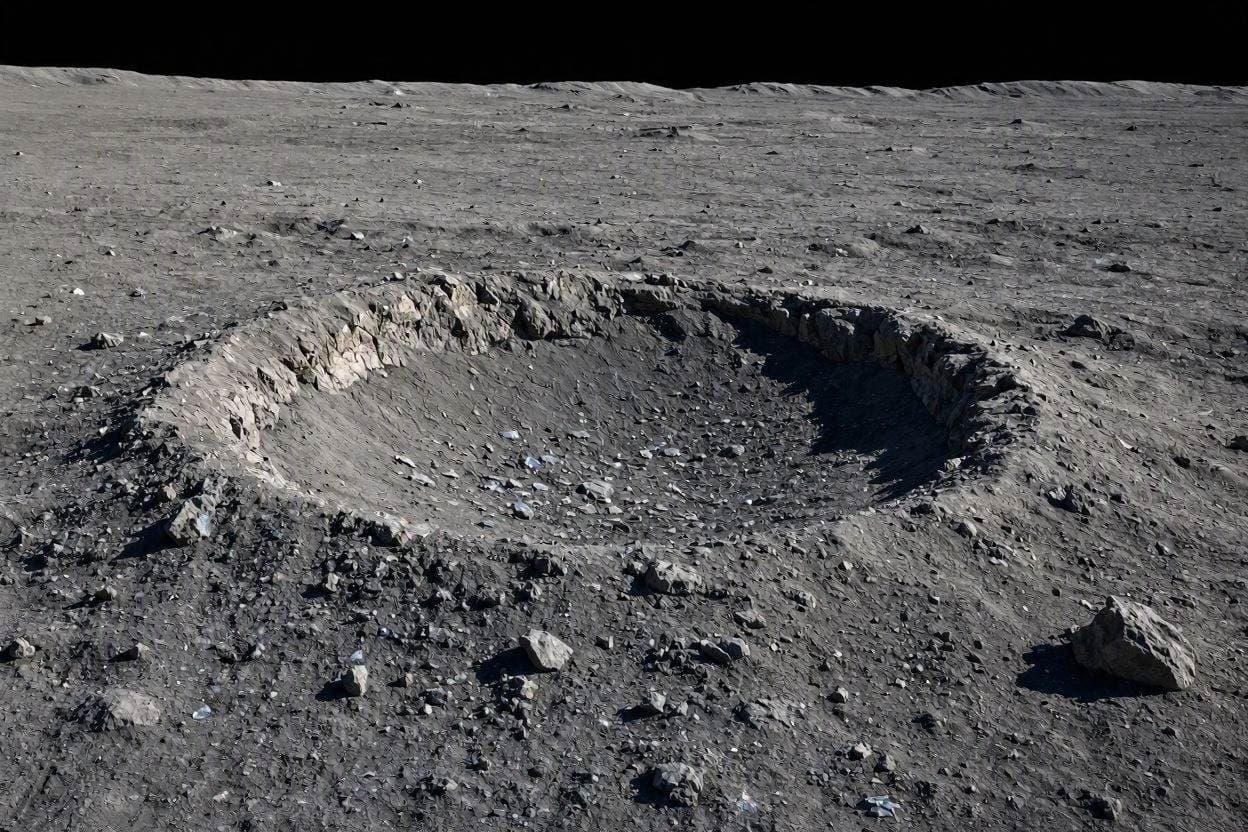
The impact, caused by a spent rocket booster from a past mission, created a crater that scientists are eager to study. By analyzing the ejecta and the shape of the crater, researchers can learn more about the moon’s subsurface composition and structure. Such accidental experiments provide insights that are difficult to obtain through remote sensing alone. The data helps refine models of lunar geology, aiding future landing missions. In this sense, the crash serves a scientific purpose.
However, the incident also highlights the growing problem of space junk. With thousands of satellites and rocket stages orbiting Earth and traveling through the solar system, the risk of collisions and contamination increases. The moon, once pristine, now bears the scars of human activity. Critics argue that leaving debris on other celestial bodies violates principles of planetary protection. It sets a precedent that could lead to further neglect if not addressed.
International guidelines exist to mitigate space debris, but enforcement is challenging. Private companies and national agencies often prioritize mission success over cleanup, citing cost and technical difficulties. The lack of a unified regulatory framework allows for inconsistent practices. As space traffic grows, the need for clear rules becomes urgent. Cooperation is key to sustainable exploration.
Public awareness of space junk is rising, driven by visible events like reentries and crashes. People are beginning to understand that space is not an infinite dump but a shared resource. Education campaigns emphasize the importance of designing missions with end-of-life plans. De-orbiting or moving spacecraft to graveyard orbits can reduce risks. Responsibility must be built into every launch.
For the scientific community, the challenge is to maximize knowledge while minimizing harm. Future missions may include instruments to study impacts in real-time, turning accidents into planned experiments. This approach could satisfy both scientific curiosity and environmental ethics. Innovation is needed to bridge the gap.
A rocket crash on the moon has provided scientific data on lunar geology but also sparked debate over space debris. The incident highlights the need for better regulations and responsible space practices. The hope is for sustainable exploration that respects celestial environments.
AI Image Disclaimer: Visuals associated with this article are AI-generated to illustrate the themes of space exploration and environmental impact.
Sources: NASA SpaceNews The Planetary Society
Published by Banx Network. This article is part of the Banx decentralized media programme, powered by the BXE token on the XRP Ledger.