
Key Highlights
- AI Discovery:Autonomous systems reveal hidden traffic patterns.
- Data Utilization:Extensive datasets enhance urban transportation analysis.
- Urban Planning Impact:Improved models can optimize traffic flow and safety.
Artificial intelligence is transforming the way we understand urban environments, particularly in the realm of traffic management. Modern cities are dynamic entities, with every intersection and roadway contributing to a complex rhythm shaped by millions of daily decisions. Researchers are now leveraging AI to uncover hidden patterns within this movement, patterns that could significantly enhance urban planning and traffic management.
Recent studies have shown that an autonomous AI system has successfully identified previously unrecognized relationships in traffic data. By analyzing large-scale datasets from city transportation networks, including vehicle movements, traffic signals, and road conditions, the AI was able to detect recurring patterns that traditional methods might overlook. This innovative approach marks a significant advancement in how we analyze urban traffic behavior.
The research utilized extensive datasets collected from various urban environments, allowing machine learning models to sift through vast amounts of information. The AI system did not rely on predefined rules; instead, it independently identified trends and relationships that could lead to a deeper understanding of traffic dynamics. This capability is particularly valuable as cities continue to grow and evolve, presenting new challenges for transportation infrastructure.
Importantly, researchers emphasize that this AI system is not intended to replace transportation engineers. Rather, it serves as a powerful analytical tool that can reveal trends and insights that experts can further evaluate using established scientific methods. This collaborative approach between AI and human expertise could lead to more effective urban planning strategies.
The implications of understanding traffic behavior are profound. More accurate models derived from AI analysis can help improve traffic signal timing, reduce congestion, and enhance fuel efficiency. Additionally, these insights can contribute to the development of safer transportation infrastructure, which is crucial in rapidly growing urban areas where the demand for efficient transit solutions is ever-increasing.
Moreover, the findings highlight the potential of AI to contribute to scientific discovery beyond mere prediction. By identifying previously overlooked relationships, AI can assist researchers in generating new hypotheses for future investigations. This capability opens up new avenues for exploration in urban studies and transportation science.
As urban planners continue to explore data-driven decision-making, they are also mindful of the need to maintain privacy and ethical standards. The integration of AI into urban planning processes must be approached with caution, ensuring that the benefits of enhanced analysis do not come at the cost of individual privacy.
While further validation of these findings is necessary before practical implementation, the research illustrates the expanding role of artificial intelligence as a scientific partner. By supporting complex urban planning decisions, AI is poised to play a crucial role in shaping the future of our cities.
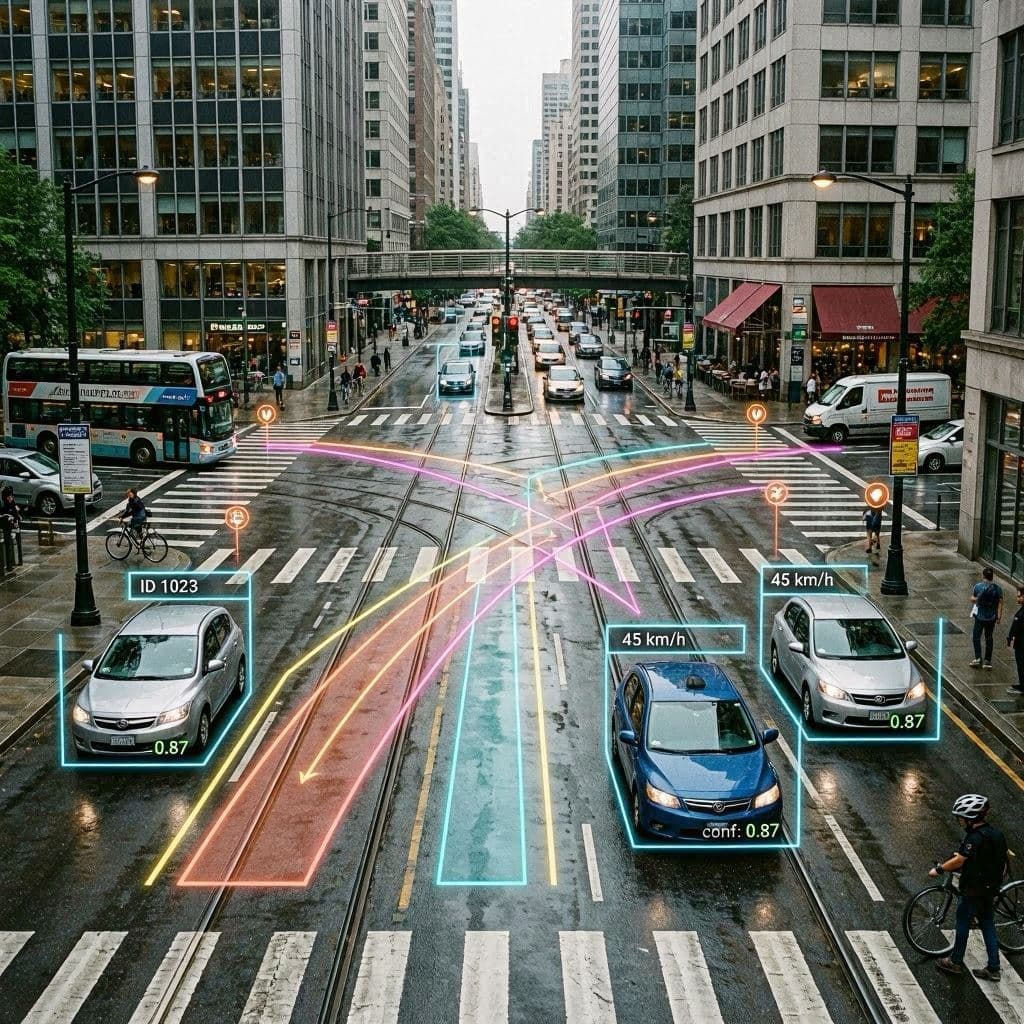
AI-generated image disclaimer: This illustration was generated using AI to support the article visually and is not an actual traffic management image.
Source Verification: arXiv, artificial intelligence research publications
Published by Banx Network. This article is part of the Banx decentralized media programme, powered by the BXE token on the XRP Ledger.



