

Key Highlights
- AI Study:Researchers found AI can identify hidden traffic patterns.
- Data Analysis:The study utilized extensive datasets from multiple cities.
- Future Impact:Findings may enhance urban transportation planning and efficiency.
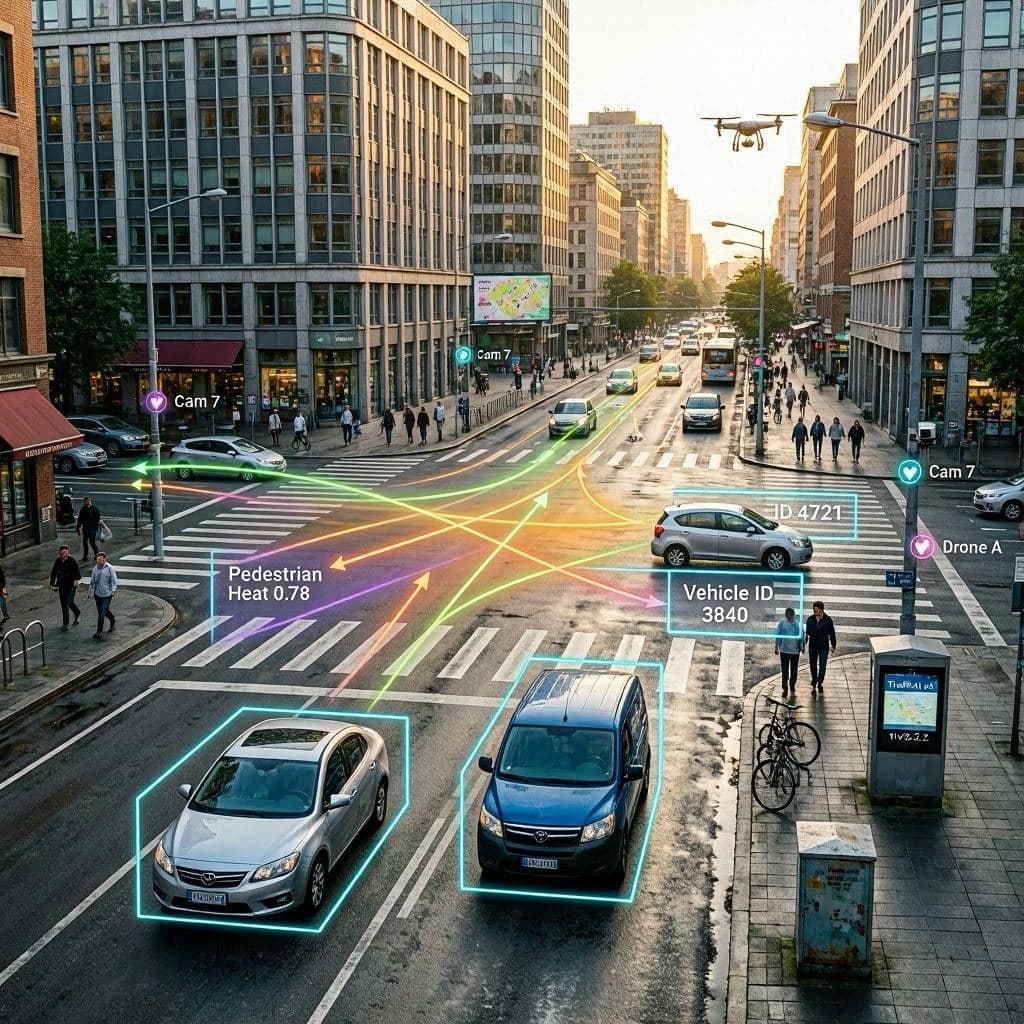
Artificial intelligence is transforming the way cities operate, revealing insights that were previously obscured by the complexity of urban systems. A recent study has demonstrated that AI can uncover hidden patterns in urban traffic behavior, offering a new perspective on how cities manage their transportation networks. By analyzing vast amounts of data, AI systems are beginning to identify relationships and trends that human-designed models might overlook.
The research involved a comprehensive analysis of transportation data from various cities, focusing on key metrics such as vehicle movement, traffic density, travel times, and road network characteristics. By processing these extensive datasets, the AI was able to identify mathematical relationships that consistently describe traffic flow under different conditions. This capability marks a significant advancement in how urban planners can approach traffic management.
One of the primary implications of this research is its potential to improve future transportation planning. With better predictive models, city officials could optimize traffic signal timing, reduce congestion, and enhance emergency response routes. Furthermore, the findings could lead to more efficient public transportation systems, ultimately improving the daily commute for millions of urban residents.
The study also highlights a broader role for artificial intelligence in scientific discovery. Rather than merely serving as a tool for automation, AI is increasingly being recognized as a collaborator in research. It assists scientists in identifying meaningful patterns within complex datasets, which may otherwise remain hidden. This shift in perspective underscores the importance of AI in advancing urban studies and related fields.
However, experts caution that the practical implementation of these findings will require extensive validation. Urban environments differ significantly in terms of geography, population density, driving behavior, and public transportation availability. Therefore, careful evaluation across diverse cities and infrastructure conditions is essential to ensure that AI-driven solutions are effective and applicable in real-world scenarios.
Looking ahead, future research will explore whether similar AI methodologies can enhance energy efficiency, reduce vehicle emissions, and contribute to the development of smart cities. These cities would be capable of dynamically responding to changing transportation demands, further improving urban living conditions.
In conclusion, this study illustrates how artificial intelligence is evolving into a collaborative scientific tool that can uncover hidden relationships within everyday systems. As AI continues to advance, it opens up new opportunities for research and innovation that may ultimately lead to significant improvements in urban life.
AI Image Disclaimer: Visuals included with this article were generated using AI to illustrate transportation research concepts and do not depict actual study locations.
Published by Banx Network. This article is part of the Banx decentralized media programme, powered by the BXE token on the XRP Ledger.




