
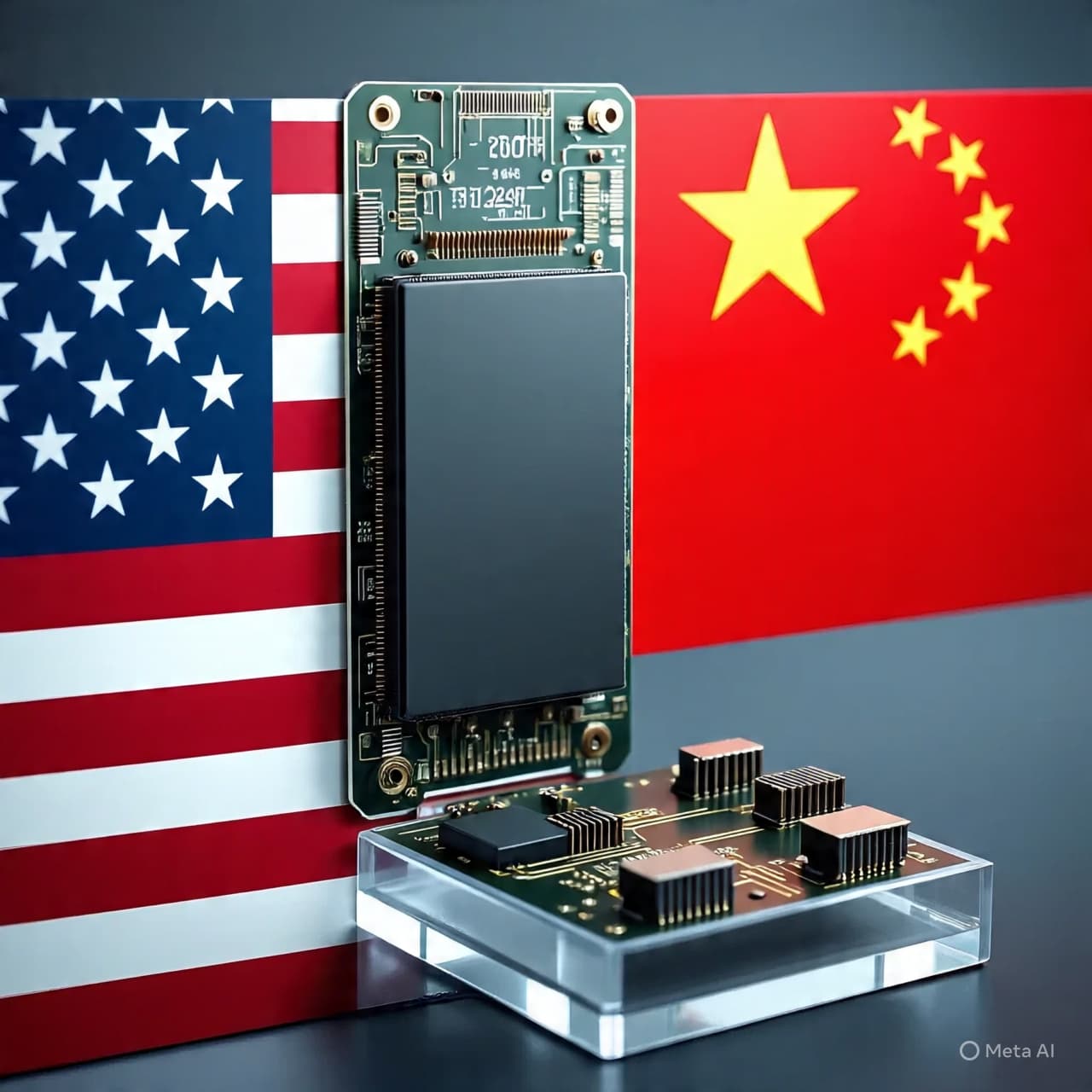
In the high-stakes arena where technology and geopolitics intersect, a quiet but significant shift has unfolded. For years, advanced American artificial intelligence chips were tightly restricted from export to China — seen as both a strategic asset and a national security concern. Yet, in recent days, the U.S. government has taken a notable step by approving the sale of Nvidia’s advanced H200 AI processors to Chinese customers under a set of carefully crafted conditions. This decision, like a calibrated turn in a complex dance, reflects evolving priorities in economic interests and strategic caution.
At the heart of the development is a revised licensing framework adopted by the U.S. Commerce Department’s Bureau of Industry and Security, which replaces a blanket prohibition with case-by-case review for advanced chips destined for China. Under the new rule, exports are permitted only if stringent requirements are met: the chips must be independently tested in the United States to verify their technical capabilities; Nvidia must demonstrate that there is sufficient supply for domestic use; and Chinese buyers must detail security measures to safeguard against misuse. Additionally, Beijing may not receive more than 50 % of the volume supplied to U.S. customers for the same product category.
The shift marks a departure from earlier export control policies designed to forestall China’s access to critical AI technologies that could enhance its own research, economic muscle, or military capabilities. While the H200 processor falls just below the very top tier of Nvidia’s most cutting-edge chips, it remains a powerful AI engine — sought after by firms pushing the limits of machine learning and data analytics. By authorizing these exports with safeguards, Washington appears to be threading a delicate needle: balancing commercial opportunity for U.S. firms with geopolitical and security considerations.
Not everyone views this move through the same lens. Proponents argue that allowing controlled exports will strengthen U.S. chipmakers’ competitiveness in China’s massive technology market and help sustain American influence over global tech standards. Critics, however, worry that even this calibrated access could inadvertently accelerate China’s AI development and erode parts of American technological leadership. Such debates underscore the broader tension in U.S.–China relations: how to navigate cooperation and competition in an era defined by rapid technological change.
For Nvidia, the approval opens a long-awaited commercial avenue — especially as Chinese customers have reportedly placed sizable orders for H200 chips. Yet the company must now work within the new regulatory framework while awaiting import clearances and compliance with both U.S. and Chinese rules. Whether this compromise proves a sound policy balance or a prelude to fresh contention will be watched closely by governments, investors, and technologists alike.
AI Image Disclaimer “Illustrations were produced with AI and serve as conceptual depictions, not real photographs.”
Sources Reuters AOL News Interesting Engineering South China Morning Post Bloomberg
Published by Banx Network. This article is part of the Banx decentralized media programme, powered by the BXE token on the XRP Ledger.



