Before a rocket ever leaves the ground, there is a stillness. It rests on the launch pad like a question waiting to be answered, surrounded by scaffolding and sky. The engineers move carefully. The countdown clocks glow quietly. In that suspended moment, the future feels both fragile and immense. This is the atmosphere surrounding Artemis II, a mission that carries not only astronauts but the weight of renewed lunar ambition.
Artemis II will be the first crewed mission of NASA’s Artemis program, a sweeping effort to return humans to the Moon and prepare for eventual journeys to Mars. Unlike its predecessor, Artemis I—which flew uncrewed to test systems—this mission will send four astronauts on a voyage around the Moon and back to Earth. It is not a landing, but a flyby, a rehearsal in deep space that reintroduces humanity to lunar orbit after more than half a century.
According to , Artemis II will launch aboard the Space Launch System (SLS), the most powerful rocket the agency has developed since the Saturn V era. Atop it will sit the Orion spacecraft, designed to carry astronauts farther from Earth than any spacecraft built for regular crewed missions. Together, they form the backbone of a program intended to establish a sustainable presence on and around the Moon.
The crew includes three NASA astronauts and one Canadian astronaut, reflecting the international nature of modern space exploration. Their journey is expected to last roughly ten days, carrying them on a free-return trajectory that loops around the Moon before gravity guides them safely back toward Earth. It is a path both elegant and practical, one that allows the spacecraft to return home even if propulsion systems fail.
Publications such as and have detailed how Artemis II will test life-support systems, navigation, propulsion, and communication in deep space conditions. These are not abstract technicalities; they are the quiet foundations of survival beyond low Earth orbit. Radiation exposure, thermal control, and precise re-entry angles all become central concerns once a spacecraft ventures hundreds of thousands of miles from home.
The mission also carries symbolic resonance. The last time humans traveled beyond Earth orbit was during the Apollo program in the early 1970s. Coverage in outlets like and has emphasized how Artemis II represents a generational bridge—linking the legacy of Apollo with a more diverse, internationally collaborative future.
Unlike Apollo’s sprint to the Moon, Artemis envisions a longer stay. Artemis III is planned to attempt a lunar landing, including the first woman and the first person of color on the Moon. Artemis II, therefore, is both a proving ground and a promise. Its success would clear the path for more ambitious steps, including the development of the Gateway lunar space station and expanded scientific exploration.
Technically, the mission will push the Orion spacecraft through high-speed re-entry upon return to Earth. Engineers will monitor how its heat shield performs under the intense friction generated by lunar-return velocities. Data collected during Artemis II will inform adjustments for subsequent missions, ensuring that each step outward is grounded in careful measurement.
The launch timeline has shifted over time as NASA completes testing and integration milestones. Spaceflight, by its nature, resists haste. Schedules adjust to reflect engineering realities, safety reviews, and system refinements. Artemis II’s target window currently points toward the near future, pending final preparations and readiness assessments.
In recent briefings, NASA officials have reiterated that Artemis II remains central to the agency’s roadmap for deep space exploration. Training for the crew is ongoing, simulations continue, and hardware assembly progresses. The mission stands as a deliberate stride rather than a dramatic leap—a reminder that exploration often unfolds through methodical preparation.
As the rocket waits and the countdown edges closer, Artemis II embodies both memory and momentum. It recalls a time when lunar voyages captured the world’s imagination, and it gestures toward a future in which such journeys may become more routine. For now, what we know is this: four astronauts will circle the Moon, test the systems meant to carry humanity farther still, and return with data that shapes the next chapter of space exploration.
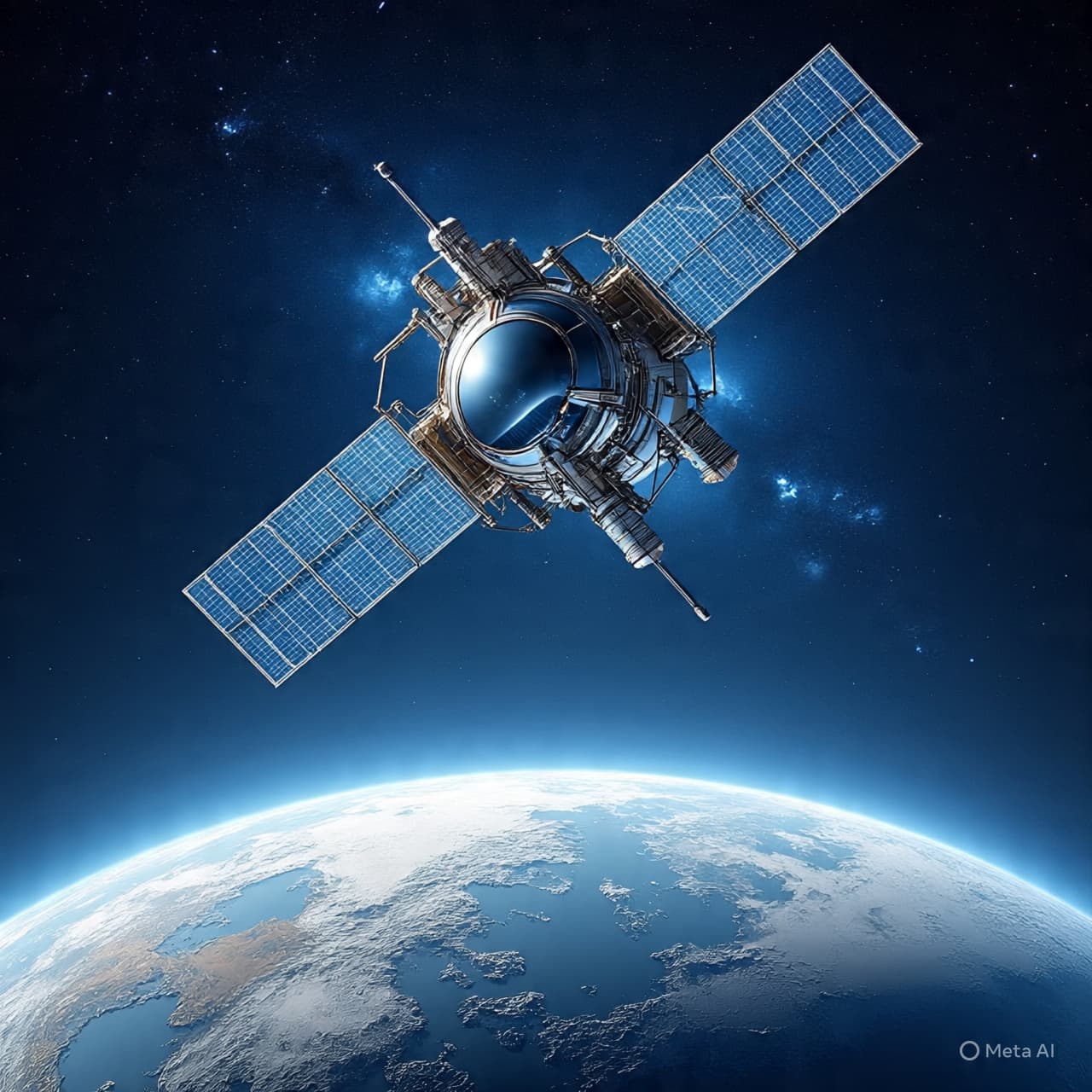
AI Image Disclaimer
Illustrations were produced with AI and serve as conceptual depictions.
Source Check:
Credible mainstream and niche sources covering NASA’s Artemis II mission include:
NASA
Space.com
The New York Times
BBC News
Ars Technica
Published by Banx Network. This article is part of the Banx decentralized media programme, powered by the BXE token on the XRP Ledger.