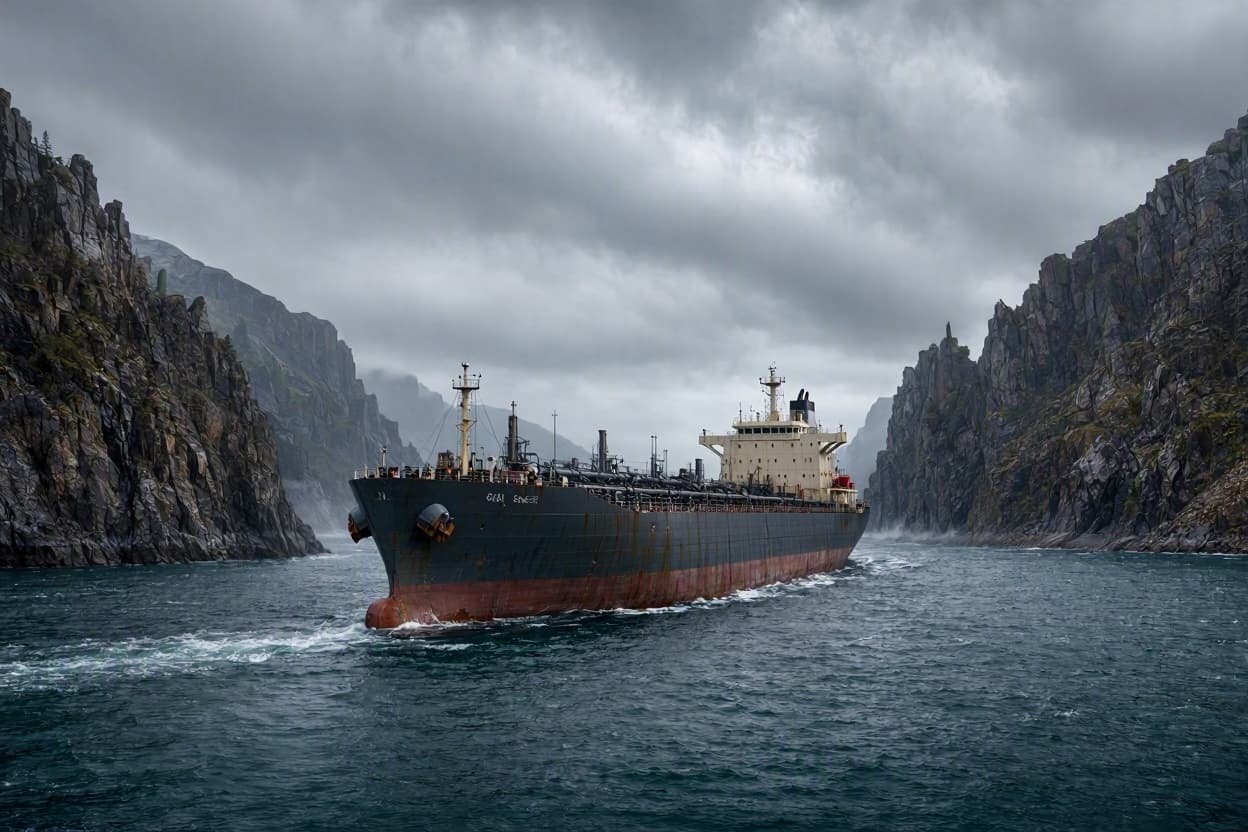
The Strait of Hormuz is often described as the jugular vein of the global oil trade, a narrow waterway where the world’s energy security hangs in a delicate balance. Recently, tensions in this critical passage have intensified as Iran issued a stark warning to forty-five international tankers. The threat of fines and potential confiscation for vessels deemed to have violated transit rules marks a significant escalation in maritime diplomacy, reminding the world of the fragility of the routes that power modern economies.
The Iranian authorities announced that the blacklisted tankers had failed to comply with specific regulations governing passage through the strait. While the exact nature of these violations was not detailed in full, they are believed to relate to mandatory reporting procedures and designated shipping lanes enforced by the Persian Gulf Strait Authority. For Tehran, this move is framed as an assertion of sovereignty and a necessary measure to ensure safety and order in its territorial waters.
For the shipping industry, the announcement sends ripples of uncertainty. Tanker operators now face the prospect of financial penalties or even the seizure of their vessels on future voyages. This creates a complex logistical challenge, as companies must navigate not only international law but also the unilateral demands of regional powers. The risk of detention adds a layer of insurance cost and operational delay that could ultimately impact global fuel prices.
The timing of this escalation coincides with broader geopolitical strains in the Middle East. Recent months have seen increased military posturing and diplomatic friction between Iran and Western nations. The threat against commercial vessels is viewed by many analysts as a lever in this larger game, a way for Iran to demonstrate its ability to disrupt global trade if its political or economic interests are threatened by sanctions or isolation.
International reaction has been one of concern. Major maritime nations and energy-importing countries rely on the free flow of traffic through Hormuz, which handles about a fifth of the world’s oil consumption. Any disruption or perceived coercion in the strait is closely monitored by naval forces and diplomatic corps alike. The United States and its allies have previously emphasized the importance of freedom of navigation, setting the stage for potential countermeasures or diplomatic protests.
Despite the harsh rhetoric, actual confiscations remain rare due to the severe economic repercussions they would trigger. However, the mere possibility serves as a powerful deterrent and a tool for negotiation. Ship captains are advised to exercise extreme caution, ensuring strict adherence to all local reporting requirements to avoid becoming targets in this high-stakes environment.
The situation highlights the ongoing vulnerability of global supply chains to regional conflicts. As long as political tensions persist, the Strait of Hormuz will remain a flashpoint where local disputes can have worldwide consequences. The international community continues to call for restraint and dialogue to prevent accidental escalations that could spiral into broader conflict.
The threat against forty-five tankers underscores the persistent volatility of the Strait of Hormuz. It serves as a reminder that in the intricate web of global energy trade, political decisions can quickly translate into maritime risks, requiring constant vigilance and diplomatic engagement.
AI Image Disclaimer: Please note that any accompanying illustrations for this piece are AI-generated representations intended to evoke the mood of the described events.
Sources: Reuters, The Financial Express, Türkiye Today, Marine Insight
Published by Banx Network. This article is part of the Banx decentralized media programme, powered by the BXE token on the XRP Ledger.