
Key Highlights
- Incident:China and the Philippines exchanged accusations over a recent encounter in the South China Sea.
- Location:The standoff centers on Sandy Cay, a contested unoccupied sandbar.
- Response:Manila plans to send ships to counter Chinese vessels conducting alleged illegal research.
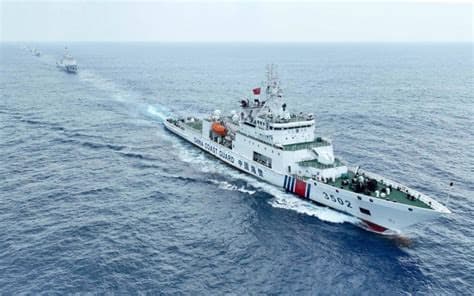
The ongoing tensions between China and the Philippines have reached a new peak following a recent encounter in the South China Sea. Both nations have publicly traded accusations, with China asserting that its coast guard identified five Philippine personnel who landed on Sandy Cay, labeling the action as 'illegal.' This incident is part of a broader pattern of escalating confrontations in the region, where territorial disputes have long been a source of friction.
Sandy Cay, an unoccupied sandbar, has become a focal point of contention between the two nations. The Philippines has historically claimed rights to the area, while China has increasingly asserted its presence in the South China Sea, often leading to confrontations between their respective coast guards. The Philippine government has expressed its determination to protect its territorial claims, stating that it will dispatch ships to drive away Chinese vessels that it accuses of conducting illegal research in the area.
In response to the accusations, Chinese officials have not provided detailed comments but have reiterated their stance on the legality of Philippine actions. The lack of immediate dialogue between the two nations raises concerns about the potential for further escalation in the region. Analysts warn that such encounters could lead to miscalculations that might spiral into more serious confrontations.
The South China Sea is a critical maritime region, rich in resources and vital for international shipping routes. Both China and the Philippines, along with other Southeast Asian nations, have competing claims over various parts of the sea, leading to a complex web of diplomatic and military tensions. The recent incident underscores the fragile nature of peace in the region and the need for diplomatic solutions to resolve these disputes.
As the situation develops, the international community is closely monitoring the actions of both nations. The United States and other allies have expressed support for the Philippines, emphasizing the importance of upholding international law and freedom of navigation in the South China Sea. The outcome of this latest encounter could have significant implications for regional stability and the future of maritime disputes in the area.
Published by Banx Network. This article is part of the Banx decentralized media programme, powered by the BXE token on the XRP Ledger.



