
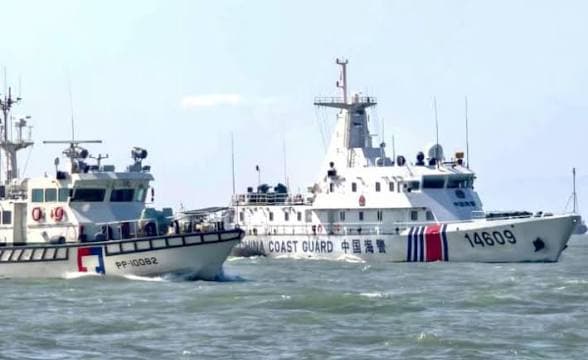
Key Highlights
- China has launched a special maritime operation near Taiwan, raising regional tensions.
- The operation includes military exercises aimed at asserting claims over the island.
- Taiwan has increased its military readiness in response to the operation.
China has commenced a special maritime operation in the waters surrounding Taiwan, a development that raises alarms in Taipei and among regional stakeholders. This operation involves a concerted military presence and naval exercises aimed at demonstrating China's capabilities and asserting its claims over the island. The timing of this operation is critical, as it follows a series of provocative actions from both sides, including increased military drills by China and calls for Taiwan's defense preparedness.
Chinese officials have characterized the operation as a legitimate response to what they perceive as foreign interference in China's internal matters. They specifically cite U.S. arms sales to Taiwan and diplomatic engagements as provocations that necessitate a show of strength. This rhetoric underscores the ongoing tensions in the Taiwan Strait, where both sides have ramped up military activities in recent months.
In response to the operation, Taiwan's government has taken significant steps to bolster its military readiness. Officials in Taipei are urging a unified stance among allies against any potential aggression from China. The Taiwanese defense ministry has stated that it is closely monitoring the situation and is prepared to respond to any threats. This proactive approach reflects Taiwan's commitment to maintaining its sovereignty and security in the face of increasing pressure from Beijing.
Experts warn that such military exercises could lead to miscalculations or unintended confrontations, further escalating tensions in the Taiwan Strait. The potential for conflict is heightened by the proximity of military assets from both sides, which could result in dangerous encounters at sea or in the air. Analysts emphasize the need for clear communication channels to prevent misunderstandings that could spiral into conflict.
The international community, particularly the United States, has expressed concern over the implications of this operation. U.S. officials have reiterated their commitment to Taiwan's self-defense, emphasizing the need for peace and stability in the region. The U.S. has also called for restraint from both China and Taiwan, urging dialogue to resolve tensions peacefully.
As the situation unfolds, regional security analysts will be closely monitoring the implications of China's maritime operation and the responses it provokes from Taiwan and its allies. The stakes are high, as any misstep could have far-reaching consequences not only for Taiwan and China but also for the broader geopolitical landscape in the Asia-Pacific region. The ongoing developments will likely shape the future of cross-strait relations and influence U.S. foreign policy in the area.
Published by Banx Network. This article is part of the Banx decentralized media programme, powered by the BXE token on the XRP Ledger.



