
Key Highlights
- China accused Japan of harassment during military drills in the Pacific.
- The Liaoning carrier group returned home after over 40 days of training.
- Japan rejected the accusations, asserting its right to monitor surrounding waters.
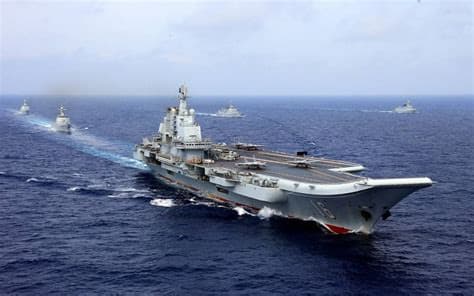
China has recently accused Japan of "harassing" its aircraft carrier strike group during joint military drills monitored by both Japan and the United States in the Pacific. The Chinese government described Japan's actions as close-range tracking and surveillance, labeling them as "provocative harassment." This incident has further strained the already tense relations between the two nations, which have been increasingly focused on military activities and regional security issues.
According to reports from Chinese state media, the Liaoning carrier flotilla returned to its home port around June 22 after completing a significant period of "far-sea combat training" that lasted over 40 days. The Chinese allegations came in response to Japan's earlier statements indicating that it had conducted vigilance and surveillance operations in the surrounding waters and airspace during the drills.
Japan's response was swift, with officials categorically rejecting the accusations. The Japan Joint Staff stated that Chinese state media had misrepresented the actions of the Japan Self-Defense Forces, claiming that they were interfering with or provoking Chinese naval vessels, including the Liaoning carrier group. Japan emphasized that these claims were "not true" and reiterated its commitment to maintaining professional and steady surveillance to ensure national sovereignty and security.
The ongoing dispute between China and Japan is emblematic of the broader tensions in the region, particularly concerning military activities in the Pacific. Both nations have been ramping up their military capabilities and presence in the area, leading to increased scrutiny and vigilance from each side. The situation is further complicated by the involvement of the United States, which has been strengthening its alliances in the region to counter China's growing influence.
As the geopolitical landscape continues to evolve, the implications of this incident may resonate beyond just China and Japan. The international community is closely monitoring the developments, as any escalation could have significant repercussions for regional stability and security. The relationship between these two nations remains a critical factor in the dynamics of the Asia-Pacific region, and how they navigate these tensions will be crucial in the coming months.
Published by Banx Network. This article is part of the Banx decentralized media programme, powered by the BXE token on the XRP Ledger.



