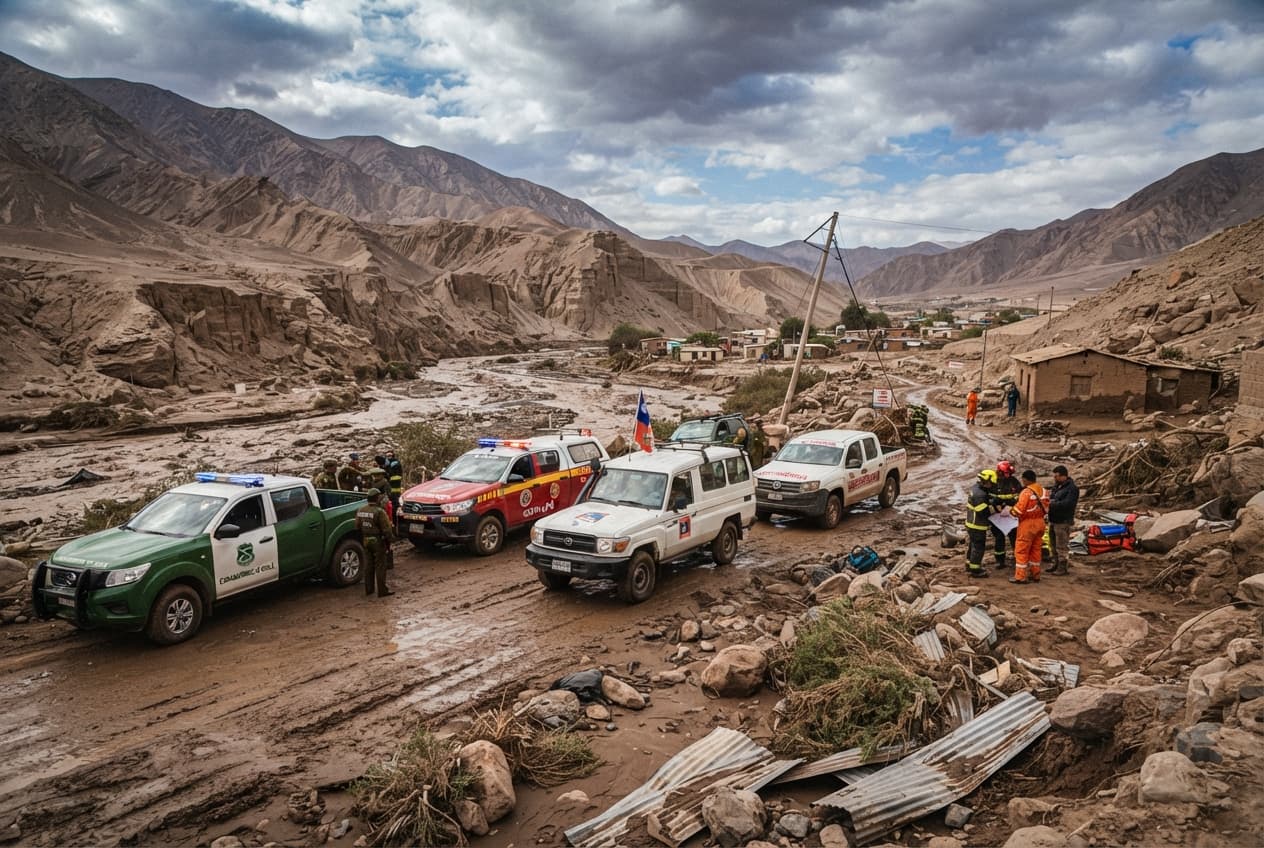
Santiago, Chile—Sudden flash floods tore through the arid desert valleys of northern Chile on September 28, 2026, catching residents and local authorities off guard as walls of water surged through typically dry terrain. The rapid inundation overwhelmed local drainage paths and low-lying settlements, transforming dry riverbeds into violent torrents within minutes. Emergency services rushed to the affected zones as reports of missing individuals emerged from isolated communities cut off by the rising waters.
Local emergency management coordinators deployed rescue units to the worst-hit valley sectors as soon as communication lines permitted initial damage assessments. Search operations faced severe hurdles due to ongoing debris flows and unstable terrain left behind by the fast-moving water. Teams utilized ground patrols and heavy equipment to clear blocked access routes, enabling medical personnel to reach areas impacted by the sudden environmental shock.
Official reports confirmed that one person lost their life during the height of the flash flood event, succumbing to injuries sustained when the rushing water breached residential perimeters. Two other local residents remained unaccounted for as night fell over the desert region. Search and rescue personnel continued combing downstream channels and accumulated sediment banks in an effort to locate the missing individuals before conditions deteriorated further.
The unexpected deluge struck without extensive warning, overwhelming municipal infrastructure that rarely encounters high-volume precipitation events. Residential structures built along historical runoff paths sustained heavy structural damage, with foundational walls undermined by the force of the water. Local authorities established temporary reception centers for displaced families who lost their homes and personal belongings to the sudden surge.
Regional infrastructure suffered extensive setbacks as rural bridges and secondary roads sustained severe structural compromises from floating debris and battering currents. Utility poles toppled in several sectors, cutting off electrical power and halting local communications. Maintenance crews mobilized emergency generators and repair materials to restore basic services, prioritizing medical facilities and municipal coordination centers.
Agricultural plots situated along the valley floors experienced total crop inundation, wiping out local seasonal yields and destroying irrigation networks. Farmers reported heavy losses of equipment and stored supplies as the muddy torrents swept across cultivated fields. Agricultural extension officers initiated damage surveys to estimate the total economic impact on local farming families who depend on the fragile desert ecosystem.
State disaster response agencies elevated alert levels across neighboring provinces to prepare for potential secondary weather systems moving down from the Andean foothills. National authorities coordinated logistical support to deliver potable water, food rations, and blankets to affected communities. Contingency plans remained active as weather monitoring stations tracked persistent atmospheric instability lingering over the northern territory.
Rescue coordination centers maintained round-the-clock operations, directing ground teams along the riverbanks and coordinating aerial reconnaissance flights where weather permitted visibility. Emergency personnel focused their immediate objectives on stabilizing vulnerable slopes and preventing further civilian entry into high-risk flood zones. Search teams pressed forward into the dark hours, awaiting daylight to expand the perimeter of their active sweep for the remaining missing persons.
Published by Banx Network. This article is part of the Banx decentralized media programme, powered by the BXE token on the XRP Ledger.