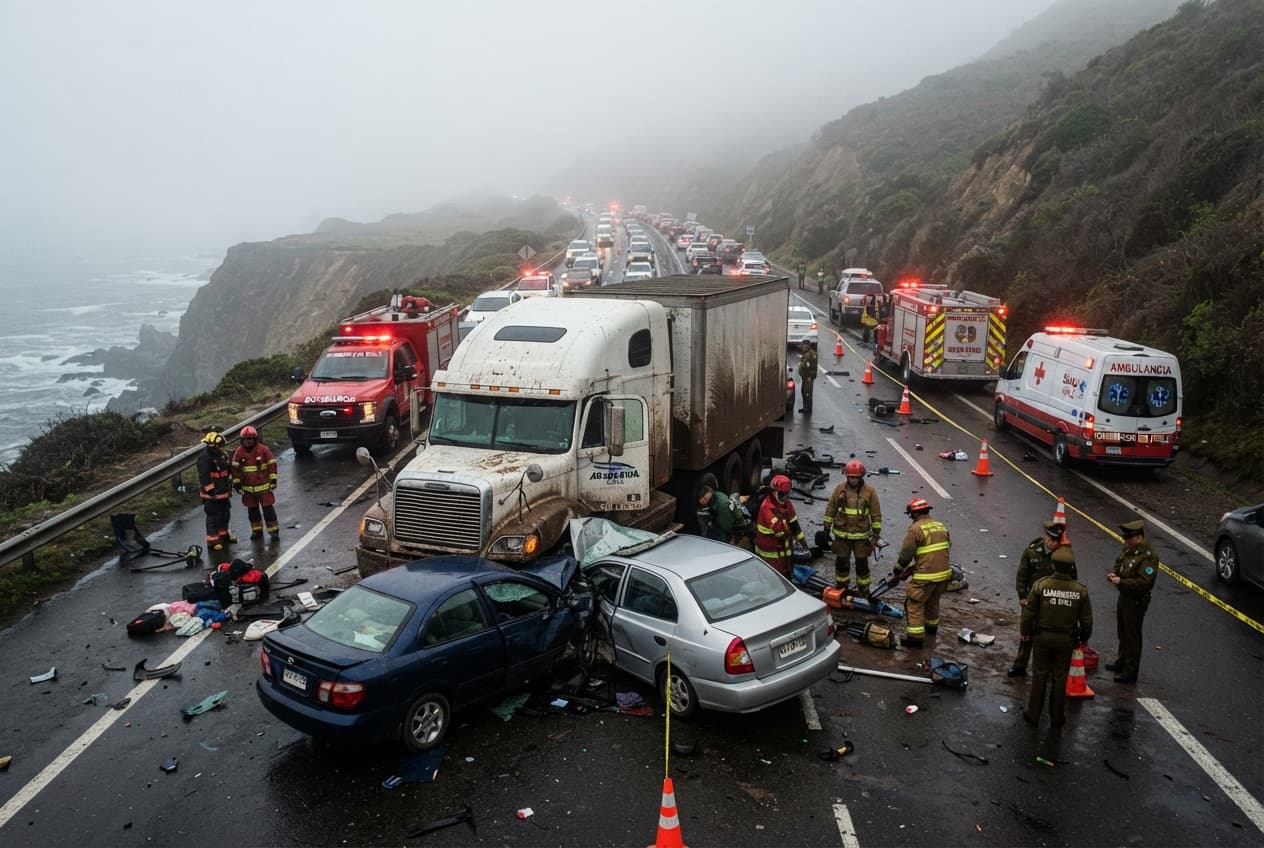
Valparaíso, Chile—A massive multi-vehicle pile-up engulfed a fog-shrouded coastal highway early Monday morning, resulting in multiple fatalities and dozens of injuries. Dense marine fog reduced visibility to near zero just as morning commuter traffic reached its peak velocity along the oceanfront corridor. A commercial freight truck slammed into the rear of a stalled commuter car, touching off a chain-reaction collision involving more than twenty vehicles. Screams echoed through the thick mist as trapped motorists attempted to escape burning engine compartments and crumpled chassis.
Emergency dispatchers flooded the regional lines as fire units and ambulances raced against time to penetrate the dense traffic gridlock. Paramedics set up triage stations directly on the asphalt, treating patients suffering from smoke inhalation, severe burns, and blunt force trauma. Heavy rescue teams used hydraulic spreaders to pry open crushed doors and extract unconscious occupants from vehicles buried beneath semi-truck trailers. Local hospitals activated emergency response protocols, recalling off-duty surgical teams to handle the sudden influx of critical trauma cases.
State highway police closed a ten-mile section of the coastal route, diverting commercial freight through winding interior roads and causing massive transit delays. Meteorological officials confirmed that seasonal coastal inversion layers created sudden visibility drops that caught drivers completely off guard. Transport union representatives immediately criticized the lack of automated fog warning systems and electronic speed reduction signage along the coastal corridor. Investigators scanned the wreckage for dashcams that might shed light on the initial braking speeds before the collision sequence began.
Heavy tow trucks struggled for hours to separate interlocking cars and clear the scorched asphalt of debris and spilled fuel. Forensic teams combed through the fog-drenched wreckage, tagging personal belongings and marking bodies before transport to the morgue. Regional authorities faced sharp questioning from victims' families regarding why the highway was not closed earlier given the severe weather advisories. Maintenance crews examined guardrails and lighting fixtures to assess structural damage caused by the series of high-speed impacts.
Medical centers issued urgent bulletins requesting immediate blood donations to maintain supplies for patients undergoing emergency surgeries throughout the night. Police investigators continued interviewing surviving drivers and passengers capable of recounting the terrifying sequence of events inside the blinding fog. State prosecutors launched a comprehensive inquiry into potential negligence by transport operators and highway maintenance contractors. Traffic restrictions remained in place across the affected zone as technical experts completed their final phase of site reconstruction.
Published by Banx Network. This article is part of the Banx decentralized media programme, powered by the BXE token on the XRP Ledger.