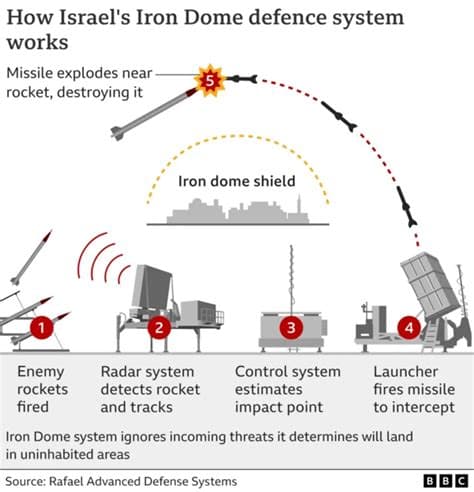
Israel's Iron Dome air-defense system is facing new challenges posed by cheap attack drones, particularly those used by Hezbollah militants. Reports indicate that these inexpensive drones, which can cost as little as €400, have begun successfully breaching the defenses traditionally safeguarded by Israel’s multi-billion euro technology.
A video surfaced this past week, allegedly showing an explosive-laden drone impacting an Iron Dome battery. While the video's authenticity remains unverified, experts suggest it likely represents a genuine incident, marking a potential propaganda victory for Hezbollah, classified by various nations, including the U.S. and Germany, as a terrorist organization.
Since March 2026, Hezbollah has increasingly employed first-person view (FPV) drones to conduct operations against Israeli targets, resulting in fatalities among Israeli soldiers. A noteworthy concern among Israeli military analysts is that a growing number of these drones operate on fiber-optic cables rather than traditional radio signals. This makes them incredibly difficult to detect and jam using conventional electronic warfare techniques.
In light of these developments, some experts have expressed surprise at the Israeli military’s preparedness. This sentiment is echoed by Neri Zin, managing director of an Israeli armaments startup, who noted that large military infrastructures can be slow to adapt, leaving them vulnerable to such low-cost technologies.
Furthermore, discussions have emerged regarding Israel’s efforts to enhance its capabilities against these drone threats. Prime Minister Benjamin Netanyahu has reportedly ordered the establishment of a special project aimed at addressing the unique challenges posed by drones. Meanwhile, military officials have indicated that various countermeasures are under consideration, including the development of new detection systems, deploying microwave and laser technology, and utilizing artificial intelligence.
As drone warfare continues to evolve, the economic and strategic implications of these low-cost aerial attacks force Israel to rethink its defense strategies, potentially leading to significant shifts in military operations.
Published by Banx Network. This article is part of the Banx decentralized media programme, powered by the BXE token on the XRP Ledger.