The universe is not static; it is a vast, breathing entity that stretches and evolves with every passing eon. For centuries, humanity looked up at the night sky and saw fixed points of light, believing in a cosmos that was eternal and unchanging. Yet, modern astronomy has revealed a different truth: the universe is expanding, and it is doing so at an accelerating pace. A new landmark cosmic survey has provided the most detailed map yet of this phenomenon, offering fresh insights into the mysterious forces driving it. This achievement invites reflection on our place in the cosmos and the relentless human quest to understand the unknown. It is a testament to the power of curiosity and collaboration.
The survey, conducted by an international consortium of astronomers, utilized advanced telescopes and data analysis techniques to measure the distances and velocities of millions of galaxies. By observing how light from these distant objects has been stretched over time, scientists can calculate the rate of expansion. The results confirm previous findings but with unprecedented precision, reducing uncertainties and strengthening the evidence for dark energy. This elusive force, which makes up about 68% of the universe, is believed to be the engine behind the acceleration.
Dark energy remains one of the greatest puzzles in physics. Unlike matter or radiation, it does not emit light or interact with electromagnetic fields, making it invisible to direct observation. Its presence is inferred only through its gravitational effects on the large-scale structure of the universe. The new map helps constrain theoretical models, narrowing down the possible explanations for what dark energy might be. Is it a constant property of space, or does it change over time? The data suggests the former, supporting the standard cosmological model.
For the scientific community, this map is a foundational tool. It allows researchers to test theories of gravity and cosmology with greater rigor. Discrepancies between observations and predictions could hint at new physics beyond the current understanding. Such discoveries have historically led to paradigm shifts, from Newtonian mechanics to general relativity. The potential for breakthrough is high, driven by the quality of the new data.
Public interest in cosmology often stems from a sense of wonder. Knowing that the universe is growing larger and colder challenges our intuition about stability and permanence. It reminds us that we live in a dynamic system, subject to laws that operate on scales far beyond human experience. This perspective can be both humbling and inspiring, encouraging a deeper appreciation for the natural world.
As the survey data becomes publicly available, it will fuel research for years to come. Students, educators, and amateur astronomers will have access to a wealth of information, fostering the next generation of scientists. Open science ensures that knowledge is shared and built upon collectively. The journey of discovery is ongoing.
A new cosmic survey has mapped the accelerating expansion of the universe with high precision, reinforcing the role of dark energy. The data provides a robust foundation for future cosmological research. The hope is for continued exploration and deeper understanding of the universe’s fundamental nature.
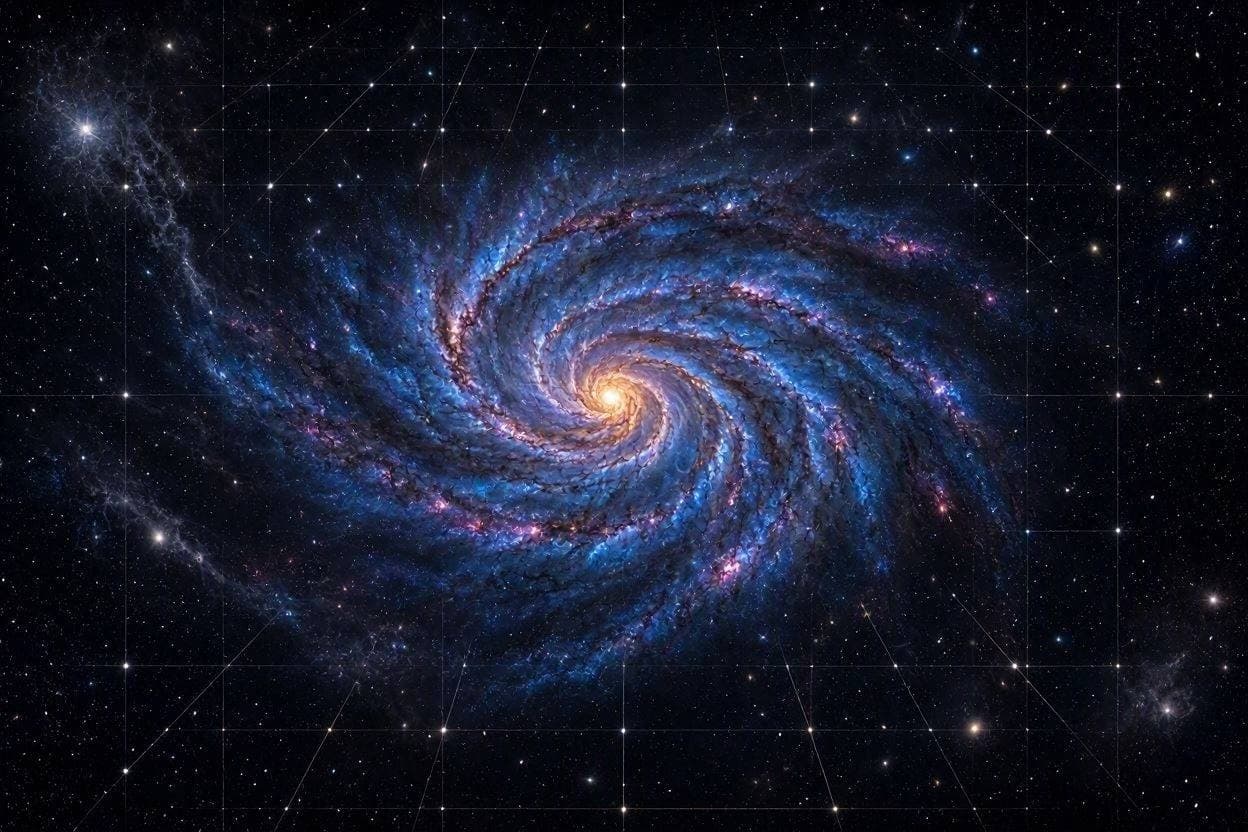
AI Image Disclaimer: The visual elements accompanying this report are AI-generated interpretations designed to reflect the astronomical and scientific context of the story.
Sources: Nature Astronomy Scientific American Space.com
Published by Banx Network. This article is part of the Banx decentralized media programme, powered by the BXE token on the XRP Ledger.