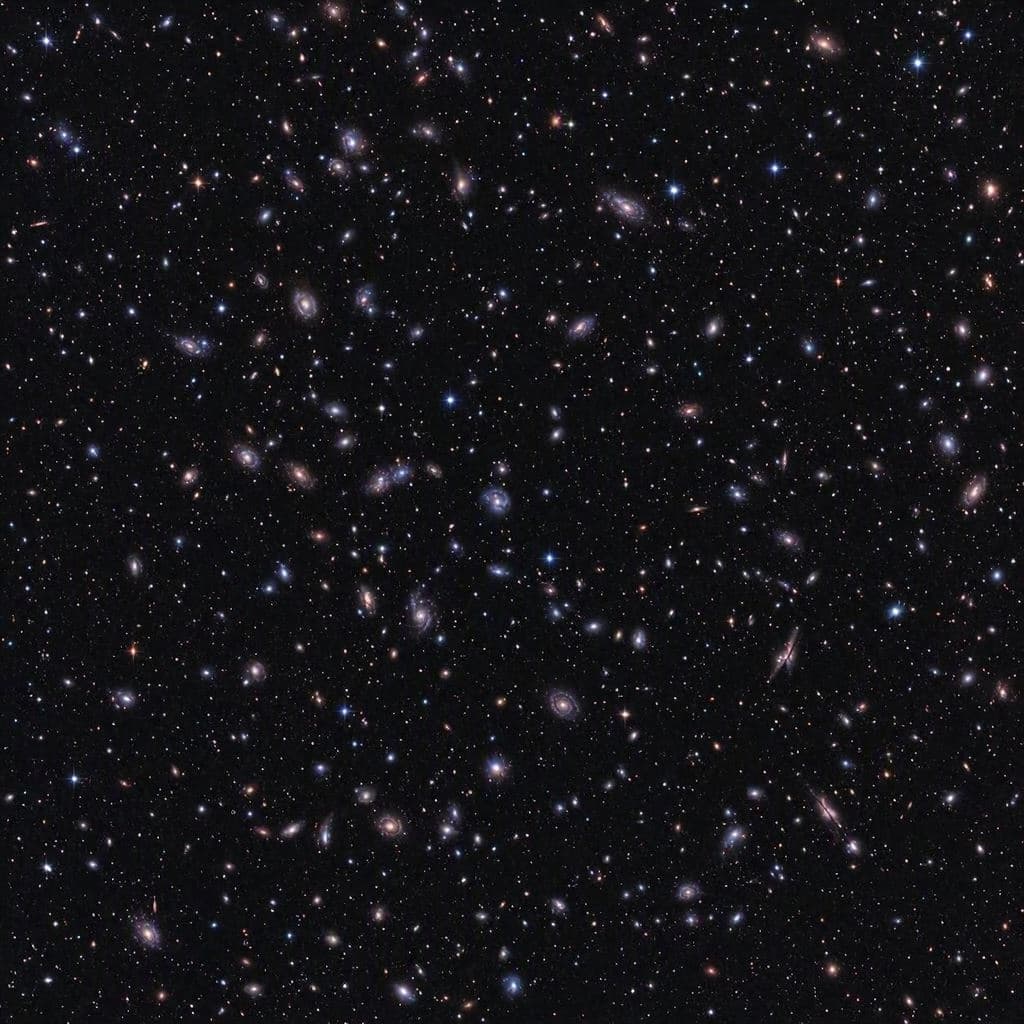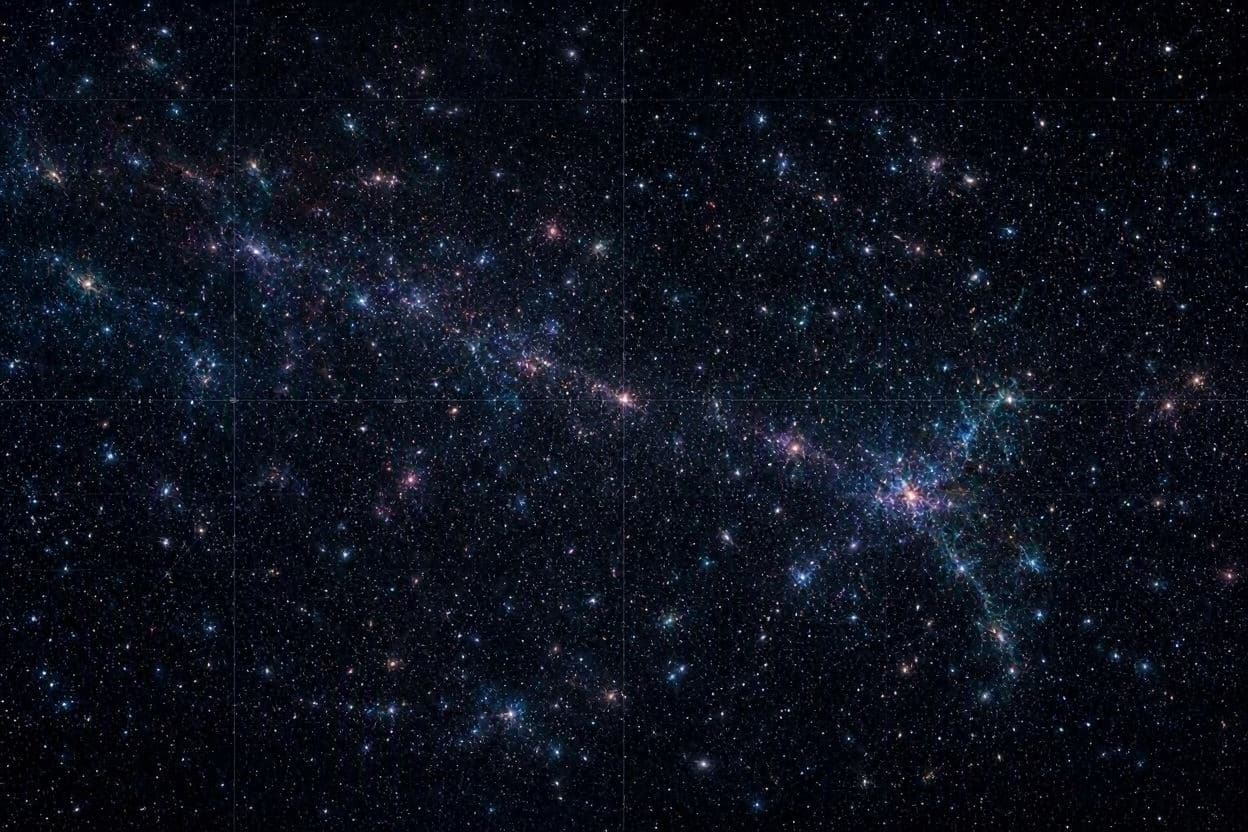
In the vast expanse of the cosmos, where distances are measured in light-years and time is woven into the fabric of space itself, humanity has long sought to chart its surroundings. Recently, scientists have unveiled the largest two-dimensional map of the universe ever created, a stunning mosaic composed of 5.6 trillion pixels. This monumental achievement, born from the DESI Legacy Imaging Surveys, offers not just a visual spectacle but a foundational tool for understanding the structure and evolution of our universe.
The map captures nearly four billion celestial objects, primarily stars and galaxies, stretching across one-third of the sky. It is the result of years of observation using telescopes in Arizona and Chile, stitching together images to create a coherent and detailed portrait of the heavens. For astronomers, this map is more than an image; it is a catalog of cosmic history, allowing researchers to trace the distribution of matter and the influence of dark energy over billions of years.
Using this map requires navigating a complex interface that allows users to zoom in on specific regions of interest. Researchers can filter data by object type, brightness, and distance, enabling targeted studies of everything from nearby star-forming regions to distant quasars. The sheer volume of data means that traditional methods of analysis are no longer sufficient, prompting the use of machine learning algorithms to identify patterns and anomalies within the stellar landscape.
For the general public, the map serves as a gateway to exploration. Online portals provide user-friendly tools that allow anyone to locate their favorite constellations or discover new galaxies. This democratization of astronomical data fosters a deeper connection between people and the night sky, transforming abstract concepts into tangible visuals. It invites curiosity and encourages a sense of wonder about our place in the cosmos.
The creation of this map also highlights the power of international collaboration. Teams from multiple countries worked together to process petabytes of data, ensuring accuracy and consistency across the entire survey. This collective effort underscores the global nature of scientific inquiry, where shared goals and resources lead to breakthroughs that benefit all of humanity. It is a testament to what can be achieved when minds unite in pursuit of knowledge.
As we look at this map, we are reminded of the scale of the universe and the smallness of our own perspective. Yet, it is through such ambitious projects that we expand our understanding and push the boundaries of what is known. The map is not static; it will continue to grow and refine as new data comes in, offering fresh insights and discoveries for years to come.
For those eager to explore, the map is freely available online, inviting students, educators, and enthusiasts to dive into the depths of space. By engaging with this resource, we participate in a grand tradition of exploration, using technology to see further and understand more. In the pixels of this map, we find not just stars and galaxies, but a reflection of our own enduring quest for meaning in the universe.
AI Image Disclaimer: The visual representations in this article are AI-generated illustrations designed to convey the scale and complexity of astronomical mapping.
Sources: Phys.org, NOIRLab, Lawrence Berkeley National Laboratory
Published by Banx Network. This article is part of the Banx decentralized media programme, powered by the BXE token on the XRP Ledger.