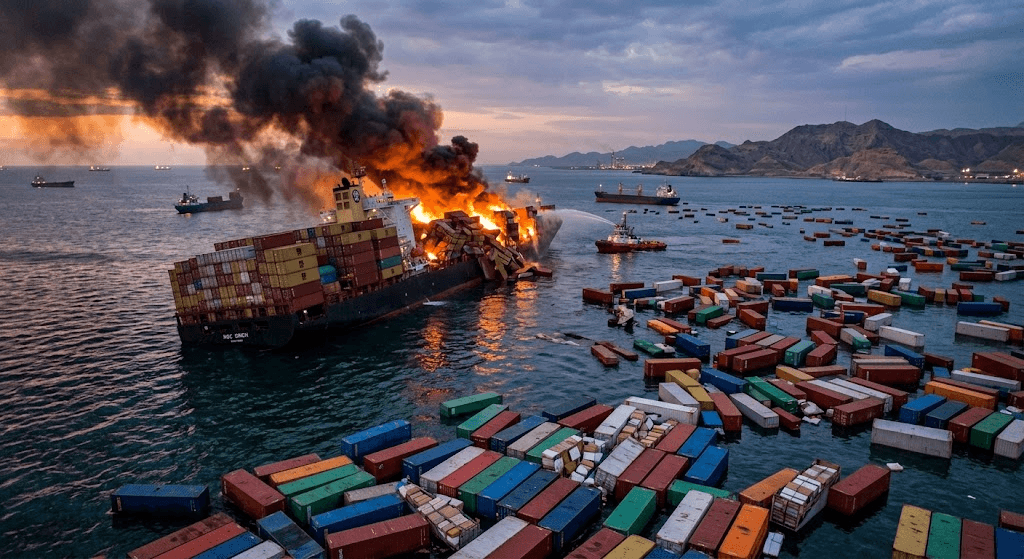
DUBAI, UNITED ARAB EMIRATES — A major maritime hazard has emerged in the strategic Strait of Hormuz after a commercial container ship carrying more than 2,500 containers struck a naval mine, caught fire, and sank in the southern waters of the key choke point.
The incident triggered heavy explosions on board, sending thick plumes of black smoke into the sky before the vessel capsized and submerged. While emergency responses successfully safely evacuated all 21 crew members without reported fatalities, the ship's loss has left thousands of cargo containers floating loose in one of the world's busiest shipping lanes.
According to statements from naval authorities and maritime security monitors, the vessel was navigating through the narrow corridor when it detonated an underwater naval mine. The blast instantly ruptured the hull and ignited a widespread fire among stacked cargo units.
Onboard emergency protocols allowed the crew to abandon ship safely shortly before flames engulfed the main superstructure. Uncontrolled flooding following the mine detonation caused the vessel to list heavily and sinks south of the main transit channel. As the ship went down, over 2,500 standard containers broke free from their deck mountings, creating a sprawling debris field of semi-submerged hazards floating across key international transit lanes.
Maritime traffic authorities, including the United Kingdom Maritime Trade Operations (UKMTO) and regional coast guards, issued urgent warnings to commercial shipping and local fishing fleets to exercise extreme caution. Semi-submerged steel containers pose severe collision risks for high-speed traffic and large tankers navigating the chokepoint.
In addition to navigational hazards, local environmental agencies are monitoring potential fuel oil leaks and cargo contamination from damaged containers. Salvage tugs and emergency response vessels have been deployed to secure drifting containers, map the hazard zone, and clear essential shipping channels to prevent further disruptions to global trade supply chains.
Insurance underwriters and maritime logistics firms have already begun assessing the widespread economic implications of the disaster. Industry analysts warn that temporary insurance premium spikes and rerouting delays could ripple through global supply chains as vessel operators navigate around the high-risk hazard zone.
Published by Banx Network. This article is part of the Banx decentralized media programme, powered by the BXE token on the XRP Ledger.