Key Highlights
- Chainlink is expanding its role in connecting blockchain networks with financial applications.
- Major companies like Kraken and BitGo are now part of its ecosystem.
- The need for reliable data and interoperability is driving this expansion.
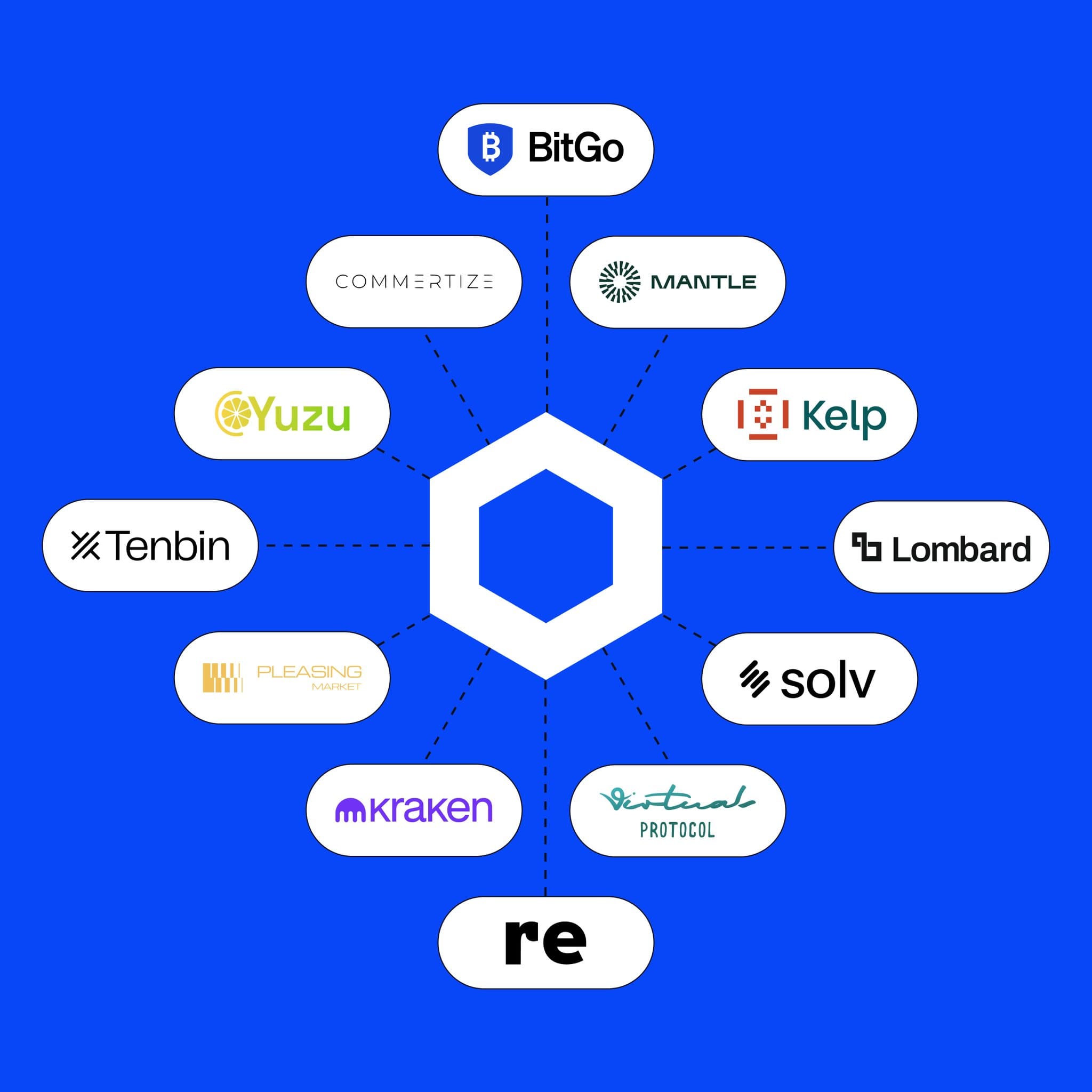
Chainlink is continuing to solidify its position as a crucial infrastructure provider that connects blockchain networks with various financial applications. The recent expansion has seen a growing number of companies and protocols integrating with Chainlink's services, including notable names such as BitGo, Mantle, Kelp, Lombard Finance, Solv Protocol, and Kraken. This development highlights a significant trend in digital finance: the increasing demand for reliable data, interoperability, and infrastructure that can bridge traditional assets with blockchain-based applications.
The core value of Chainlink lies in its ability to address a fundamental problem in the blockchain ecosystem. While blockchains are designed to verify information within their own networks, many applications require data that originates from outside these networks. For instance, smart contracts often need accurate prices, interest rates, and other financial data that cannot be assumed to be correct without external verification. This is where oracle networks, like Chainlink, come into play, providing the necessary external information to ensure the accuracy and reliability of smart contracts.
As decentralized finance (DeFi) continues to evolve, the importance of reliable data has become increasingly pronounced. Lending protocols, for example, depend on accurate asset prices to assess collateral values. Similarly, tokenized assets require confirmation of what the underlying asset represents, while stablecoin systems need market information to maintain their mechanisms. Furthermore, cross-chain applications necessitate secure communication channels between different blockchain environments, underscoring the need for robust infrastructure.
The diverse projects showcased in Chainlink's ecosystem illustrate the broad applicability of its technology. BitGo, for instance, is known for its institutional digital-asset custody solutions, while Lombard and Solv are focused on blockchain-based financial products. Mantle operates within the Ethereum ecosystem, and Kelp is involved in restaking infrastructure. Kraken, a major digital-asset exchange, is also part of this expanding network, which includes applications related to lending, tokenization, payments, trading, and decentralized services.
The significance of this expansion is not merely in the number of projects utilizing Chainlink but in the collective demand for a common infrastructure across an increasingly fragmented blockchain industry. As new networks and applications emerge, developers are seeking reliable systems that can facilitate information exchange without the need for each project to build its own infrastructure from scratch.
This need becomes even more critical as traditional financial assets begin to transition onto blockchains. Tokenization involves digitally representing assets such as funds, securities, and commodities. Once these assets are programmable, smart contracts can interact with them automatically. However, this automation hinges on the trustworthiness of the underlying information. For example, a tokenized financial product that relies on external price data must ensure that the information is accurate and timely; otherwise, it risks exposing the entire application to significant vulnerabilities.
Cross-chain activity presents another layer of complexity. The digital-asset market is no longer confined to a single blockchain; it spans Ethereum, Solana, Avalanche, and various layer-2 networks, each hosting different applications and assets. Users increasingly expect these systems to communicate seamlessly, making infrastructure that supports cross-chain operations increasingly valuable.
The institutional aspect of Chainlink's expansion is equally noteworthy. Large financial institutions typically require stringent controls, dependable infrastructure, and transparent verification before committing capital to public blockchains. Services that provide custody, proof of reserves, and secure data transmission can help meet these requirements, further solidifying Chainlink's role in the financial landscape.
Despite the growth of Chainlink's ecosystem, it is essential to recognize that risks associated with blockchain infrastructure remain. Oracle failures, smart contract vulnerabilities, network congestion, and inaccuracies in external information can still pose challenges. Additionally, widespread adoption does not guarantee token value appreciation, as the usage of infrastructure and the overall market dynamics play significant roles in determining value.
Published by Banx Network. This article is part of the Banx decentralized media programme, powered by the BXE token on the XRP Ledger.