Key Highlights
- Partnership:Mastercard collaborates with Chainlink to enhance crypto payment systems.
- Direct Purchases:Users can buy cryptocurrencies directly with debit or credit cards.
- Industry Impact:The initiative aims to simplify access to digital assets for mainstream users.
Mastercard, a global leader in payment solutions, has partnered with Chainlink, a prominent blockchain infrastructure provider, to advance the adoption of cryptocurrency in mainstream finance. This collaboration introduces a groundbreaking system that allows users to purchase digital assets directly using traditional payment methods, such as debit and credit cards. The initiative aims to streamline the purchasing process, making it more accessible for everyday consumers.
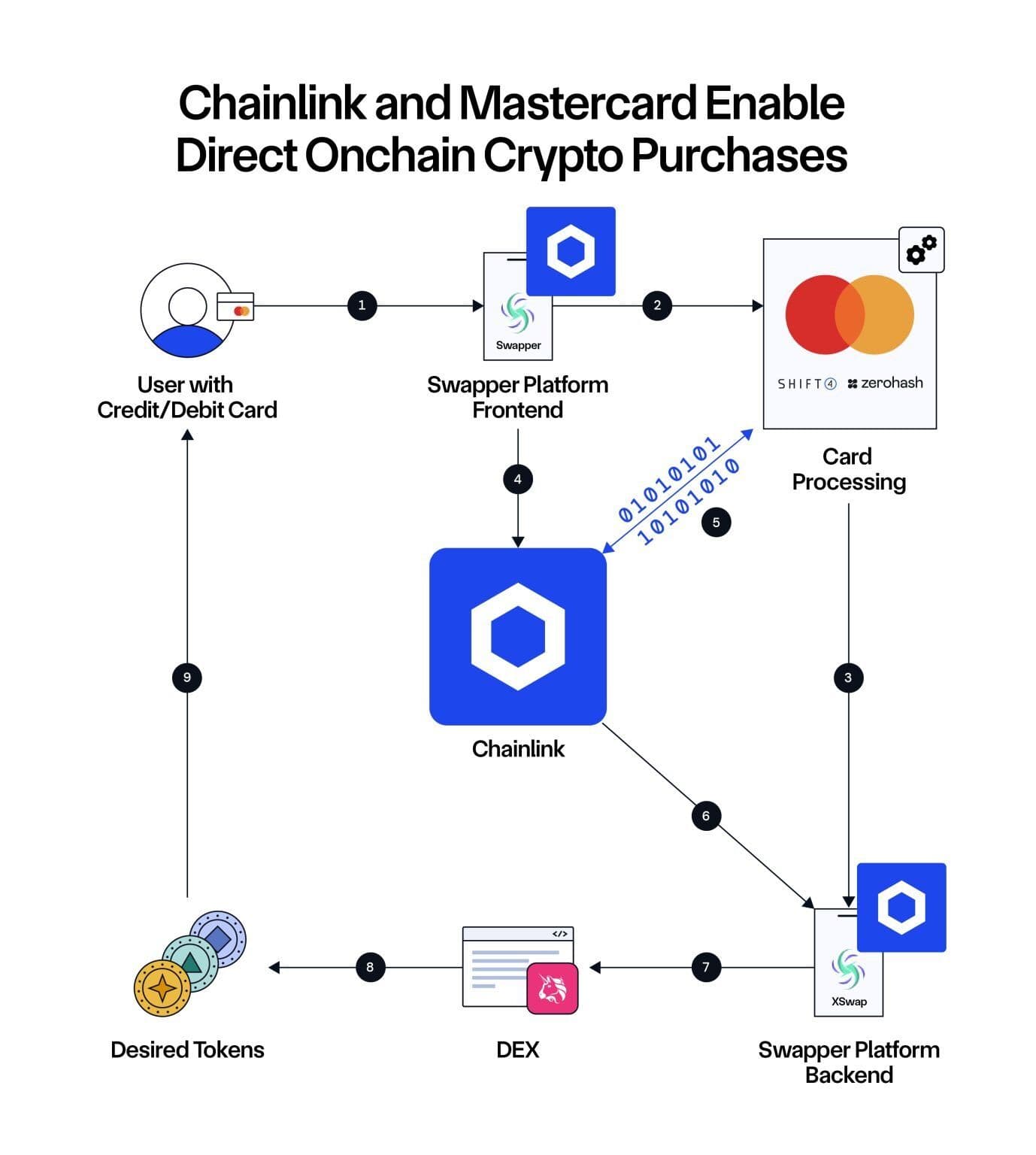
The new payment model facilitates a seamless transaction flow where users can select their desired cryptocurrencies through a user-friendly interface. Once the selection is made, the card payment information is processed through Mastercard's established payment infrastructure. Meanwhile, Chainlink's technology manages the backend operations, ensuring that the token delivery occurs efficiently and securely. This innovative approach significantly reduces the friction that often exists between conventional financial systems and decentralized blockchain environments.
Chainlink's role in this partnership is crucial, as it provides the necessary technology to connect external payment systems with decentralized blockchain networks. The integration of trusted data movement between offchain financial systems and onchain networks is essential for creating a reliable and secure payment infrastructure. This demand for interoperability is a key factor in the ongoing evolution of blockchain applications.
Additionally, the architecture of this new payment system incorporates decentralized exchange functionality. Through token swap systems, the payment value can be converted into the requested cryptocurrency assets. This liquidity infrastructure enhances conversion efficiency, while backend automation manages the settlement processes, ensuring that transactions are completed swiftly and accurately.
Financial infrastructure providers, such as Zerohash, are also contributing to this initiative by offering compliance and transaction support layers. These layers are designed to bridge the gap between traditional payment rails and blockchain execution systems, further facilitating the integration of cryptocurrency into everyday financial transactions.
This development reflects a significant priority within the cryptocurrency industry: reducing the barriers that have historically hindered mainstream adoption. For years, purchasing cryptocurrency has often involved navigating multiple platforms, completing bank transfers, setting up wallets, and obtaining exchange account approvals. The industry is actively working towards creating user experiences that resemble conventional online payment methods, which could lead to a broader acceptance of digital assets.
As institutional participation in digital assets continues to grow, payment companies, financial infrastructure providers, and blockchain developers are focused on creating systems that support larger-scale adoption. The emphasis is shifting towards usability, ensuring that the processes involved in purchasing and using cryptocurrencies are as straightforward as possible.
As blockchain ecosystems mature, simplifying payment processes could play a pivotal role in determining how quickly digital assets become integrated into mainstream financial activities. The collaboration between Mastercard and Chainlink represents a significant step towards merging traditional finance with blockchain technology, paving the way for a future where cryptocurrency transactions are as commonplace as traditional banking operations.
Published by Banx Network. This article is part of the Banx decentralized media programme, powered by the BXE token on the XRP Ledger.