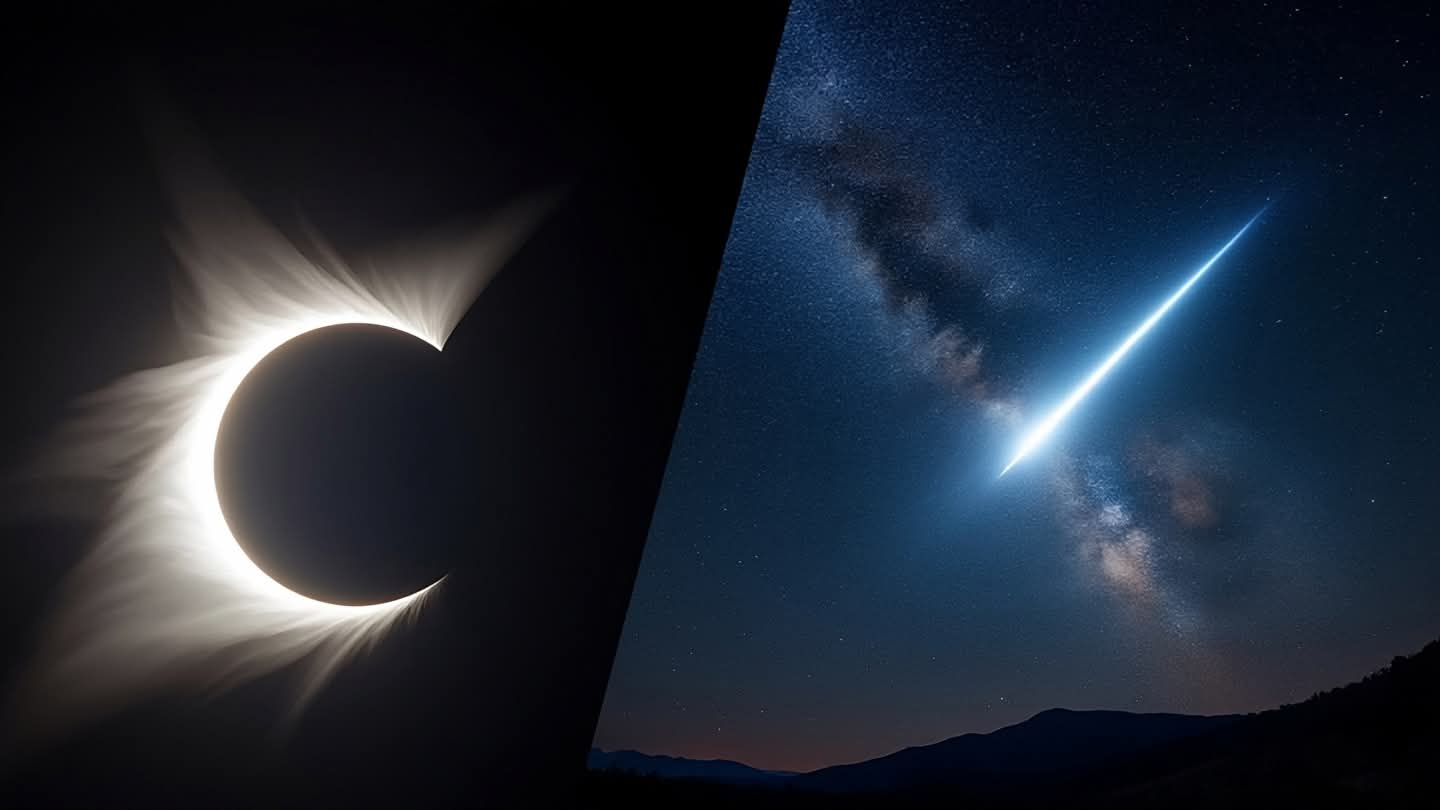
The sky is a theater of constant change, where the drama of celestial mechanics unfolds with quiet precision. In August 2026, skywatchers across North America and Europe found themselves at the intersection of two distinct astronomical events: a partial solar eclipse and the anticipated peak of the Perseid meteor shower. This convergence invites reflection on the dual nature of our cosmic neighborhood, where the steady light of the sun and the fleeting streaks of cometary debris offer different but equally compelling spectacles. It is a moment where patience is rewarded by the rhythm of the heavens.
In parts of Canada, the focus was shifting toward the Perseids, one of the most reliable and active meteor showers of the year. Caused by Earth passing through the debris trail of Comet Swift-Tuttle, the shower promises dozens of meteors per hour under ideal conditions. Debris becomes light. History burns bright.
The timing of the 2026 peak, occurring around August 12-13, coincided with a new moon, providing dark skies that enhance visibility. For observers in regions like Ontario and Quebec, the wait for the meteor peak was accompanied by the subtle dimming of a partial solar eclipse, depending on their specific location. Darkness aids vision. Contrast reveals detail.
While the solar eclipse offered a daytime event, the Perseids required the cover of night. This duality allowed enthusiasts to engage with astronomy throughout the entire day, from the careful observation of the sun’s edge to the hopeful scanning of the midnight sky. Day and night unite. Observation is continuous.
Safety remained a priority for both events. Specialized glasses were essential for viewing the solar eclipse, while comfortable seating and warm clothing were recommended for the long nights of meteor watching. Preparation ensures enjoyment. Care protects sight.
Community gatherings and local astronomy clubs played a vital role in facilitating these experiences. By sharing knowledge and equipment, they helped newcomers appreciate the nuances of each event. Community enhances wonder. Sharing builds connection.
Skywatchers in Canada and beyond experienced a unique period of astronomical activity in August 2026, balancing observations of a partial solar eclipse with the peak of the Perseid meteor shower. The clear skies and favorable lunar conditions provided excellent viewing opportunities. The hope is for continued public engagement with celestial events.
AI Image Disclaimer: The visual elements accompanying this report are AI-generated interpretations designed to reflect the astronomical and observational context of the story.
Sources: Royal Astronomical Society of Canada EarthSky Timeanddate.com
Published by Banx Network. This article is part of the Banx decentralized media programme, powered by the BXE token on the XRP Ledger.