On a clear night in April 2029, the sky will hold a secret that has been whispered by astronomers for decades. Apophis, a massive asteroid roughly the size of the Eiffel Tower, will glide past our planet at a distance closer than many of our own communication satellites. While it will not strike Earth, this near-miss is not merely a celestial spectacle but a profound reminder of the delicate balance that governs our place in the cosmos. The event invites us to look up with both wonder and a quiet sense of vulnerability.
The asteroid, officially known as 99942 Apophis, was discovered in 2004 and initially caused a stir due to early calculations suggesting a small chance of impact. Subsequent observations have firmly ruled out any collision in 2029 or the following decades. However, the proximity of its flyby—approximately 32,000 kilometers from the surface—means that Earth’s gravity will exert a significant pull on the space rock. This gravitational interaction could alter Apophis’s trajectory and physical structure in ways that are difficult to predict with absolute certainty.
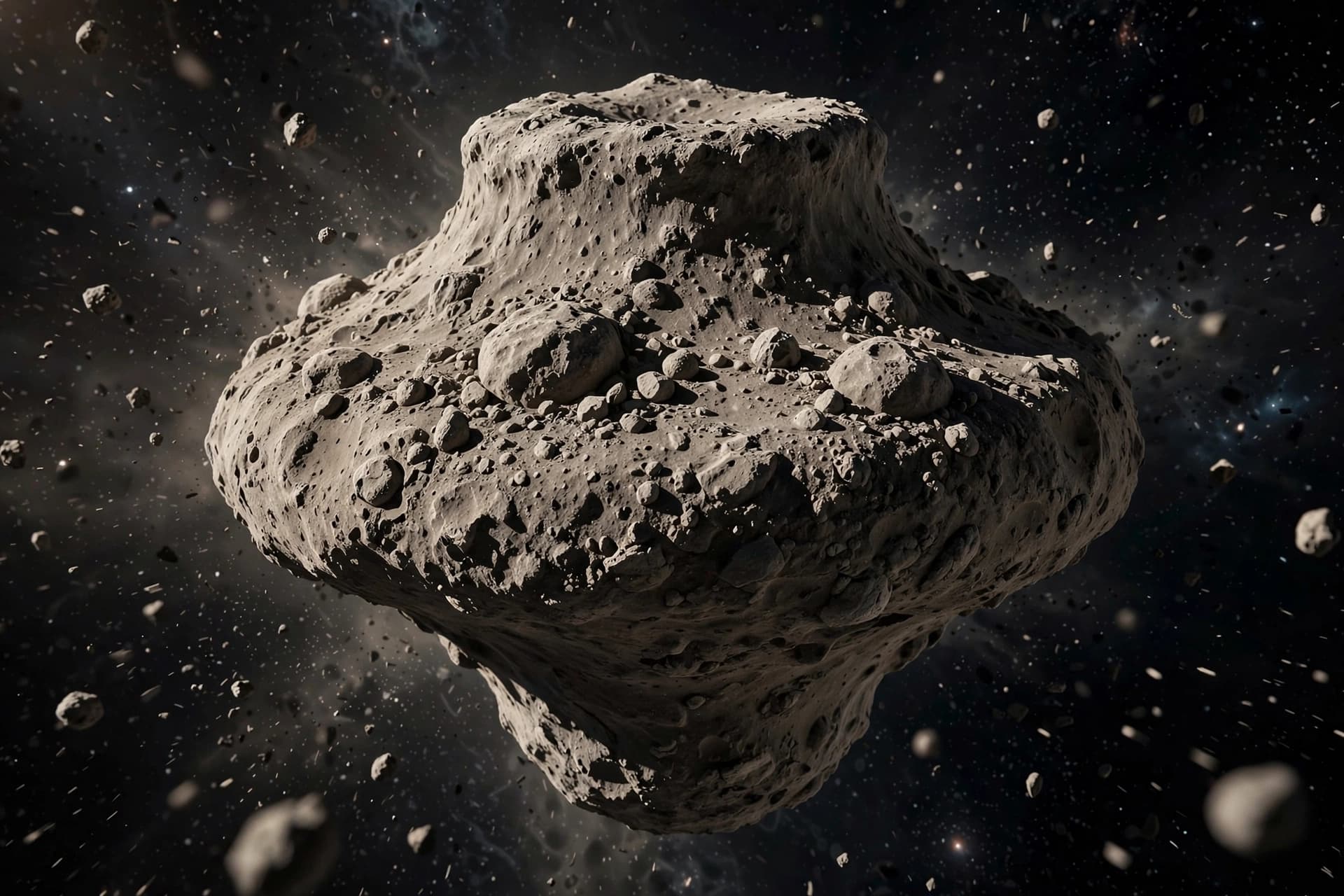
Scientists are particularly concerned about the potential for tidal forces to fracture the asteroid or shift its center of mass. If Apophis is a "rubble pile"—a loose collection of rocks held together by gravity rather than a solid monolith—the stress of the close encounter could cause it to break apart. Such an event would create a debris field that could pose risks to satellites in low Earth orbit, potentially disrupting global communications and navigation systems that we rely on daily.
Beyond the immediate physical risks, the 2029 flyby serves as a critical test case for planetary defense strategies. It offers a unique opportunity to study how a large near-Earth object behaves under gravitational stress. Data collected during this event will refine our models for future asteroid encounters, helping us better understand the dynamics of these celestial visitors. The knowledge gained could be invaluable if a more threatening object were ever detected on a collision course.
The psychological impact of such a close approach should not be underestimated. For a brief moment, humanity will share the sky with a visitor from the deep solar system, a tangible presence that underscores the vastness of space and our relative smallness within it. This shared experience may foster a greater appreciation for scientific inquiry and international cooperation in monitoring space hazards. It is a moment that transcends borders, uniting people in a common gaze toward the heavens.
Preparation for the event is already underway, with telescopes and radar systems around the world poised to track Apophis’s every move. Space agencies are coordinating efforts to ensure that data is shared openly and analyzed comprehensively. This collaborative spirit highlights the importance of global solidarity in addressing challenges that extend beyond national boundaries. The asteroid does not recognize flags or borders; it belongs to the universe, and its study is a shared human endeavor.
As April 2029 approaches, the anticipation builds not for disaster, but for discovery. Apophis’s flyby will be a landmark event in astronomical history, offering insights that could protect our planet for generations to come. It reminds us that while we may live on a stable world, we are part of a dynamic and sometimes unpredictable cosmic neighborhood.
AI Image Disclaimer: The visual representations accompanying this article are AI-generated interpretations designed to illustrate the astronomical context of the event.
Sources: NASA The Planetary Society Fox News
Published by Banx Network. This article is part of the Banx decentralized media programme, powered by the BXE token on the XRP Ledger.