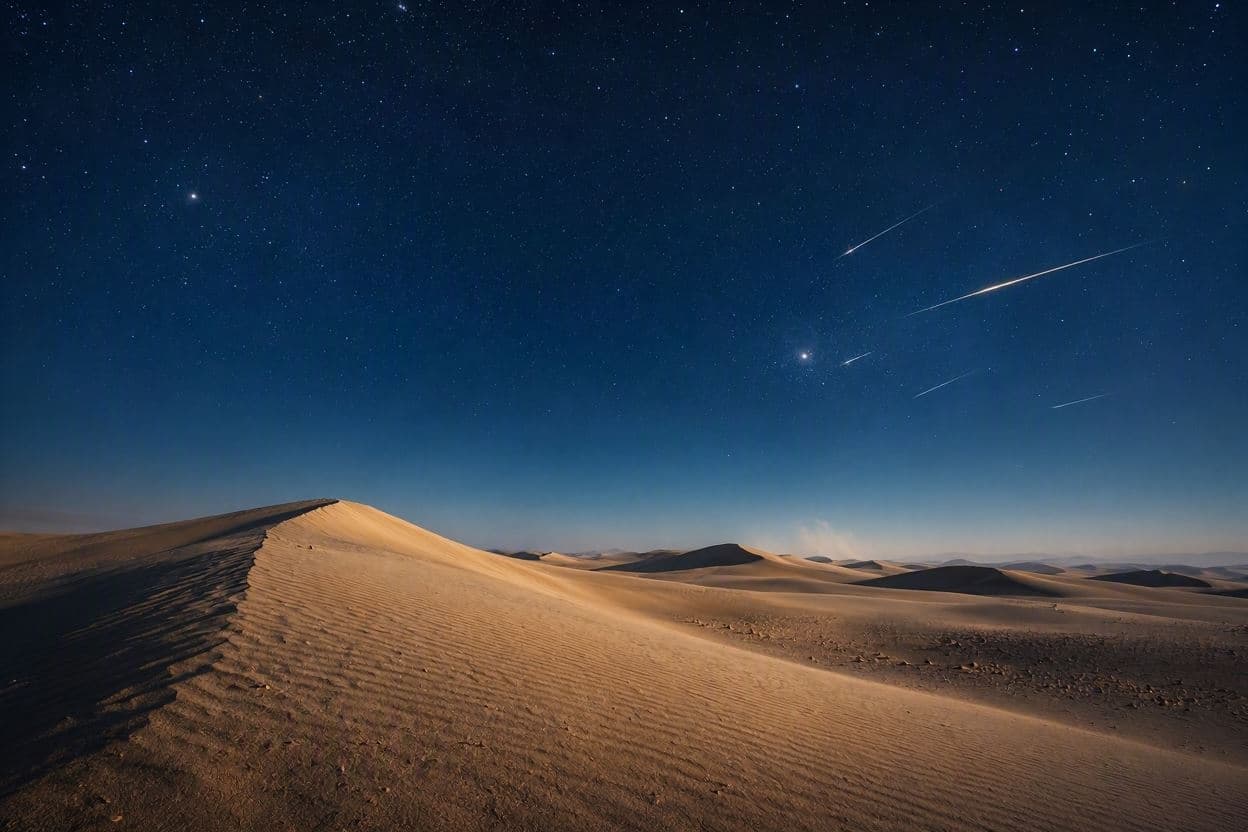
In the vast, quiet expanses of the desert, the sky becomes a canvas of infinite depth, waiting for the brushstrokes of celestial events. In Ningxia, China, the annual Perseid meteor shower recently painted the night with streaks of light, drawing stargazers to the remote dunes. This spectacle invites reflection on the enduring human fascination with the cosmos and the peace found in witnessing natural rhythms. It is a moment where earth meets sky in silent celebration.
The Perseids, caused by debris from Comet Swift-Tuttle, are known for their brightness and frequency, making them a favorite among astronomers. In the clear, dry air of the Ningxia desert, the meteors appeared with exceptional clarity, free from the light pollution of urban centers. Clarity reveals beauty. Darkness aids vision.
Local residents and tourists gathered in the cool night air, sharing blankets and wishes as the shooting stars flashed across the heavens. The event served as a reminder of the shared human experience of wonder, transcending language and culture. Wonder unites people. Wishes connect hearts.
For photographers and scientists, the shower provided valuable opportunities to capture data and images of these fleeting visitors. Each meteor is a tiny piece of cosmic history burning up in our atmosphere, a brief but brilliant finale to a long journey through space. History burns bright. Finale leaves memory.
The desert environment, with its minimal humidity and stable atmospheric conditions, offers an ideal setting for such observations. It highlights the importance of preserving dark skies for both scientific research and public enjoyment. Preservation protects view. Stability aids study.
As the peak of the shower passed, the sky returned to its usual starry calm, but the memory of the display remained. For many, it was a moment of connection to something larger than themselves, a reminder of the vastness of the universe. Connection brings humility. Vastness inspires awe.
The Perseid meteor shower peaked over Ningxia, China, offering a spectacular display for stargazers in the desert region. The event highlighted the area’s ideal conditions for astronomy and drew crowds to witness the celestial phenomenon. The hope is for continued appreciation of dark sky preservation.
AI Image Disclaimer: Visuals associated with this article are AI-generated to illustrate the themes of astronomy and natural beauty.
Sources: CGTN Xinhua News Agency EarthSky Newsflare
Published by Banx Network. This article is part of the Banx decentralized media programme, powered by the BXE token on the XRP Ledger.