
Key Highlights
- PSG Wins:Paris Saint-Germain secures its second consecutive UEFA Champions League title.
- Unrest Erupts:Celebrations in Paris lead to violence and over 400 arrests.
- Police Injuries:Dozens of officers injured amid clashes with celebratory crowds.
Paris, France – Victory in football often spills beyond the boundaries of a stadium. Songs echo through streets, flags wave from balconies, and entire cities seem to move with a shared heartbeat. Yet moments of celebration can sometimes carry a fragile balance, where excitement and disorder stand closer together than many expect.
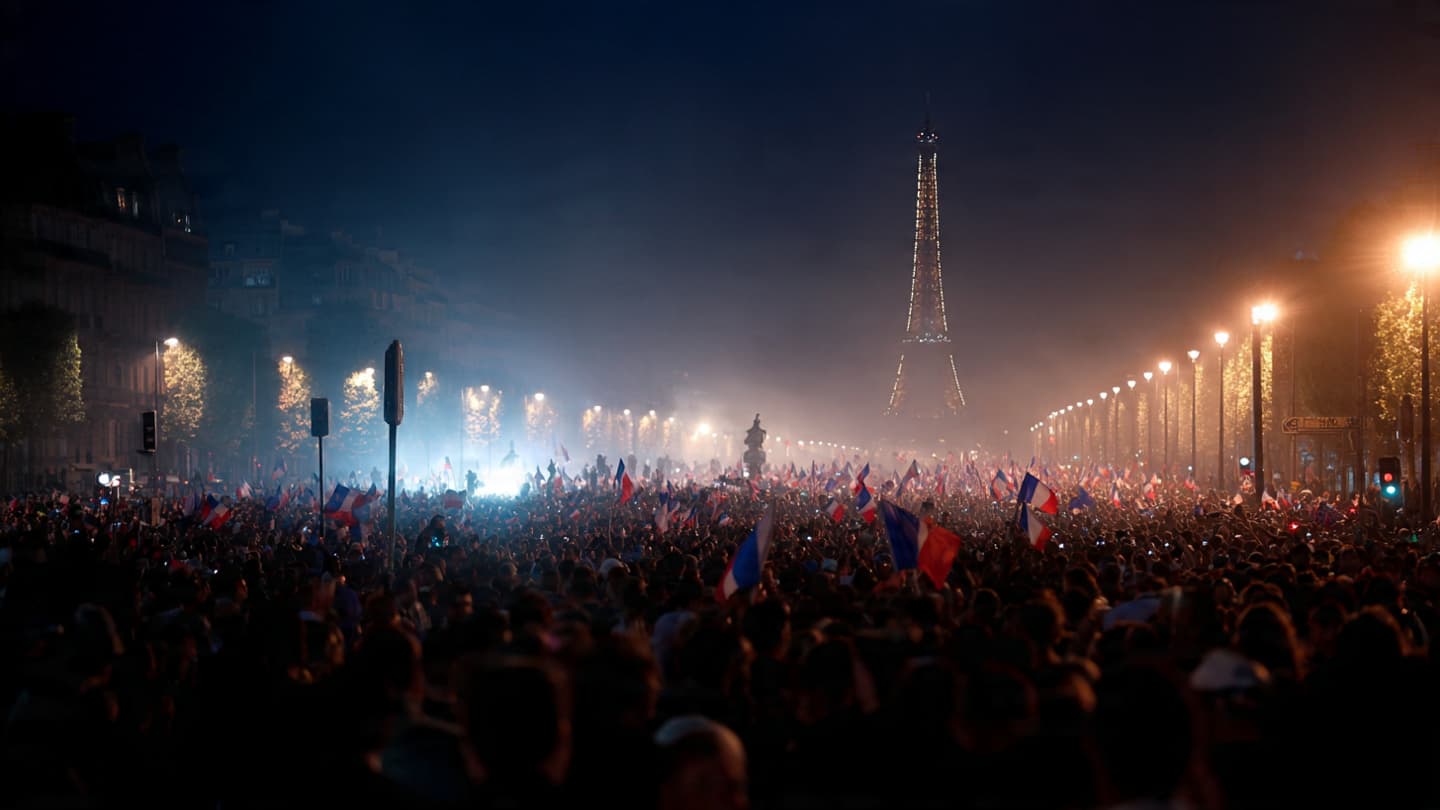
Following Paris Saint-Germain’s latest UEFA Champions League triumph, the city was filled with jubilant supporters. However, the celebrations took a dark turn as unrest erupted in various districts of the French capital. What began as large public gatherings marking the club’s victory gradually devolved into chaos, leading to significant clashes between fans and law enforcement.
Paris Saint-Germain secured its second consecutive Champions League title after defeating Arsenal in a dramatic penalty shootout in Budapest. Thousands of supporters gathered around the city, particularly near iconic landmarks such as the Eiffel Tower and the Parc des Princes stadium, where large public viewing areas had been established for fans to celebrate together.
As the evening progressed, the atmosphere shifted. Authorities reported that some groups began to clash with police officers, leading to a series of violent incidents. Fireworks were launched toward security personnel, vehicles were set ablaze, and several storefronts suffered damage during the disturbances. The situation escalated quickly, prompting a significant police response.
French officials stated that more than 400 people were detained during the unrest, while dozens of police officers sustained injuries. Emergency responders treated hundreds of individuals affected by incidents linked to the celebrations, highlighting the chaotic nature of the night.
The scale of the security operation reflected concerns that large celebrations could become difficult to manage. Approximately 20,000 police officers were deployed across Paris and surrounding areas as authorities prepared for the anticipated crowds following the final match. This proactive approach was aimed at preventing potential violence, but the events of the night revealed the challenges of maintaining public order during such large-scale celebrations.
The disturbances have reignited broader debates within France about public order during major sporting events. Similar scenes have occurred after previous PSG victories, prompting ongoing discussions about crowd management, policing strategies, and the social tensions that occasionally emerge during large gatherings. The government is now under pressure to reassess its approach to managing large crowds in the wake of these incidents.
Despite the violence, many supporters remained focused on the football itself. Large numbers of fans celebrated peacefully throughout the city, reflecting the deep connection many Parisians feel toward one of France’s most prominent clubs. The duality of the night—joyful celebration overshadowed by disorder—underscores the complexities of public gatherings in contemporary society.
French authorities continue to review the incidents while assessing the damage and injuries reported during the celebrations. Officials have emphasized that investigations remain ongoing as the city recovers from a night that combined sporting joy with significant public disorder. The hope is that lessons learned from this event will lead to improved safety measures for future celebrations.
Published by Banx Network. This article is part of the Banx decentralized media programme, powered by the BXE token on the XRP Ledger.



