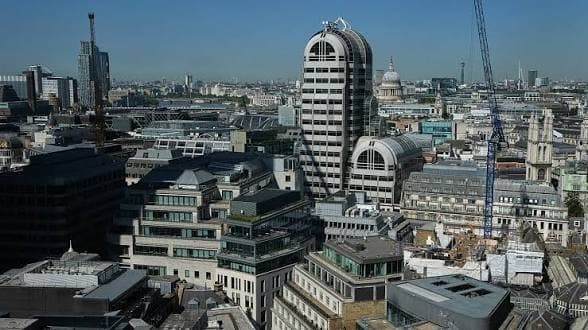
In the world of financial markets, volatility often arrives like an uninvited storm, leaving traders, analysts, and investors scrambling to adjust their sails. When it comes to Cboe Global Markets (CBOE), the storm has been fierce. Recently, the company has experienced record volatility-driven trading volumes, sending ripples of uncertainty through the market. While volatility can be a double-edged sword, offering both opportunities and risks, the rise in trading volumes coupled with strong earnings growth has prompted a pressing question: Should investors be taking immediate action, or is it simply another chapter in the ongoing fluctuations of the market? For Cboe, the surge in trading volumes might be seen as a sign of resilience, but it also presents a moment of reflection for investors trying to determine whether this current phase is sustainable—or a precursor to a more profound shift in the market landscape.
Cboe Global Markets, one of the leading exchanges in the world, has long been synonymous with high-stakes trading, offering various products like equity options, futures, and volatility indices. The company’s role in the broader financial ecosystem has never been more important as the dynamics of global markets become increasingly unpredictable. As trading volumes surged to record levels, largely driven by heightened market uncertainty and economic shifts, Cboe found itself at the center of a larger conversation about the state of financial markets.
The increased volatility that spurred this surge in activity has undoubtedly been a boon for Cboe in terms of revenue. Higher trading volumes often correlate with increased fees, providing a significant boost to earnings. This pattern has been evident in Cboe’s most recent earnings reports, showing strong growth in both revenue and profits. For many investors, these results could be interpreted as a sign that Cboe is thriving in a turbulent market, able to capitalize on volatility while maintaining a leading position in the financial sector.
However, the surge in trading volumes comes with its own set of challenges. While Cboe stands to gain from the current volatility, there are questions about whether such a model is sustainable in the long term. Market volatility is unpredictable—what goes up can also come crashing down. The very factors driving Cboe’s growth, such as the ongoing economic uncertainty and rising geopolitical tensions, also contribute to the instability that characterizes this period of trading. There is always the risk that when volatility settles or diminishes, the sharp spike in trading volumes could wane, leaving the company to grapple with a return to normal levels of activity.
For CBOE investors, this raises a more fundamental question: Should they act on the current wave of growth, taking advantage of the strong earnings, or should they be cautious, acknowledging that high volatility may not be sustainable in the long term? The answer lies in understanding the balance between short-term opportunities and long-term stability. Volatility-driven trading volumes are an indication of market dynamics at play, but how long will they last? For some investors, the high levels of activity may be seen as a temporary windfall, whereas others might view it as a signal to reposition themselves for a future when markets stabilize.
The broader financial landscape also plays a role in shaping these decisions. Central banks around the world, particularly the Federal Reserve, have been adjusting interest rates in an attempt to manage inflation, which affects the cost of borrowing and influences investor sentiment. The rise in rates can have a cooling effect on the markets, reducing trading volumes and, in turn, affecting Cboe’s business model.
For Cboe’s investors, this period of record volatility calls for a careful assessment of their strategy. Do they embrace the volatility for its current financial benefits, or do they prepare for a possible return to more stable market conditions? As much as volatility can drive growth in the short term, it also introduces a level of unpredictability that could pose a risk to future earnings.
As Cboe Global Markets continues to navigate this phase of record volatility and strong earnings growth, the question of whether investors should take action is complex. On one hand, the company has demonstrated resilience, benefiting from high trading volumes. On the other, the nature of volatility means that today’s boon could quickly turn into tomorrow’s challenge. For investors, the key lies in weighing the immediate rewards against the potential risks in a market that can change course with little warning. As of now, the storm seems to be in Cboe’s favor, but the question remains: Will it last, or will a calmer horizon soon arrive, altering the landscape once again?
AI Image Disclaimer (Rotated Wording): "Images in this article are AI-generated illustrations, meant for conceptual purposes only." "Visuals are AI-created and serve as conceptual depictions, not real-world photographs." "Illustrations are AI-generated and intended to represent abstract concepts, not actual events." Sources: Reuters Bloomberg The Wall Street Journal CNBC MarketWatch
Published by Banx Network. This article is part of the Banx decentralized media programme, powered by the BXE token on the XRP Ledger.