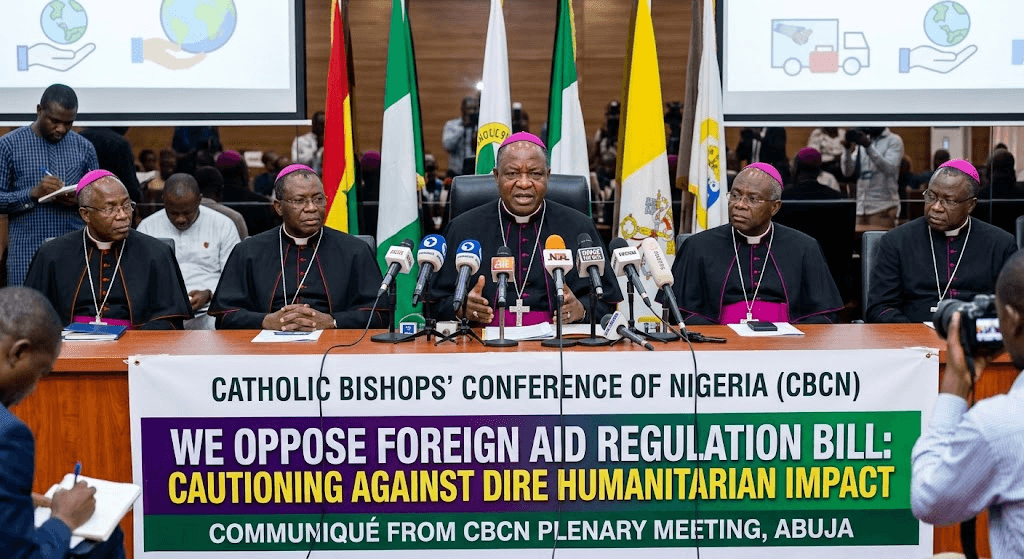
ABUJA, Nigeria — Catholic bishops have formally called on the government and legislature to halt the proposed Foreign Aids (Regulation, Transparency, and Disclosure) Bill 2026, warning that the measure threatens vital humanitarian operations across vulnerable communities.
In a official communiqué issued following their national plenary meeting, church leaders expressed severe concern that the pending legislation would impose excessive bureaucratic hurdles and grant government officials overly broad discretionary powers over non-governmental organizations, places of worship, and schools. While acknowledging government arguments regarding transparency and national security, the bishops pointed out that faith-based entities and charitable trusts are already subject to extensive legal oversight under existing corporate and statutory frameworks.
The bishops cautioned that restricting international assistance channels could cripple local social programs—including primary healthcare, emergency food distribution, and educational support—that heavily rely on international aid networks to serve marginalized populations, refugees, and communities displaced by conflict. They stressed that the proposed framework risks infringing upon constitutional freedoms of association, thought, and religious practice by creating state-managed gateways for charitable contributions.
The call to reject the bill comes alongside broader demands from the clergy for decisive state action against growing regional economic hardship, crumbling infrastructure, and persistent security challenges. Human rights advocates and civil society groups have echoed the bishops' warnings, urging lawmakers to engage in open dialogue with civil society and faith leaders to protect essential civic and humanitarian spaces.
Legislative observers note that public hearings on the bill are expected to draw heavy turnout from international aid agencies, legal scholars, and faith-based coalitions advocating for major amendments or a complete withdrawal of the proposal. As pressure mounts on lawmakers to balance regulatory oversight with fundamental rights, the outcome of the legislative debate is widely seen as a crucial test for the future of civil society and independent aid operations across the nation.
Published by Banx Network. This article is part of the Banx decentralized media programme, powered by the BXE token on the XRP Ledger.