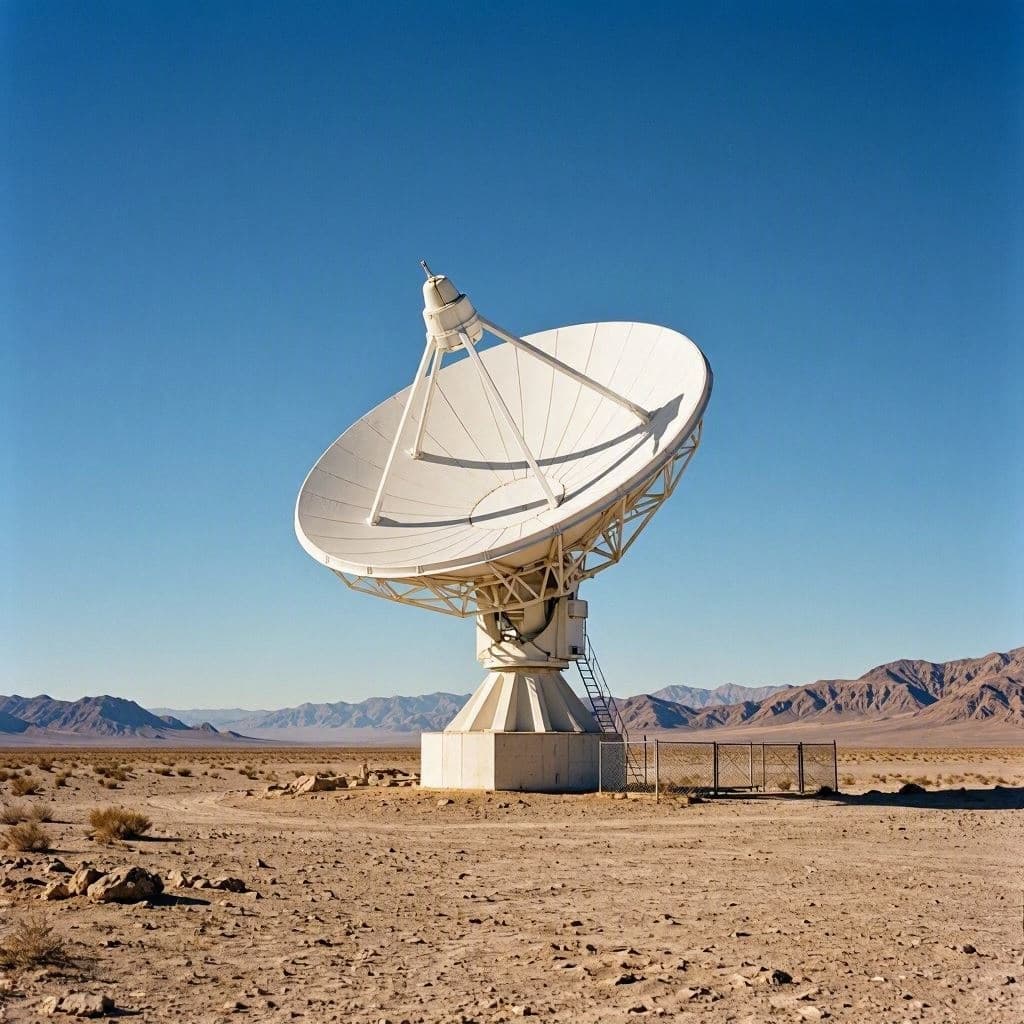
In the vastness of space, endings rarely arrive with applause. More often, they unfold quietly, far from human eyes, carried by radio waves crossing unimaginable distances. Such was the final chapter of the Cassini spacecraft, a machine that spent nearly two decades exploring Saturn and its moons before NASA guided it deliberately into the planet’s atmosphere in September 2017.
Cassini had become one of the most successful planetary missions in history. Launched in 1997 through a collaboration involving NASA, the European Space Agency, and the Italian Space Agency, the spacecraft entered Saturn’s orbit in 2004 and transformed scientific understanding of the ringed planet and its complex system of moons.
Among its most significant discoveries was the revelation that Enceladus, one of Saturn’s icy moons, contains a global ocean beneath its frozen crust. Cassini detected water-rich plumes erupting into space, along with organic compounds and conditions that scientists considered potentially favorable for microbial life.
As the mission neared its conclusion, NASA faced a difficult decision. Engineers knew Cassini was running low on fuel, and without proper control the spacecraft could eventually collide with moons such as Enceladus or Titan. Because those worlds are considered scientifically important in the search for life, even a small chance of contamination from Earth microbes was treated with great seriousness.
The solution became known as the “Grand Finale.” Instead of allowing the spacecraft to drift unpredictably, mission planners directed Cassini into Saturn itself. The decision reflected a broader principle in planetary science: protecting potentially habitable environments from biological contamination introduced unintentionally by human exploration.
During its final months, Cassini executed daring dives between Saturn and its inner rings, gathering data from regions never studied before. These close passes allowed scientists to examine Saturn’s atmosphere, magnetic field, and ring structure with unprecedented detail. Even in its last phase, the spacecraft continued expanding knowledge rather than merely surviving.
On September 15, 2017, Cassini entered Saturn’s upper atmosphere at tremendous speed. As atmospheric pressure increased, the spacecraft used its thrusters continuously to maintain orientation and keep its antenna pointed toward Earth. For approximately 90 seconds, the aging probe fought against forces it was never meant to withstand.
Eventually, Saturn’s atmosphere overwhelmed the spacecraft. Communication ceased as Cassini burned apart high above the clouds, ending a mission that had traveled billions of miles across the solar system. Yet even during those final moments, it continued transmitting scientific data back to Earth.
Scientists still study the enormous archive Cassini left behind. Its observations reshaped understanding of Saturn’s moons, revealed intricate weather systems on the planet itself, and strengthened interest in future missions searching for signs of life beyond Earth. In many ways, Cassini’s final act was not simply a destruction, but a carefully chosen farewell designed to preserve the possibility of future discovery.
AI-generated image notice: Illustrative images connected to this report may include AI-generated artwork created to visualize the spacecraft and planetary environments discussed.
Sources: NASA, Jet Propulsion Laboratory, European Space Agency, National Geographic, Space.com
Published by Banx Network. This article is part of the Banx decentralized media programme, powered by the BXE token on the XRP Ledger.