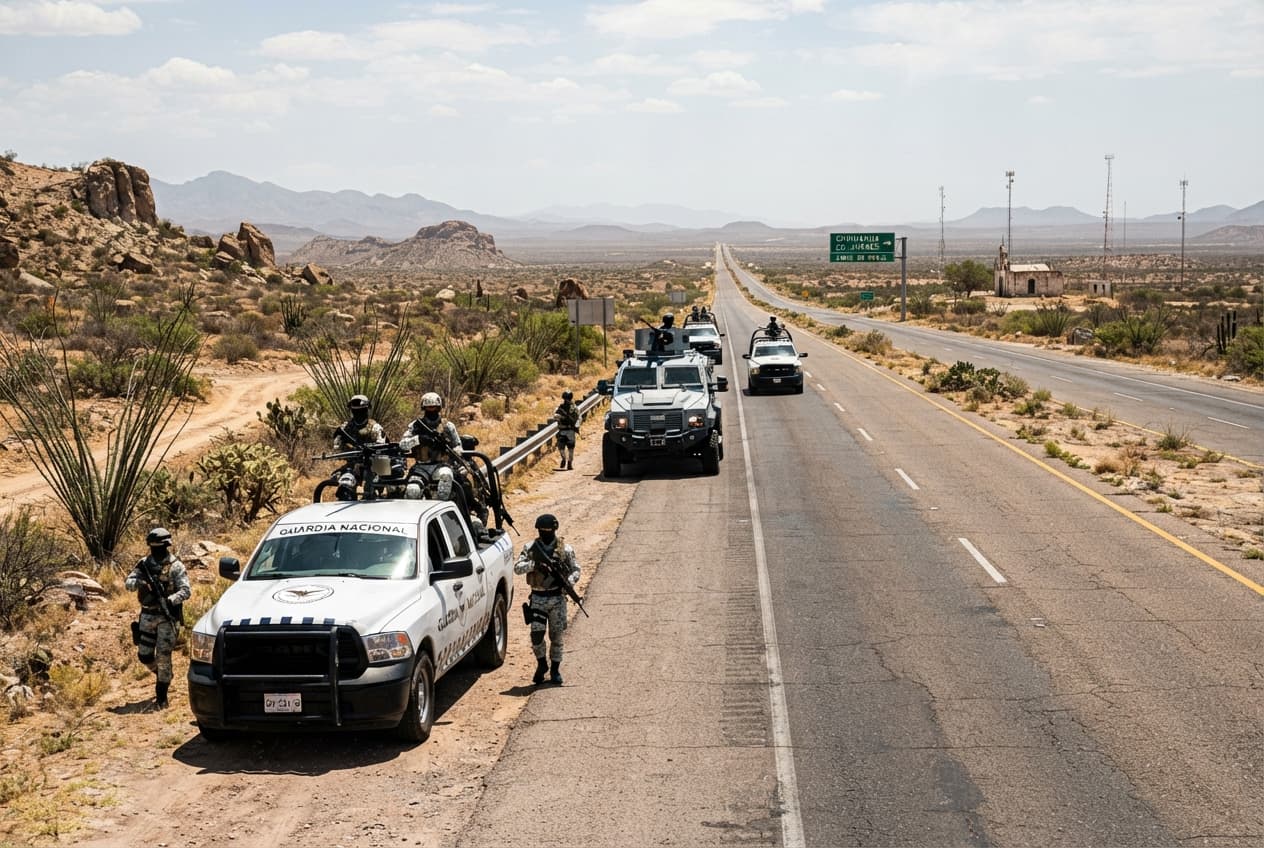
Monterrey, Mexico—A heavy exchange of gunfire between federal security forces and suspected cartel operatives left seven alleged gang members dead in a remote northern district on Monday. State security officials reported that the armed confrontation erupted when a military patrol intercepted a convoy of armored vehicles traveling along a rural highway. The suspects immediately opened fire with high-powered automatic rifles, prompting a coordinated tactical response from national guard units.
The fierce firefight lasted for nearly an hour, turning the isolated stretch of asphalt into an active combat zone littered with spent shell casings. Tactical reinforcement units deployed helicopter support to cut off potential escape routes used by the remaining convoy vehicles. Forensic investigators later recovered multiple assault weapons, tactical vests, and military-grade communication equipment from the scene.
Military commanders confirmed that none of the federal soldiers or national guard personnel sustained fatal injuries during the prolonged engagement. Medical evacuation choppers transported two wounded officers to a secure military hospital where they remain in stable condition. Local residents sheltered indoors as the sound of continuous gunfire echoed across the semi-arid landscape throughout the afternoon.
State prosecutors initiated a comprehensive ballistic analysis to trace the serial numbers of the confiscated weaponry used by the criminal cell. Intelligence analysts believe the armed group belonged to a regional faction involved in cross-border trafficking and extortion rackets. Security sweeps continued across neighboring municipalities overnight to locate additional safehouses linked to the targeted syndicate.
The clash underscores the persistent volatility and high-intensity conflicts characterizing law enforcement operations in northern territories. Federal security cabinets have repeatedly emphasized their commitment to dismantling armed cartels operating outside the bounds of state control. Human rights observers monitored the scene to ensure standard protocol adherence during the evidence collection process.
Local commerce ground to a halt as frightened merchants locked their doors and suspended transportation services along the affected highway corridor. State transit authorities rerouted commercial freight traffic through alternative inland passes while federal convoys secured the highway. Community leaders expressed exhaustion over the ongoing cycle of violence plaguing their rural municipalities.
Forensic pathologists scheduled autopsies for the deceased suspects to confirm identities and check for chemical substances in their systems. Investigators are cross-referencing fingerprints with national criminal databases to determine if any of the dead faced active arrest warrants. The confiscated vehicles were towed under heavy guard to a secure military compound for detailed inspection.
Federal agencies pledged to maintain an elevated security posture across the region to deter retaliatory strikes from allied criminal cells. Intelligence units continue monitoring encrypted radio frequencies used by local factions to intercept potential communication chatter. The highway reopened to civilian traffic late Monday evening after clearance from military explosives ordnance disposal teams.
Published by Banx Network. This article is part of the Banx decentralized media programme, powered by the BXE token on the XRP Ledger.