
Key Highlights
- Collision:Two container ships collided in Rotterdam's main harbor channel.
- Traffic Halted:All vessel traffic has been suspended indefinitely.
- Environmental Concerns:Heavy fuel oil is leaking into the harbor, prompting cleanup efforts.
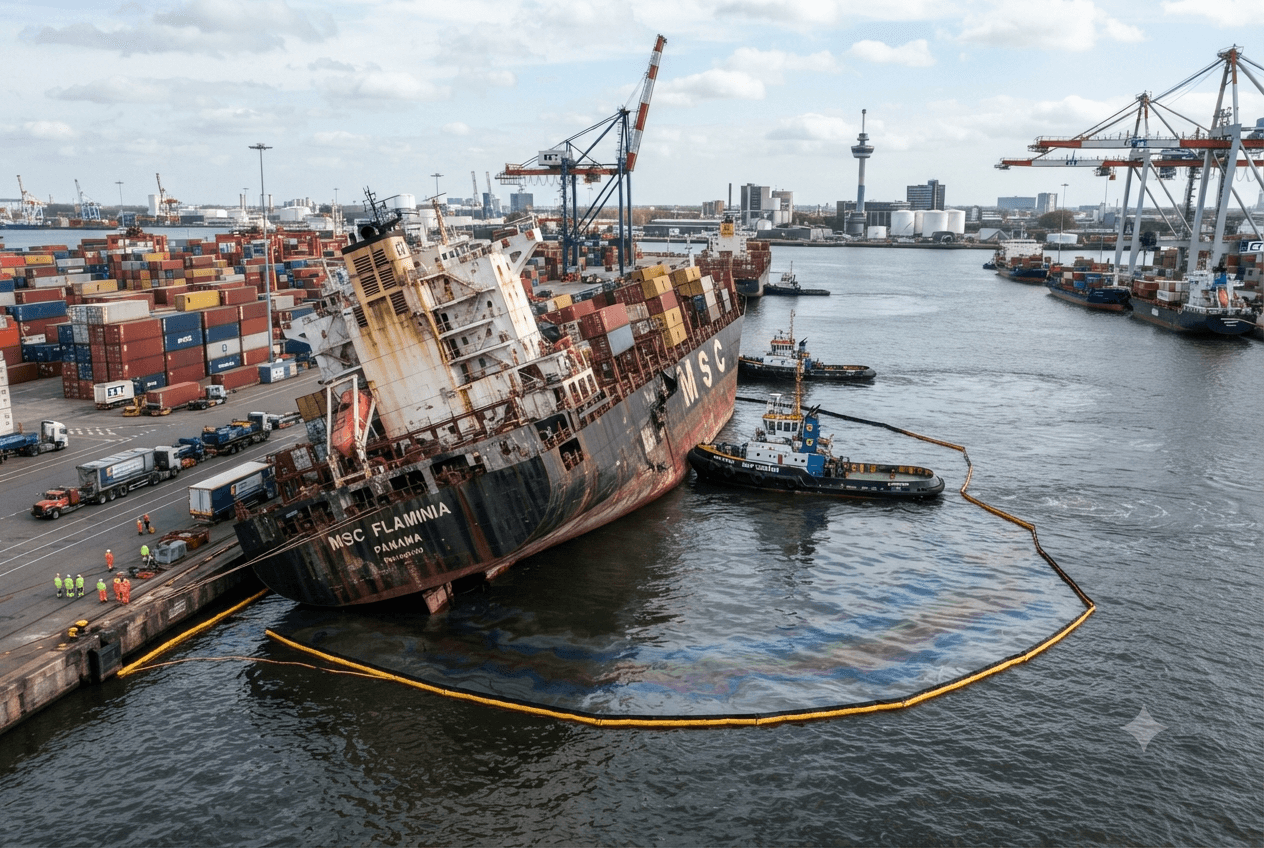
Rotterdam, Netherlands—A significant maritime incident unfolded early Tuesday morning when two container ships collided in the main harbor channel, leading to a complete halt of vessel traffic through Europe’s busiest port. The crash occurred just after dawn when a Liberia-flagged cargo carrier experienced a steering failure and struck a stationary docking vessel. Fortunately, no injuries were reported among the crew members, but the impact caused a rupture in the fuel bunker of the moving ship, resulting in a heavy fuel oil leak into the harbor basin within minutes.
In response to the incident, port authorities quickly deployed emergency response vessels to contain the spill. Harbor master Jan van de Velde confirmed that all incoming and outgoing shipping movements were suspended indefinitely, leading to commercial vessels dropping anchor miles offshore. As the queue of ships waiting to enter the port grew, tugboats surrounded the wreckage to stabilize the listing carriers, while salvage divers prepared to inspect the damage.
Initial assessments indicated that the hull breach was severe enough to block the channel for at least forty-eight hours. Crane operators and salvage crews faced the challenge of securing loose containers that were precariously hanging over the water, all while contending with the incoming tide. Local environmental agencies were on high alert, monitoring the spill and deploying cleanup teams to spray dispersants along the shoreline to protect nearby wildlife reserves.
The shutdown of the port has raised immediate concerns among logistics associations, as thousands of shipping containers risk being stranded. In an effort to mitigate the impact, shippers have begun diverting vessels toward smaller regional ports. However, these facilities lack the crane capacity to handle ultra-large container ships, further complicating the situation. Industry analysts have warned that the disruption could ripple through European manufacturing supply chains within days, potentially leading to delays in the delivery of goods and materials.
By midday, insurance investigators arrived at the harbor office to begin reviewing voyage data recorders and radio logs. Port police detained the pilot and master of the inbound vessel for mandatory drug and alcohol screenings, a standard procedure following such incidents. Harbor authorities have stated that navigation clearance will not be granted until the wreckage is completely removed from the turning basin.
As evening approached, salvage engineers were busy calculating weight distributions to prevent the damaged ships from capsizing during the extraction process. Heavy-lift floating cranes moved into position, preparing for a delicate overnight recovery operation. The situation remains fluid, with port officials and environmental agencies working tirelessly to address the immediate challenges posed by this maritime accident.
Published by Banx Network. This article is part of the Banx decentralized media programme, powered by the BXE token on the XRP Ledger.



