
Key Highlights
- New imaging technology captures ultrafast events in a single shot.
- This advancement allows for a richer understanding of microscopic processes.
- Applications span materials science, chemistry, and biology.
[Breakthrough in Imaging Technology]
In the realm of scientific discovery, certain phenomena occur so rapidly that they elude conventional observation. Events unfolding in trillionths of a second have long posed a challenge for researchers, who traditionally relied on repeated experiments to piece together a coherent narrative from fleeting glimpses. However, recent advancements in imaging technology are revolutionizing this approach, enabling scientists to capture ultrafast microscopic events in a single shot.
This innovative technique marks a significant departure from traditional ultrafast imaging methods, which required identical events to be reproduced multiple times. Each repetition contributed a fragment of information, ultimately combined to form a complete picture. While this method has proven effective, it is contingent upon the assumption of perfect consistency—an assumption that can falter in complex or unpredictable systems.
The new imaging approach transcends these limitations by simultaneously recording multiple dimensions of data, including intensity, timing, and spatial variation. This capability allows for a more comprehensive representation of microscopic events, reducing uncertainty and unveiling details that were previously obscured. As a result, phenomena that were once approximated can now be observed directly, providing a clearer understanding of their dynamics.
[Engagement with Light]
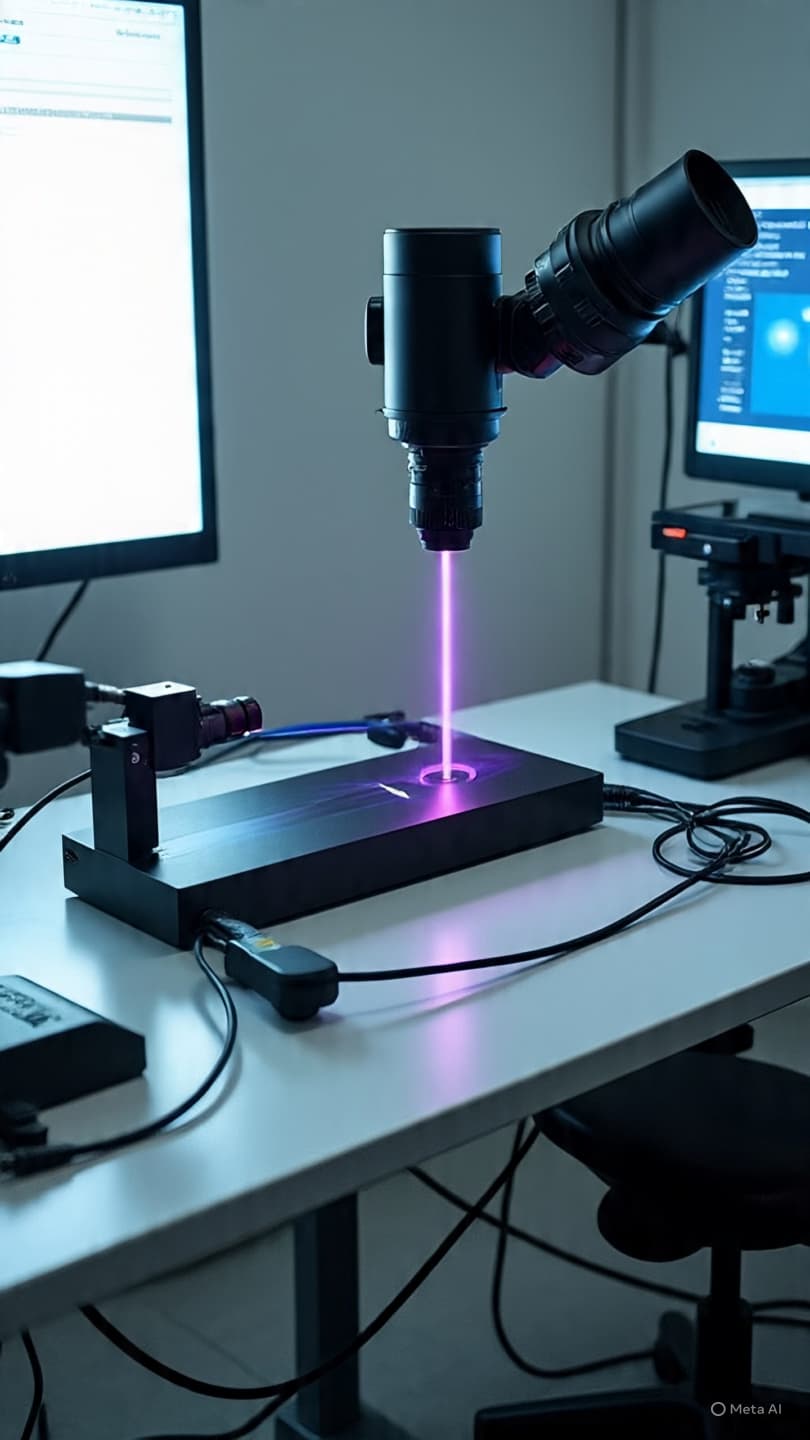
At the core of this technological advancement is a sophisticated engagement with light itself. Researchers employ advanced optical techniques to manipulate and measure ultrafast pulses of light as they interact with various materials. These interactions are governed by fundamental principles of optics, where light serves both as a tool and a subject of study. This dual role enhances the clarity of the captured images, allowing scientists to observe processes that occur at speeds that challenge even the most advanced instruments.
The implications of this breakthrough are profound. In materials science, for instance, it could lead to a deeper understanding of how substances behave under extreme conditions. In the field of chemistry, this technology may unveil intermediate states in reactions that were previously invisible to researchers. Furthermore, in biology, it offers the potential to observe rapid cellular processes without disrupting their natural flow, providing insights into fundamental biological mechanisms.
[The Elegance of Observation]
This new imaging method embodies an elegant shift in scientific observation. Rather than pursuing an event through repetitive trials, the system is designed to wait for the moment to occur, capturing everything in one go. This quieter, more contemplative approach prioritizes completeness over reconstruction, allowing scientists to engage with the reality they seek to understand more fully.
As researchers continue to refine single-shot imaging techniques, they aim to enhance resolution, sensitivity, and accessibility across various scientific disciplines. Although still in development, this approach represents a significant leap toward observing ultrafast phenomena as they naturally occur—captured not in fragments, but in their entirety.
Published by Banx Network. This article is part of the Banx decentralized media programme, powered by the BXE token on the XRP Ledger.



