By midday, the desert light flattens everything it touches. Portable structures—trailers, prefabricated units, temporary offices—take on the same pale hue as the sand around them. In forward-operating environments, these makeshift spaces become more than their materials suggest. They hold briefings and coffee breaks, maps pinned to thin walls, laptops open on folding tables. They are where routine gathers in places defined by uncertainty.
It was inside one such improvised office space that six U.S. service members were killed in an Iranian strike, according to American defense officials. The structure, described as a temporary workspace within a larger installation, was not hardened like permanent command buildings. It was functional, practical, assembled to meet the immediate needs of deployment.
The strike, attributed by U.S. authorities to Iran or Iran-backed forces, marked a sharp escalation in a region already braced for confrontation. Initial reports indicate that the projectile—believed to be a drone or missile—struck the section of the base used for administrative and planning work rather than frontline operations. The distinction offers little comfort; in modern conflict, there is rarely a clear rear.
Defense officials in Washington confirmed the deaths and said an investigation is underway to assess how the strike penetrated base defenses. The Pentagon noted that protective systems were active but acknowledged that no shield is absolute. In recent years, Iran and allied groups have expanded their use of precision-guided drones and short-range missiles, tools capable of navigating airspace once considered secure.
The base itself, located in a strategic corridor of the Middle East, has long supported coalition logistics and regional deterrence. Like many installations in the region, it balances visibility with vulnerability—large enough to function as a hub, yet exposed to the arc of evolving threats. Temporary structures are common in such settings, erected to accommodate surges in personnel or shifting missions.
In the hours after the strike, images showed emergency crews moving through debris and twisted metal. Flags were lowered. Statements were delivered in careful tones. The White House condemned the attack and signaled that the United States would respond at a time and manner of its choosing. Iranian officials denied direct responsibility while reiterating their opposition to the U.S. military presence in the region.
Beyond the official language lies a quieter reality: six individuals working inside a space intended for paperwork and planning did not return home. Makeshift offices are built for flexibility, not fortification. They reflect the transient nature of deployments—structures meant to be assembled, used, and eventually dismantled. That one became the site of lethal force underscores how the boundaries between combat and support have blurred.
Regional allies reacted with expressions of solidarity, while global markets registered the tremor with modest shifts in oil prices and security assessments. Diplomats renewed calls for restraint, aware that retaliation could widen a conflict already stretching across borders and waterways.
As evening falls again over desert installations and coastal bases, the familiar hum resumes—generators, radio traffic, boots on gravel. Yet the awareness lingers that even ordinary spaces can become flashpoints. The confirmed facts remain stark: six U.S. service members were killed in an Iranian strike while inside a makeshift office structure; investigations are ongoing; Washington has pledged a response.
Temporary walls can be rebuilt. Offices can be relocated. But the absence left behind does not yield so easily to reconstruction. In regions where history often moves in cycles of escalation and pause, the hope—spoken softly in press rooms and prayer services alike—is that this moment does not become another widening circle.
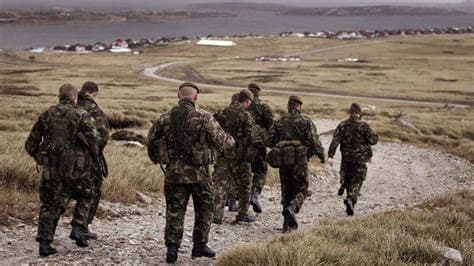
AI Image Disclaimer Visuals are AI-generated and serve as conceptual representations.
Sources Reuters Associated Press BBC News The New York Times U.S. Department of Defense
Published by Banx Network. This article is part of the Banx decentralized media programme, powered by the BXE token on the XRP Ledger.