Key Highlights
- Reports of tampered Halloween candy have emerged from multiple provinces in Canada.
- Police have found needles and metal objects in treats collected by children.
- Authorities advise parents to carefully inspect candy before allowing children to consume it.
Across Canada, the Halloween tradition of trick-or-treating has taken a concerning turn this year, as police services issue warnings following reports of tampered candy. Parents are urged to exercise caution after alarming discoveries of metal objects, needles, and even a used syringe found among the treats collected by children on Halloween night. While no injuries have been reported, the unsettling nature of these incidents has cast a shadow over a holiday typically filled with joy and excitement.
Reports of tampered candy have surfaced from various provinces, each contributing to a growing sense of unease. In Quebec, provincial police reported that two families in Drummondville discovered needles hidden inside small chocolate bars. Additionally, a metal pin was found in Saint-Marcel, and another was reported in a bag of gummies in Gatineau. In Happy Valley-Goose Bay, Newfoundland and Labrador, the RCMP received two official reports of small metal items found inside treat-sized Coffee Crisp bars collected on Halloween night, with authorities stating they are "open to all possibilities" regarding how these objects ended up in the candy.
In Nova Scotia, the RCMP responded to a call from Beaver Bank, a rural community within Halifax, where a parent found what appeared to be a used syringe without a cap in a child's treat bag. Officers advised the family to discard all the candy, although no injuries were reported. In Ontario, Durham Regional Police investigated reports of sewing needles found in candy in Oshawa, while Hamilton police warned of needles discovered in Aero, KitKat, and Caramilk bars distributed along Limeridge Road on the East Mountain. Winnipeg police also received reports of tampered candy, including a mini-Twix and a KitKat, from different neighborhoods in the city.
These incidents challenge the fundamental trust that underpins the tradition of trick-or-treating. Children approach strangers' doors, accepting treats with the innocent faith that they are safe. When that trust is violated, even by a single report, the repercussions can be widespread. Chloé Bourgeois, a city councillor in Gatineau, articulated the frustration many parents feel: "I can't believe that even now in 2026, we can't celebrate with our children without feeling stressed."
Police have been cautious not to speculate on the origins of the tampered candy. RCMP Cpl. Jesse O'Donaghey emphasized the need for vigilance while also advising parents to check for signs of manufacturing issues, noting that there is "no definitive determination" regarding the source of the objects. In Winnipeg, Const. Dani McKinnon mentioned that police typically receive one or two reports of this nature each Halloween, a detail that offers both comfort and concern.
As the situation unfolds, police across the country are providing consistent guidance to parents: carefully sort through the candy, look for torn wrappers or unusual openings, avoid unwrapped treats, and if something seems amiss, set it aside, take a photo, and contact the non-emergency line. This year, the ritual of sorting through Halloween candy has transformed into an act of care, carrying more weight than usual. The candy will be inspected, suspicious items will be set aside, and the holiday will conclude as it always does—with wrappers in the trash and the hope that next year, the sorting will be simpler.
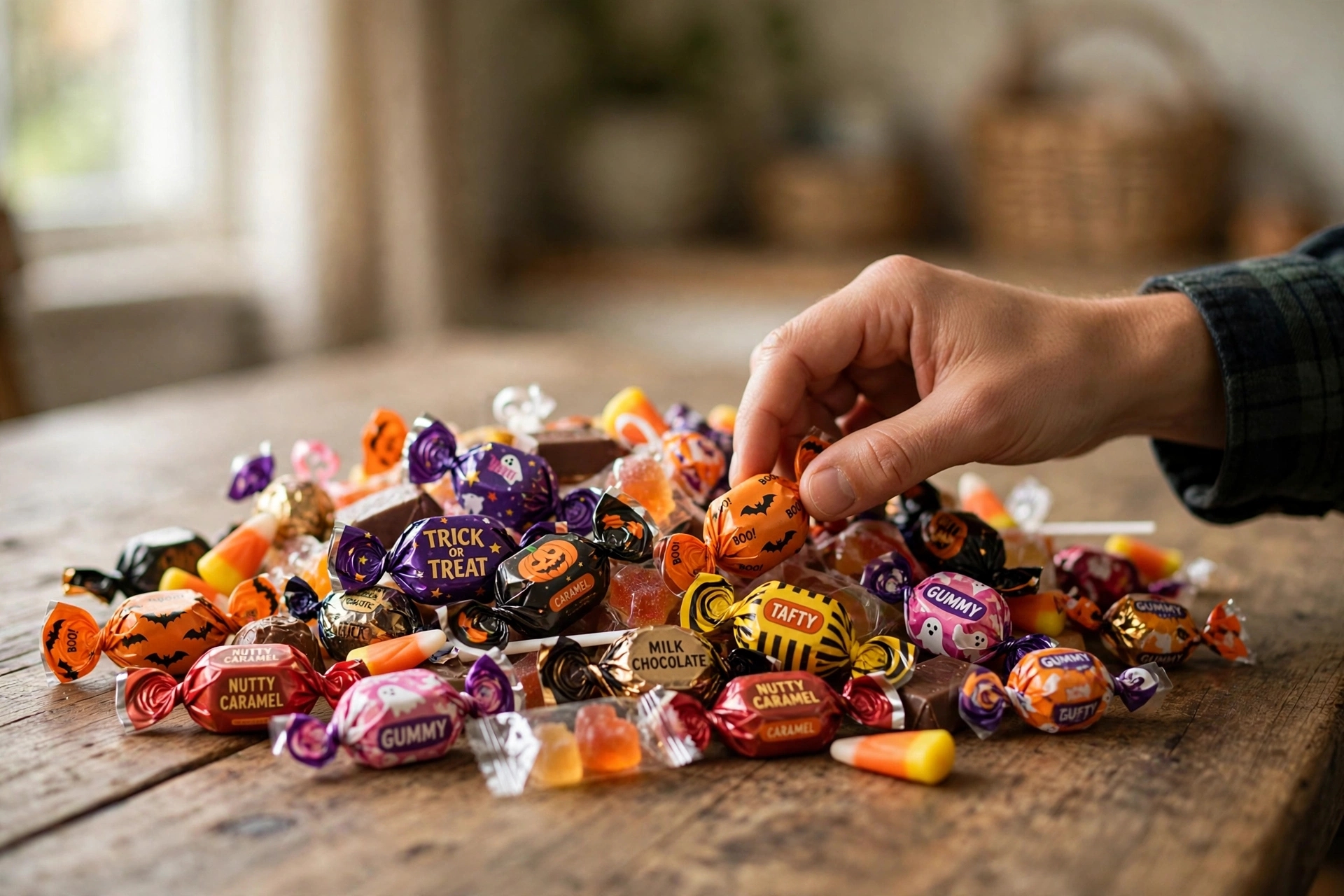
AI Image Disclaimer: The visuals accompanying this report were generated by artificial intelligence and are intended for illustrative purposes only; they do not depict the actual candy, packaging, or locations involved in these reports.
Published by Banx Network. This article is part of the Banx decentralized media programme, powered by the BXE token on the XRP Ledger.