
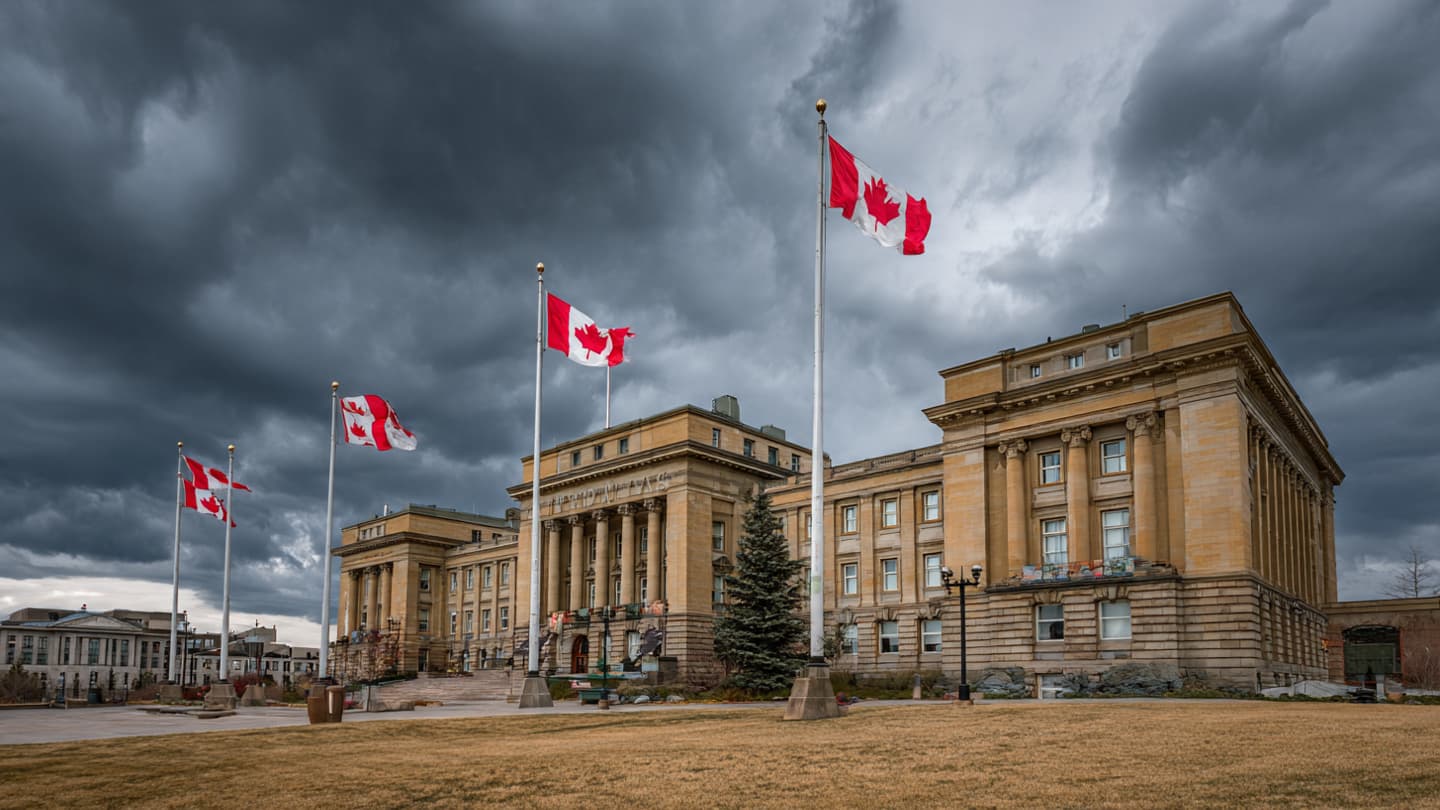
Nations are often held together not only by constitutions and borders, but by quieter threads of memory, economy, and shared identity. In Canada, where landscapes stretch across mountains, plains, and coastlines, conversations about unity periodically return like distant thunder across open fields. This week, those conversations resurfaced as federal leaders responded to renewed separatist sentiment in Alberta.
Canadian Prime Minister Mark Carney described Alberta as “essential” to the country while addressing growing calls from sovereignty advocates seeking greater provincial autonomy and potential independence. His remarks came as debates surrounding Alberta’s place within the Canadian federation intensified following proposed referendum-related legislative changes in the province.
The issue has drawn national attention after Alberta Premier Danielle Smith introduced measures designed to make citizen-led referendums easier to initiate. Although no formal independence vote has been announced, separatist groups have interpreted the policy shift as an opportunity to amplify discussions around sovereignty.
Federal officials emphasized Alberta’s economic and strategic importance to Canada, particularly through its role in energy production, agriculture, and interprovincial trade. Ottawa also sought to frame national unity as a practical partnership shaped by mutual economic interests rather than solely constitutional arrangements.
Supporters of Alberta sovereignty argue that the province has long faced political frustration tied to federal environmental policies, energy regulations, and perceptions of unequal representation within national institutions. Many advocates believe western provinces carry disproportionate economic burdens while holding limited influence over national policy direction.
Critics of separation, however, warn that independence would involve major economic and legal uncertainty. Constitutional scholars and business groups have repeatedly pointed to complications involving trade agreements, federal transfers, citizenship arrangements, and infrastructure coordination should Alberta pursue sovereignty.
Political analysts note that while frustration with Ottawa remains significant in parts of Alberta, public support for outright separation appears more limited than broader calls for provincial autonomy. Polling over recent years has often shown stronger support for reforming federal-provincial relations than for leaving Canada entirely.
Public discussion surrounding the issue continues across political forums, local communities, and social media platforms. For some Canadians, the debate reflects unresolved regional tensions; for others, it represents a democratic conversation about the balance between provincial rights and national cohesion.
For now, Alberta remains firmly within Canada’s federal framework. Yet the renewed sovereignty debate illustrates how regional identity and political dissatisfaction continue shaping conversations across one of the world’s longest-standing democracies.
AI-generated visuals are included solely for illustrative newsroom use.
Sources: CBC News, Reuters, The Globe and Mail, CTV News, Associated Press
Note: This article was published on BanxChange.com and is powered by the BXE Token on the XRP Ledger. For the latest articles and news, please visit BanxChange.com