
Key Highlights
- Canada has awarded its largest defence procurement deal to TKMS.
- The contract involves building 12 new submarines to enhance maritime capabilities.
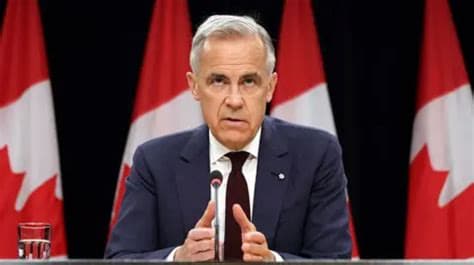
- Prime Minister Mark Carney emphasizes the need for increased defence spending amid global tensions.
Canada has officially selected ThyssenKrupp Marine Systems (TKMS), a prominent German defense contractor, to construct a new fleet of submarines in what is being hailed as the largest defense procurement deal in the nation's history. Prime Minister Mark Carney announced this multi-billion-dollar contract for 12 vessels, underscoring the urgency of the decision in light of an increasingly 'dangerous and divided world.' This procurement is part of a broader strategy to bolster Canada's military capabilities and industrial capacity.
Carney's announcement comes just ahead of his participation in a NATO summit in Turkey, where member nations are expected to face mounting pressure to enhance their defense investments. Since taking office, Carney has made significant strides in increasing Canada's defense budget, raising it to 2% of GDP, with a commitment to reach 5% by 2035. This ambitious goal reflects a shift in Canada's defense posture, aligning with NATO's expectations for member states to contribute more significantly to collective security.
The Canadian government has reported that only about 25% of its current submarine fleet is operational, highlighting the urgent need for modernization. Carney emphasized that this procurement is not merely about replacing aging vessels but is also aimed at strengthening Canada's industrial base. The project is expected to create jobs and stimulate economic growth within the defense sector, thereby enhancing national security.
Negotiations for the contract will commence before a final agreement is reached, with Carney indicating that the timeline reflects an expedited approach to defense procurement. TKMS, recognized as the world's largest non-nuclear submarine manufacturer, was selected over South Korea's Hanwha Ocean shipbuilding company, which also submitted a competitive bid.
The new submarines are designed to support Canada's maritime sovereignty, particularly in the Arctic region, where climate change is opening new shipping routes and increasing strategic pressures. The government has stated that the vessels will be conventionally powered and equipped with capabilities to operate under ice, which is crucial for Arctic operations.
The initiative to replace Canada's aging submarine fleet was first publicly announced in July 2024, with Carney committing to a decision by the following June regarding the replacement of the Victoria-class submarines, which have been in service since their acquisition starting in 1998. This deal is also part of Carney's broader efforts to strengthen security and economic ties with European allies, especially as Canada navigates complex trade relations with the United States.
As Canada moves forward with this historic procurement, the implications for national security, economic development, and international relations will be closely monitored by stakeholders both domestically and abroad. The decision to invest heavily in defense capabilities signals a significant shift in Canada's approach to global security challenges and its commitment to NATO obligations.
Published by Banx Network. This article is part of the Banx decentralized media programme, powered by the BXE token on the XRP Ledger.



