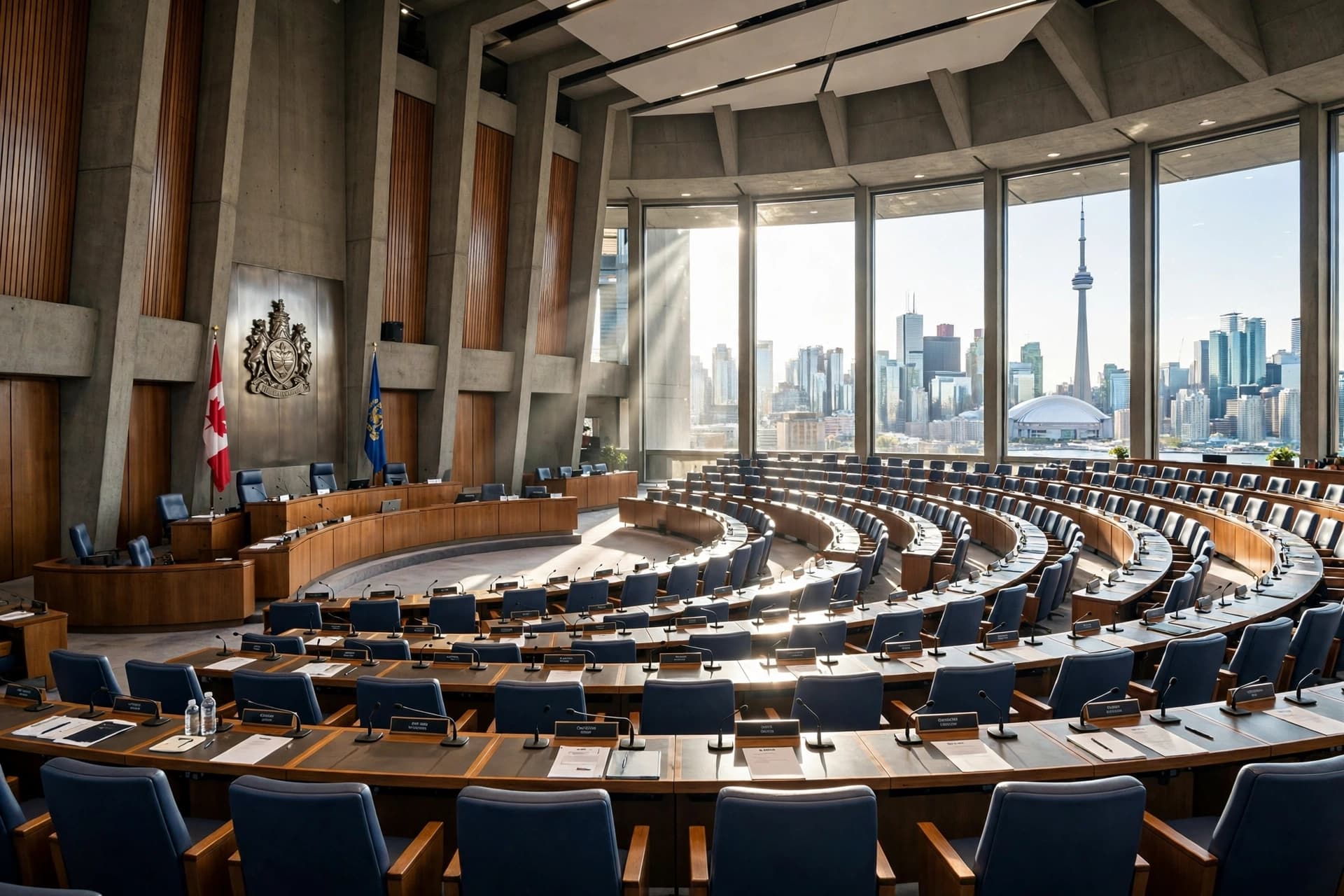
The character of a city is often written in its council chamber. Who sits in those chairs, whose voice is heard, whose daily experience becomes the default backdrop for decision-making—these seemingly technical questions actually determine whether a policy looks reasonable on paper but feels foreign in some people's lives. Nearly half of Toronto households rent. Before this election, not a single councillor had explicitly identified as a renter. That contrast, on its own, is a quiet statement about representation.
The change arrived in concrete form. In Parkdale–High Park, longtime tenant advocate Gord McNally won his seat. Speaking to the Toronto Star after his victory, he said he wants to bring the renter's perspective into the fight against the affordability crisis. He is joined by fellow new councillors Chiara Padovani and Curran Stikuts, both of whom also said they rent. Three of the seven new councillors rent their homes. Before them, the number of confirmed renters on council was zero.
This is more than a shift in numbers. Renters and homeowners face different realities. Homeowners worry about property taxes; renters worry about rent increases and eviction protection. Homeowners worry about neighborhood stability; renters worry about whether their lease will be renewed. These concerns are not opposed, but they do not always overlap. When a chamber is filled with homeowners, the anxieties only renters know—the helplessness of receiving a renoviction notice, the exhaustion of watching wages never catch up to rent—can be pushed to the margins of decision-making.
McNally insists his campaign was not a "homeowners versus renters" contest. That distinction deserves to be taken seriously. City governance needs not factional warfare but a fuller perspective. But he also pointed to a simple fact: the renter's perspective is necessary for the city to "be a better landlord." Toronto's role as landlord shows up in the social housing it owns, the rental market it regulates, and the tenant protection policies it enforces. A councillor who has never rented can hardly understand from the inside what those policies feel like on the other end.
The inertia of history is plain. The Star's analysis found that councillors who entered office as renters often left it as homeowners. This is not surprising. The income, stability, and social capital that accumulate in political life all make homeownership a natural trajectory. The problem is not individual success but whether that trajectory quietly shapes a "temporary renter's perspective"—the view of someone who knows they will eventually leave renter status, which differs from the view of someone who sees no exit.
The arrival of new councillors will not change everything at once. Council's power structure, committee assignments, and negotiations with the province will all limit any single member's influence. But the symbolic and practical meaning of representation are intertwined here. When one renter sits in the chamber, the debate over rent control carries an added weight of lived experience. When three renters sit there, issues once dismissed as "technical" may begin to look like questions about people.
Toronto's housing crisis was not built in a day and will not be solved by one election. But who is in the room, who speaks, and whose experience is treated as the "normal" reference point—the answers to these questions are slowly changing. The pace may be frustrating, but the change is real. In a city where nearly half the households rent, the council chamber is finally beginning to look a little more like the people it serves.
Image Disclaimer: The image with this article was created using AI generation tools and does not depict actual councillors or council proceedings.
Sources: Toronto Star, The Globe and Mail, Statistics Canada
Published by Banx Network. This article is part of the Banx decentralized media programme, powered by the BXE token on the XRP Ledger.