

Key Highlights
- Desktop accelerators are revolutionizing particle physics research.
- These compact devices utilize laser-driven acceleration technology.
- They promise to make advanced experiments more accessible to smaller institutions.
The field of particle physics has long been characterized by its reliance on large-scale facilities, such as CERN's Large Hadron Collider, which span vast underground tunnels and require monumental investments. However, a significant shift is occurring as researchers explore the potential of desktop particle accelerators—compact devices that can fit on a laboratory bench yet hold the promise of transforming scientific inquiry.
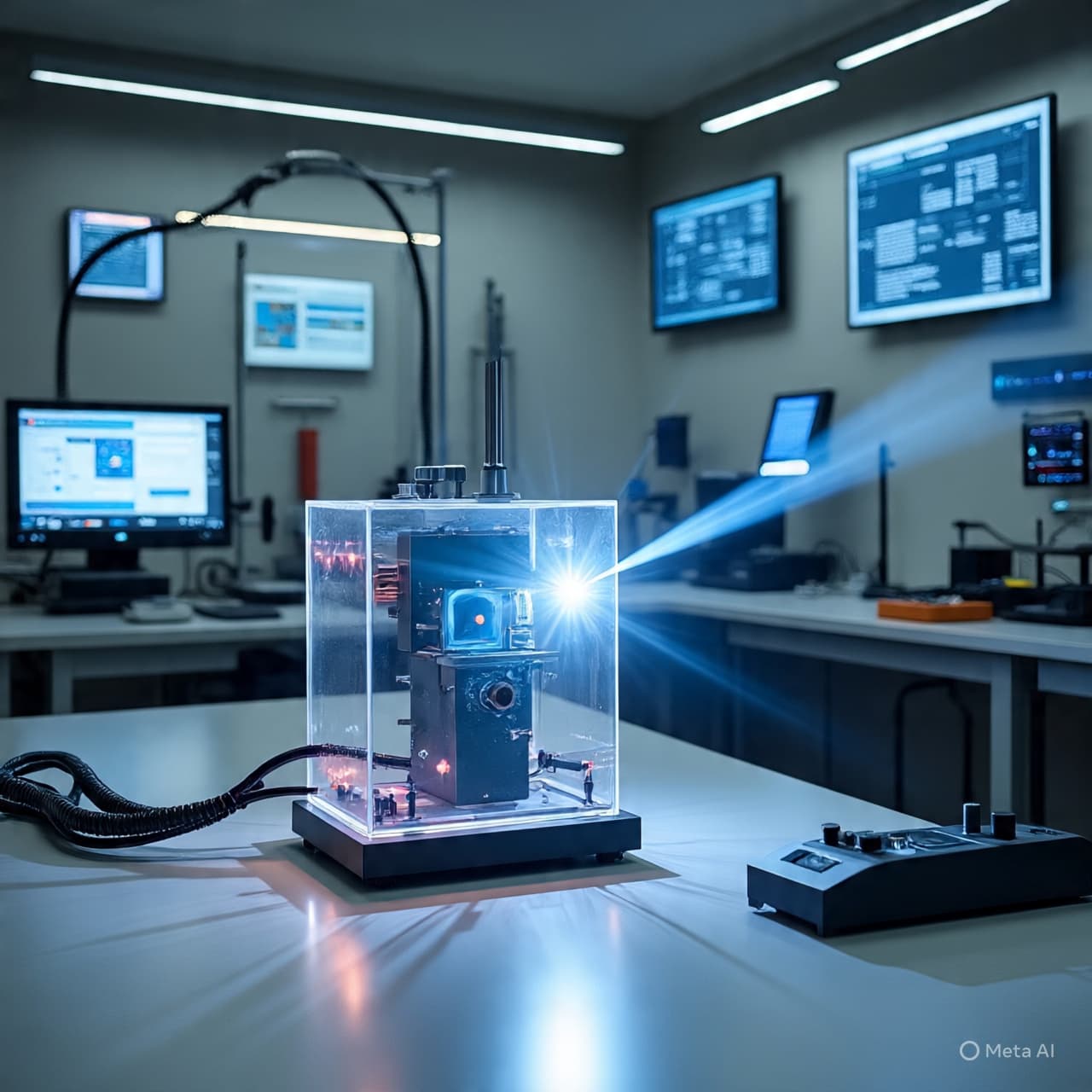
Desktop accelerators utilize innovative technologies, particularly laser-driven acceleration, which allows particles to be propelled over short distances using intense laser pulses. This method contrasts sharply with traditional accelerators that rely on massive electromagnetic structures. The result is a compact system capable of achieving energies that were previously thought to be attainable only in large-scale facilities.
The implications of this technological advancement are profound. By reducing the size and cost of particle accelerators, these devices could democratize access to advanced physics experiments. Smaller universities, research labs, and interdisciplinary teams may soon find themselves able to conduct experiments that previously required extensive global collaborations. This accessibility could lead to a surge in innovative research and discoveries across various fields.
Moreover, the flexibility of desktop accelerators allows for rapid adaptation to new experimental ideas. Unlike traditional facilities, where experiments are often planned years in advance, smaller accelerators can be modified and utilized more quickly. This agility could foster a more dynamic research environment, encouraging scientists to explore new hypotheses and test ideas in real-time.
In addition to their research potential, compact accelerators have practical applications in fields such as medical imaging, cancer treatment, and materials science. Their portability and efficiency make them attractive tools for industries seeking high-energy solutions without the need for extensive infrastructure. This versatility could lead to significant advancements in technology and healthcare.
Despite these advancements, challenges remain. Currently, desktop accelerators do not achieve the highest energies that large facilities can produce. For certain fundamental research areas, large accelerators will continue to play a crucial role. Rather than replacing these giants, smaller devices are expected to complement existing systems, providing new avenues for exploration.
This trend reflects a broader movement in science toward the miniaturization of powerful tools. Just as computers have evolved from room-sized machines to pocket-sized devices, particle accelerators may follow suit, shrinking in size while expanding their reach and capabilities.
Researchers are optimistic about the future of desktop accelerators. As technology continues to advance, the performance of these compact devices is expected to improve, narrowing the energy gap with their larger counterparts. Each technological leap brings new opportunities to explore the unseen aspects of the universe, making the future of particle physics more exciting than ever.
Ultimately, the shift toward desktop accelerators is not merely about reducing size; it is about expanding possibilities. By bringing the tools of particle physics closer to everyday laboratories, scientists are paving the way for discoveries that could reshape our understanding of the universe.
Published by Banx Network. This article is part of the Banx decentralized media programme, powered by the BXE token on the XRP Ledger.




