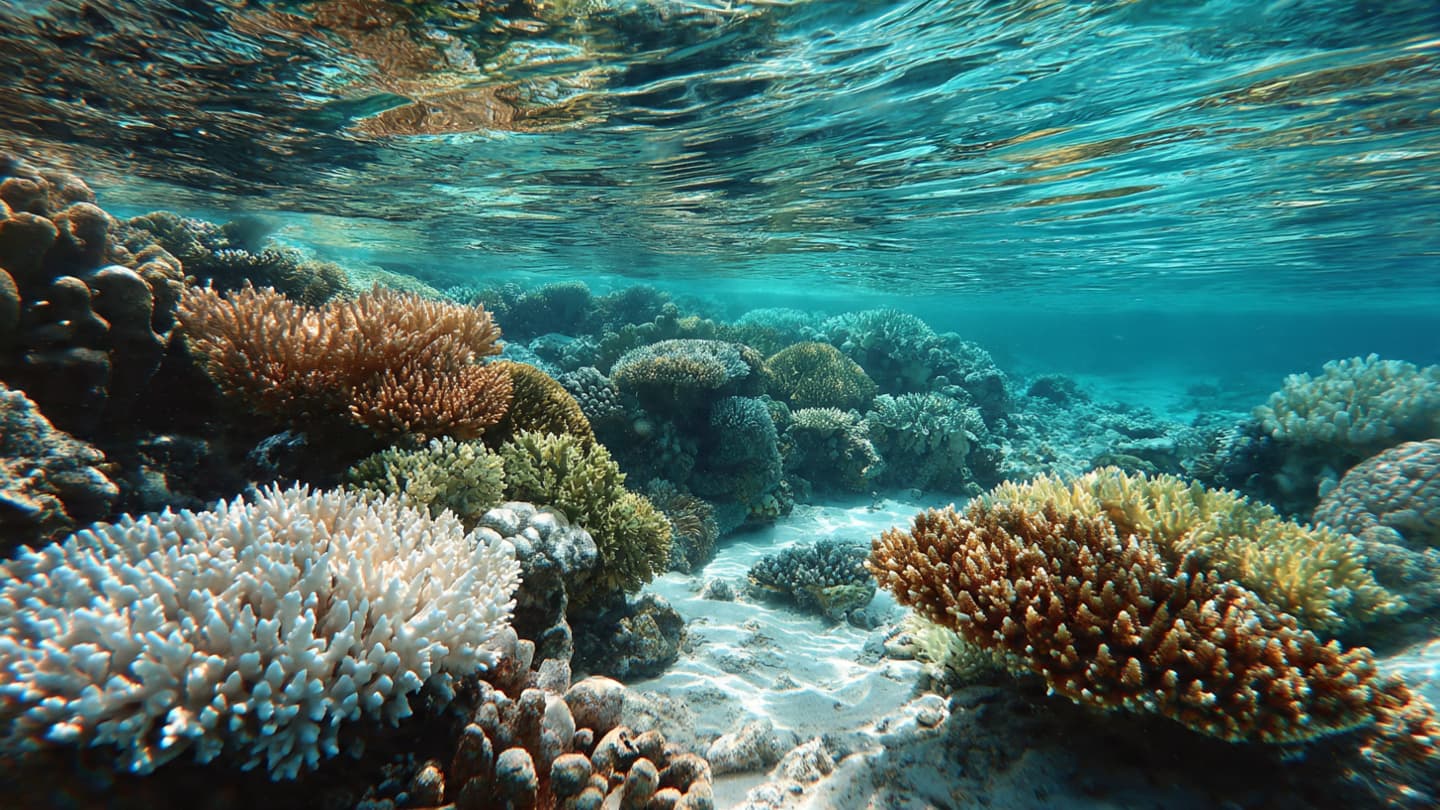
Beneath the surface of warm, shallow seas, coral reefs grow slowly, almost patiently, as if time itself were part of their structure. Yet in recent years, the pace of change in the oceans has begun to outstrip that quiet rhythm. Against this shifting backdrop, new research suggests that corals may not be as still as they appear, adapting in ways that echo the urgency of their environment.
A recent study indicates that some coral species may be capable of accelerating their evolutionary responses to rising ocean temperatures. This process, often described as rapid adaptation, involves genetic shifts occurring over relatively short timeframes, allowing corals to better tolerate heat stress linked to climate change.
Scientists have observed that certain coral populations exposed to repeated heat waves show increased resilience over time. These corals appear to pass on traits that improve survival during thermal stress, suggesting that natural selection may be acting more quickly than previously understood.
The role of symbiotic algae, which live within coral tissues, is also central to this adaptation. Changes in the composition of these algae can influence how corals respond to temperature changes, potentially enhancing their ability to withstand bleaching events.
However, researchers emphasize that this adaptive capacity has limits. While some corals may evolve to tolerate higher temperatures, the pace and intensity of global warming remain critical factors. Rapid environmental change can still exceed the ability of many reef systems to adjust.
The findings offer a more nuanced perspective on coral survival. Rather than viewing reefs solely as vulnerable systems, scientists are beginning to recognize their potential for resilience under certain conditions, particularly when local stressors such as pollution are minimized.
Conservation strategies may benefit from this understanding. Protecting genetically diverse coral populations and reducing additional environmental pressures could support natural adaptive processes already underway.
At the same time, the study reinforces the importance of addressing climate change at a broader scale. Evolutionary adaptation alone is unlikely to safeguard coral ecosystems without parallel efforts to limit global temperature rise.
The research suggests that while corals may adapt in response to warming seas, their future will depend on both their own resilience and the actions taken to stabilize the environment around them.
AI Image Disclaimer: Images used with this article include AI-generated visuals created to represent coral ecosystems and environmental changes.
Sources: Nature Climate Change, Science Advances, NOAA, National Geographic, BBC Science
Published by Banx Network. This article is part of the Banx decentralized media programme, powered by the BXE token on the XRP Ledger.