
Key Highlights
- Political rhetoric can shape perceptions before reality sets in.
- Recent claims about Iran's leadership have been met with firm denials.
- The exchange reflects internal political dynamics in the U.S. and Iran.
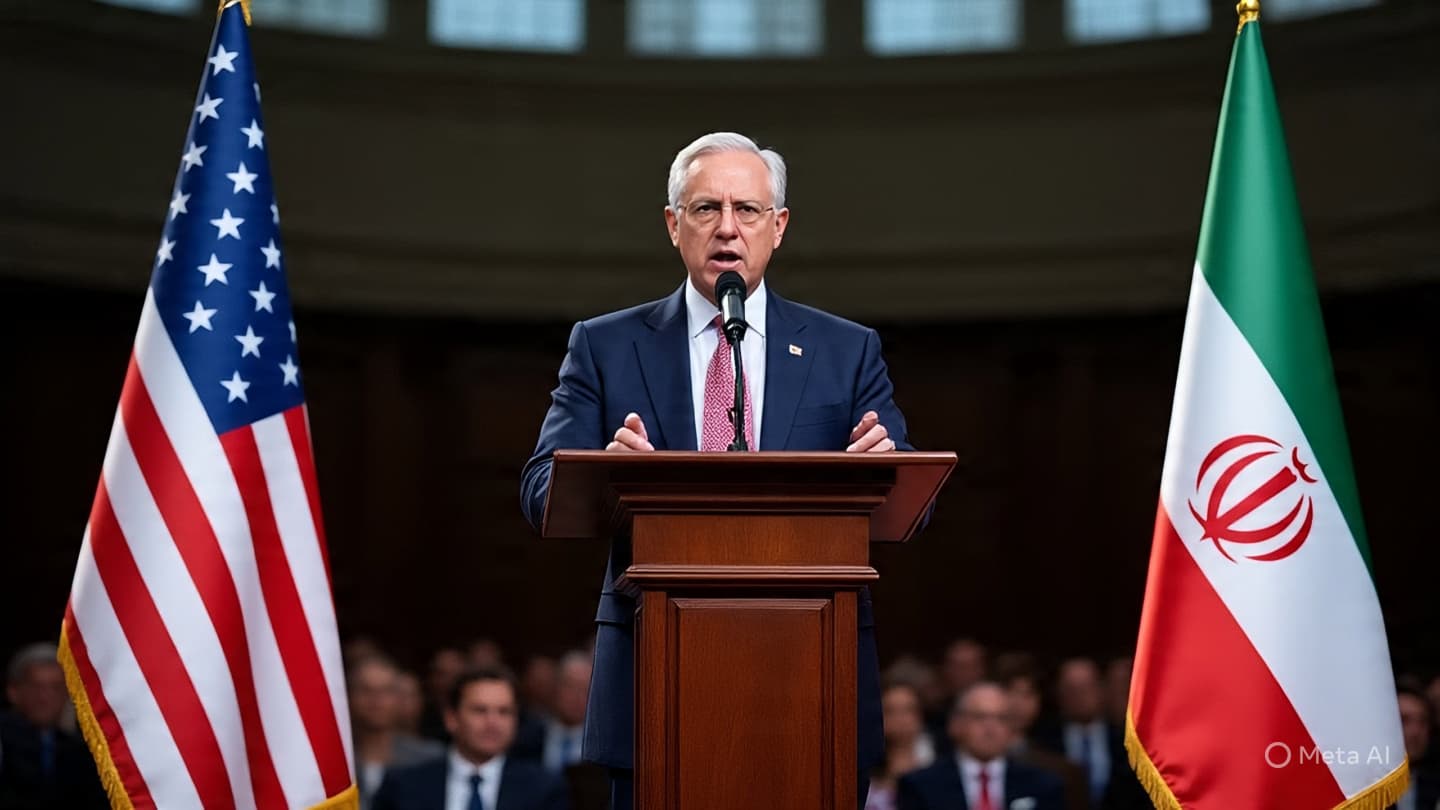
In the shifting theater of global politics, words often travel faster than events themselves, shaping perceptions long before reality settles into place. Statements made from podiums and platforms can ripple across borders, stirring reactions that reveal as much about the speaker as the subject. This phenomenon is particularly evident in the context of recent remarks regarding Iran's leadership, which suggested that the regime was nearing collapse. Such claims, delivered with characteristic certainty, arrive at a moment when geopolitical tensions remain delicately balanced, especially in the Middle East.
Officials in Iran responded firmly to these assertions, rejecting them as unfounded and politically motivated. Representatives in Tehran emphasized continuity within their governing structures, portraying stability rather than fragility. This response underscores the ongoing effort by Iranian officials to project resilience in the face of external pressures, including economic sanctions and diplomatic isolation.
The exchange highlights a familiar pattern in international discourse, where rhetoric becomes both a tool and a signal. Analysts note that such claims often serve domestic audiences as much as international ones, reflecting internal political dynamics within the United States. The interplay between domestic politics and foreign policy is crucial, as leaders often use external threats to galvanize support at home.
At the same time, Iran's response points to its commitment to maintaining governance despite challenges. Officials pointed to institutional continuity and recent policy initiatives as evidence that their governance remains intact. This narrative is essential for the Iranian leadership, as it seeks to reassure both its citizens and the international community of its stability.
Observers caution against reading too much into declarative statements without corroborating developments. While tensions between Washington and Tehran have persisted for years, predictions of sudden political collapse have historically proven unreliable. The broader context includes ongoing regional challenges, economic constraints, and diplomatic standoffs that complicate the situation further.
Yet within these complexities, both nations continue to engage in a narrative contest, each seeking to frame reality in a way that supports its strategic posture. In this environment, rhetoric becomes a kind of currency—valuable, but not always reflective of underlying conditions. It shapes headlines and public perception, even as the deeper currents of policy and governance move at their own pace.
Ultimately, the exchange reflects the enduring interplay between language and power, where statements may echo loudly but require careful listening to understand their true meaning. As political claims continue to evolve, the challenge remains for observers to discern the reality behind the rhetoric and the implications for international relations.
Published by Banx Network. This article is part of the Banx decentralized media programme, powered by the BXE token on the XRP Ledger.



