
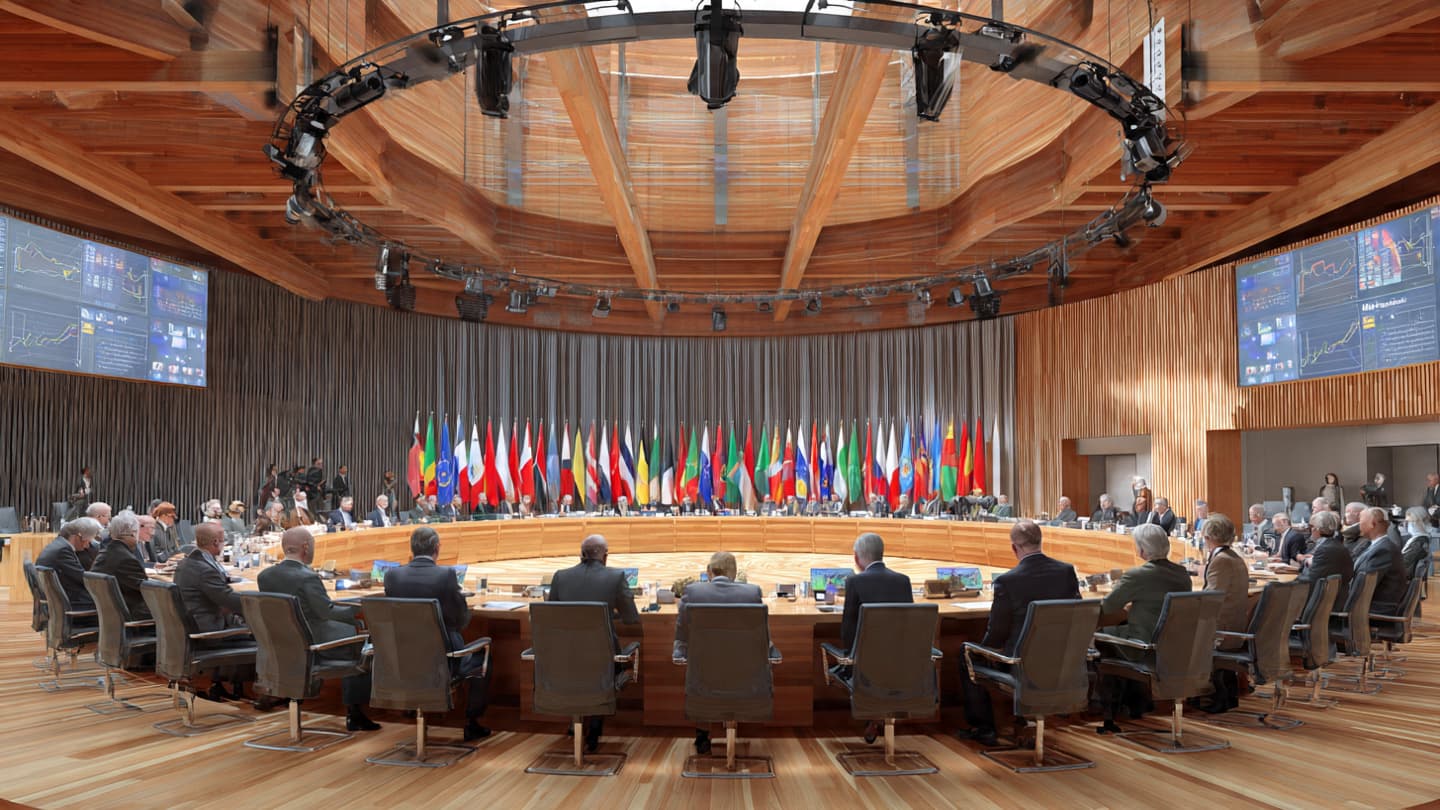
Key Highlights
- G7 Summit:France led discussions on reforming international financial architecture.
- Global Challenges:Emphasis on climate adaptation and technological transformation.
- Developing Economies:Focus on improving access to financing for infrastructure.
The G7 Summit, held recently, served as a platform for France to advocate for significant reforms in the international financial architecture. This call for change reflects the understanding that the financial institutions established decades ago may not adequately address the complexities of today's global economy. As nations grapple with issues such as climate change, technological advancements, and supply chain disruptions, the need for a more responsive financial framework has become increasingly evident.
International financial institutions play a crucial role in shaping economic stability and development projects worldwide. Their influence extends to how countries manage crises and pursue growth. However, as France pointed out during the summit, the challenges faced today are markedly different from those encountered when these institutions were first created. The urgency for reform is underscored by the need for these organizations to adapt to contemporary realities.
Supporters of the proposed reforms argue that existing institutions must evolve to respond swiftly to economic shocks that can ripple across borders. The interconnectedness of global markets means that flexibility and coordination are essential for mitigating risks and seizing opportunities. Modernization efforts are focused not only on enhancing efficiency but also on maintaining trust in the global financial system.
Developing economies are at the forefront of this discussion, as many seek improved access to financing for critical infrastructure projects, sustainability initiatives, and technological advancements. Policymakers are actively debating how international institutions can better support these goals, recognizing that equitable access to resources is vital for fostering global economic growth.
The summit discussions also highlighted the importance of financial resilience. Recent global events have illustrated how vulnerabilities can be exacerbated by interconnected markets. Strengthening international cooperation is seen as a key strategy for reducing these vulnerabilities and enhancing preparedness for future disruptions.
France's advocacy for reform reflects a broader consensus that global institutions must evolve alongside the economies they serve. This perspective does not imply a rejection of existing structures but rather an acknowledgment of the need to preserve their relevance in a rapidly changing environment. Achieving consensus on these issues, however, remains a complex challenge, as countries have varying priorities and perspectives on governance and economic strategy.
As the summit concluded, immediate changes to the international financial architecture were not forthcoming. Nonetheless, the discussions underscored a critical reality: the global economy is in a state of flux, and institutions must adapt to remain effective. France's call for reform is a proactive step toward ensuring that international financial systems can meet the demands of the future.
Published by Banx Network. This article is part of the Banx decentralized media programme, powered by the BXE token on the XRP Ledger.



