

Key Highlights
- Discovery:Astronomers found a supernova that did not leave behind a black hole.
- Implications:This challenges existing astrophysical theories regarding stellar deaths.
- Cosmic Chemistry:The explosion contributes to the formation of new stars and planets.
In the grand theater of the cosmos, death is rarely quiet. Stars, when they reach their end, often do so with a brilliance that briefly rivals entire galaxies. Yet even in this predictable drama, there are moments when the script falters—when something expected simply does not appear. Recent observations have revealed a rare type of stellar explosion that challenges one of the most established outcomes in astrophysics.
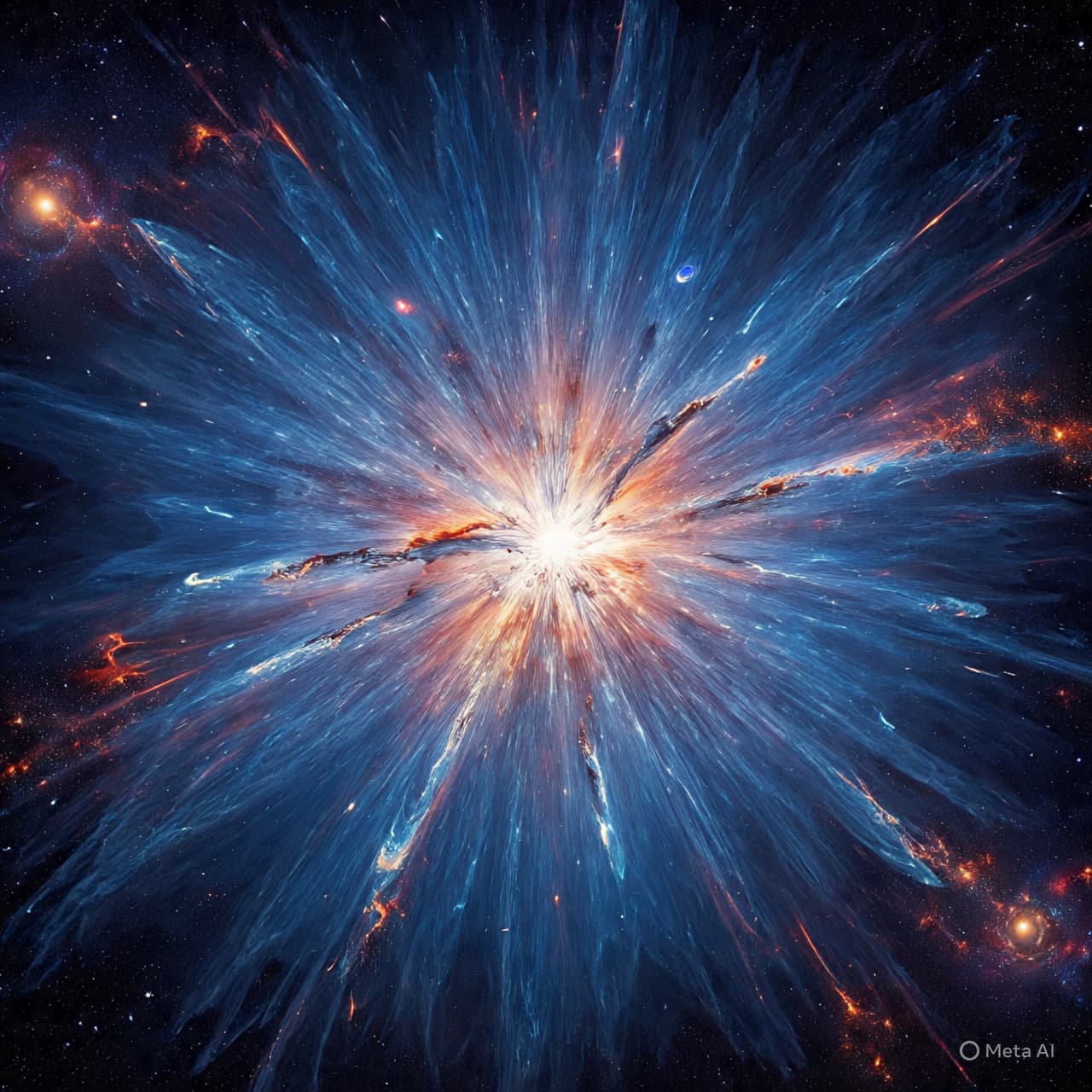
Typically, when massive stars collapse under their own gravity, they leave behind either a neutron star or a black hole. However, astronomers have identified a supernova that seems to defy this expectation. This unusually energetic explosion, which should have resulted in the formation of a black hole, has left researchers puzzled as no trace of such an object has been found. It is as if the star vanished completely, leaving only the echo of its explosion behind.
This phenomenon is not entirely without precedent, but it remains exceptionally rare. Some theoretical models have predicted scenarios in which a star could be entirely disrupted, leaving no compact remnant. These so-called “pair-instability supernovae” involve extreme internal conditions that cause the star to effectively tear itself apart. The new findings provide observational evidence that such processes may indeed occur in nature.
By analyzing the light curves and chemical signatures of the explosion, scientists were able to infer the mass and behavior of the original star. What they found aligned closely with predictions of total stellar destruction. The absence of a black hole raises deeper questions about how often such events might occur and whether they have been overlooked in past observations. If stars can sometimes end their lives without leaving any remnant, it may require astronomers to rethink how they estimate black hole populations across the universe.
There is also a broader implication tied to cosmic chemistry. Explosions of this magnitude release vast amounts of elements into space, contributing to the formation of future stars and planets. In this sense, a star that leaves nothing behind may still give rise to countless new beginnings elsewhere. The discovery underscores the importance of continued observation and refinement of theoretical models.
As telescopes become more sensitive and data more precise, anomalies like this are less likely to be dismissed and more likely to reshape our understanding of stellar life cycles. For now, the missing black hole remains an absence that speaks volumes. It reminds us that even in a universe governed by physical laws, there are still corners where certainty fades—and where the unexpected quietly reshapes what we thought we knew.
Published by Banx Network. This article is part of the Banx decentralized media programme, powered by the BXE token on the XRP Ledger.




